How to Make the Best Carne Asada (Grilled Flank Steak) at Home
Have you ever wondered what makes authentic taqueria Carne Asada so explosively flavorful? The answer lies in a perfect marinade and the high-heat sear of a grilled flank steak. While it might seem intimidating, crafting this staple of Mexican cuisine at home is not only budget-friendly but also allows you to control the quality of the ingredients. In this data-backed guide, we’ll break down the science and art behind achieving deeply charred, tender, and juicy results every single time. Let’s transform your kitchen into a taqueria.
Ingredients & Kitchen Tools
For the Perfect Marinade:
– 2 lbs flank steak: The star of the show. Look for consistent thickness (1-1.5 inches) for even cooking.
– 1/2 cup fresh orange juice: Provides natural sweetness and acidity to tenderize.
– 1/4 cup fresh lime juice: Adds brightness and helps break down proteins.
– 1/4 cup olive oil: Carries fat-soluble flavors and aids in browning.
– 4 cloves garlic (minced): A non-negotiable aromatic base.
– 1/2 cup chopped cilantro: Adds authentic herbal notes.
– 2 tsp ground cumin: Earthy, warm spice essential to Mexican cuisine.
– 1 tsp smoked paprika: Provides subtle smokiness.
– 1 tbsp kosher salt + 1 tsp black pepper: Crucial for seasoning.
Essential Kitchen Tools:
– Gas or charcoal grill: High heat is critical. A cast-iron grill pan works indoors.
– Instant-read thermometer: Guarantees perfect doneness every time.
– Sharp chef’s knife: For thinly slicing against the grain.
– Large resealable bag or glass dish: For marinating.
– Tongs: Long-handled tongs for safe flipping.
Prep Time & Cooking Schedule
– Marinating Time: 4-8 hours (overnight yields the deepest flavor).
– Prep Time: 15 minutes (juicing, mincing, mixing).
– Cook Time: 8-10 minutes for medium-rare.
– Resting Time: 10 minutes (non-negotiable for maximum juiciness).
– Total Active Time: Approximately 30 minutes.
Pro Tip: The ideal marinating window is 4-8 hours. Going beyond 12 hours can make the meat mushy due to the citrus acid breaking down the protein structure too aggressively.
Step-by-Step Instructions
Step 1: Prepare the Marinade
In a medium bowl, whisk together orange juice, lime juice, olive oil, minced garlic, cilantro, cumin, smoked paprika, salt, and pepper. Reserve 1/4 cup of the marinade for later basting.
Step 2: Marinate the Beef
Place the flank steak in a large resealable bag. Pour the remaining marinade over the meat, seal tightly, and massage to coat evenly. Refrigerate for 4-8 hours. For best results, flip the bag halfway through.
Step 3: Grill to Perfection
Preheat your grill to high heat (450-500°F). Remove the steak from the marinade and pat it completely dry with paper towels—this step is vital for a proper crust. Grill the Carne Asada for 4-5 minutes per side for medium-rare (internal temperature of 130-135°F). Avoid pressing down on the steak; let it develop a rich, charred crust.
Step 4: Rest and Slice
Transfer the steak to a cutting board. Loosely tent the grilled flank steak with aluminum foil and let it rest for exactly 10 minutes. This allows the juices to redistribute. After resting, slice thinly against the grain at a 45-degree angle for maximum tenderness.
Nutritional Benefits & Advantages
Flank steak is a remarkably lean cut of beef, making it a smart choice for health-conscious eaters without sacrificing flavor. A 4-ounce serving provides approximately 25 grams of high-quality complete protein, along with significant amounts of iron (15% DV) and B vitamins (B12, B6, and niacin). Because this dish relies on bold spices and citrus rather than heavy sauces, it is naturally low in carbohydrates, gluten-free, and compatible with keto, paleo, and whole30 dietary patterns. The grilling process also allows excess fat to drip away while retaining deep, smoky flavor from the Maillard reaction.
Tips, Variations & Cooking Advice
Flavor Variations
– Spicy Chipotle: Add 1 minced chipotle pepper in adobo sauce to the marinade for smoky heat.
– Beer-Marinated: Replace 1/4 cup of orange juice with a dark Mexican lager (like Negra Modelo) for added depth.
– Citrus-Herb: Swap cilantro for fresh oregano and add orange zest for extra brightness.
Alternative Cuts
– Skirt steak: Richer, more intense beef flavor. Cooks slightly faster due to thinner profile. Check temperature at the 3-minute mark.
– Sirloin flap: Budget-friendly with good marbling. Works perfectly if flank is unavailable.
Cooking Advice
– Indoor Method: Use a cast-iron skillet over high heat. Ensure excellent ventilation—it will get smoky.
– Charcoal Tip: Use mesquite or hickory wood chunks for authentic Mexican-style smokiness.
– Doneness Guide: 125°F for rare, 135°F for medium-rare, 145°F for medium.
Common Mistakes to Avoid
Mistake 1: Over-Marinating
The acid in citrus juice begins to cook the meat. If marinated longer than 12 hours, the exterior becomes mushy and mealy. Stick to the 4-8 hour window for optimal texture.
Mistake 2: Grilling Cold Steak
A cold steak cooks unevenly—the exterior burns before the interior reaches temperature. Let the steak rest at room temperature for 20-30 minutes before grilling.
Mistake 3: Slicing With the Grain
Flank steak has long, visible muscle fibers. If you slice parallel to these fibers, you get long, tough strands. Always identify the grain direction and slice perpendicular to it.
Mistake 4: Skipping the Rest
Cutting the steak immediately releases all the flavorful juices onto the cutting board. A 10-minute rest retains up to 30% more moisture in each bite.
Storage & Meal Prep Tips
Refrigeration
Store leftover sliced steak in an airtight container with a splash of the reserved marinade or a drizzle of olive oil to maintain moisture. It stays fresh for up to 4 days.
Freezing
Wrap the un-sliced grilled flank steak tightly in plastic wrap, then a layer of aluminum foil, and place in a freezer bag. It will maintain peak quality for up to 3 months. Thaw overnight in the refrigerator.
Reheating
– Best Method: Reheat in a hot cast-iron skillet with a tablespoon of water or beef broth for 30-60 seconds per side. This restores the crust without drying out the meat.
– Avoid: The microwave. It turns tender flank steak into tough, rubbery strips. If you must use it, set power to 50% and heat in 15-second bursts.
Conclusion
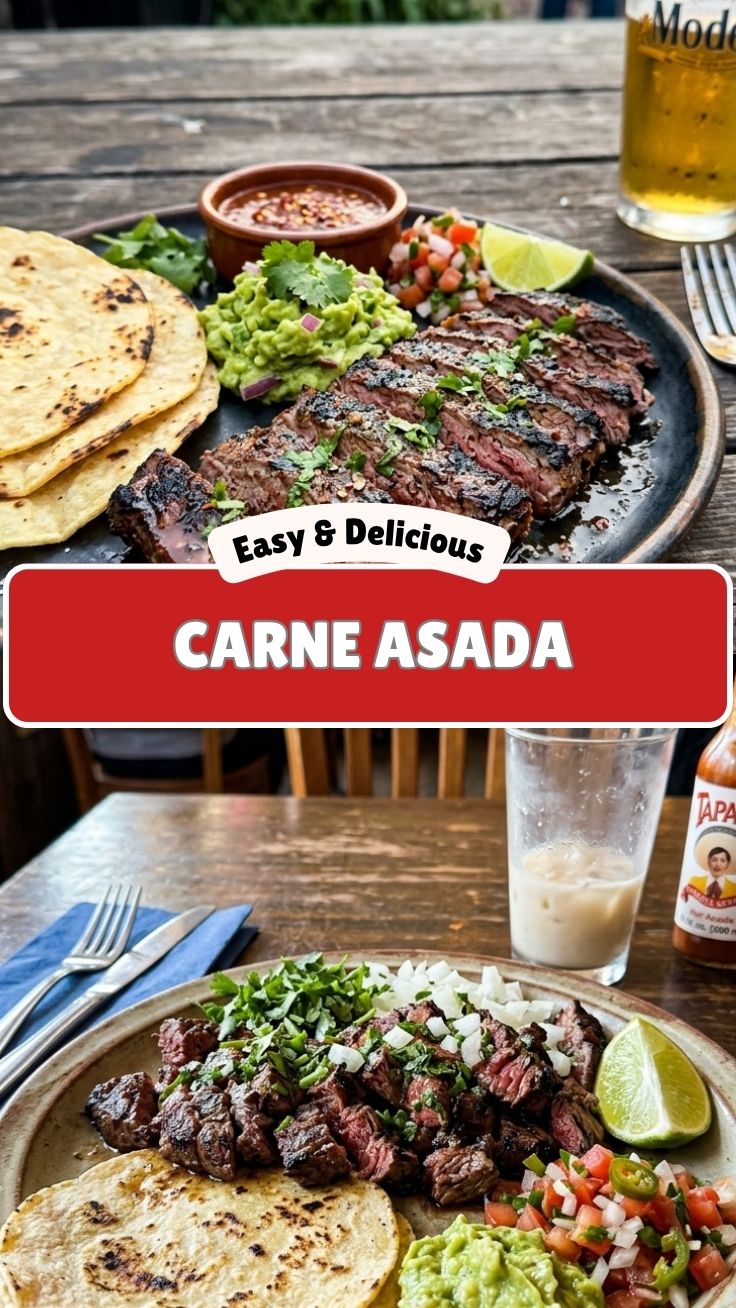
Ready to elevate your taco game indefinitely? Crafting this Carne Asada at home is simpler and more rewarding than you might imagine. By mastering the marinade, controlling the heat of your grill, and respecting the critical resting period, you transform an affordable cut of beef into an unforgettable meal. That grilled flank steak deserves to be the centerpiece of your next taco night. Pair it with fresh corn tortillas, pico de gallo, and a squeeze of lime, then share your results in the comments below!
FAQs
1. Can I use skirt steak instead of flank steak for carne asada?
Absolutely. Skirt steak is a classic substitute with a looser grain and richer, beefier flavor. Adjust cooking time slightly, as skirt steak is often thinner—check temperature at the 3-minute mark per side.
2. How can I tell when the carne asada is done without a thermometer?
Use the hand test. The fleshy part of your palm below your thumb, when touching your thumb to your pinky, mimics medium-rare resistance. The steak should feel firm yet yield slightly to pressure.
3. Can I cook carne asada indoors?
Yes! Use a heavy cast-iron skillet or grill pan over high heat. Ensure proper ventilation, as the high heat and oil will generate smoke. Open a window and consider turning on your kitchen exhaust fan.
4. Why is my flank steak tough after grilling?
Two common culprits: overcooking or improper slicing. Flank steak is best at medium-rare. Additionally, always slice thin and against the grain to shorten the muscle fibers, making each bite tender.
5. Can I freeze flank steak in the marinade?
Yes, this is an excellent meal prep strategy. Combine the steak and marinade in a freezer bag, squeeze out all the air, and freeze flat. Thaw overnight in the refrigerator, then grill directly. The marinating happens during the thawing process.
Quick way to grow a flavorful Carne Asada in 3 steps
Ingredients
Equipment
Method
- In a bowl, whisk together the orange juice, lime juice, soy sauce, minced garlic, cumin, chili powder, salt, and black pepper to create the marinade.
- Place the skirt or flank steak in a shallow dish, pour the marinade over it, ensuring the steak is fully coated, then cover and refrigerate for at least 30 minutes, or up to 2 hours for best flavor.
- Heat olive oil in a large skillet or grill pan over medium-high heat until shimmering.
- Remove the steak from the marinade, discarding any excess, and cook for 4-6 minutes per side for medium-rare, or longer for desired doneness.
- Let the steak rest for 5 minutes before slicing against the grain into thin strips to serve.