Quick and Flavorful Salmon Dinner
Craving restaurant-quality seafood without the hefty bill? You’re not alone. Many home cooks struggle to replicate that perfect charred crust and moist interior. Let me walk you through making Blackened Salmon and its bolder cousin Cajun Salmon in your own kitchen. The key is mastering the spice blend and heat control—two skills that transform simple salmon fillets into a weeknight showstopper. Plus, preparing Blackened Salmon at home lets you adjust salt, spice, and cooking method to your taste, saving money and ensuring freshness. Let’s dive in.
Ingredients & Kitchen Tools
Salmon – 4 fillets (6 oz each), skin-on or skinless. Fresh or fully thawed frozen works.
Spice blend – Paprika (smoked or sweet), garlic powder, onion powder, dried thyme, cayenne pepper, black pepper, salt. Substitute Cajun seasoning if desired.
Butter – Unsalted, for basting and richness. Ghee works for dairy-free.
Oil – High smoke point like avocado or canola for searing.
Lemon – Fresh juice and wedges for serving.
Tools: Cast-iron skillet (preferred) or heavy stainless steel pan, fish spatula, paper towels, tongs, instant-read thermometer.
Prep Time & Cooking Schedule
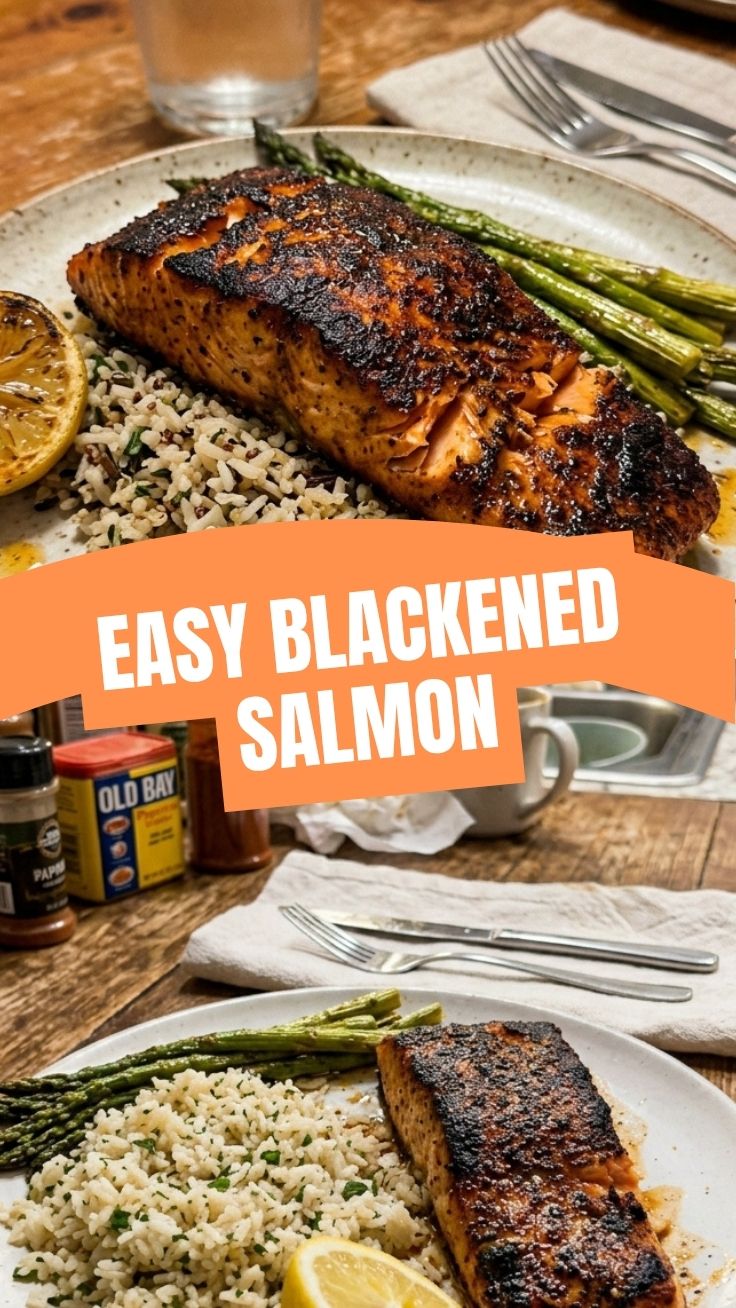
Prep time: 10 minutes (mix spice blend, pat fillets dry).
Cook time: 6–8 minutes total (3–4 minutes per side).
Resting time: 2 minutes off heat.
No marinating needed – the spice rub works immediately. Plan for a 20-minute total window, ideal for busy evenings.
Step-by-Step Instructions
1. Preheat your skillet on medium-high heat for 3 minutes. While it heats, pat salmon dry with paper towels – moisture is the enemy of a good crust.
2. Apply the spice rub generously on all sides of each fillet. For authentic Blackened Salmon flavor, press the seasoning firmly so it sticks.
3. Add oil (1 tbsp) to the hot skillet, then place fillets skin-side down (if skin-on). Cook undisturbed for 3 minutes – you want a deep sizzle.
4. Flip carefully using a fish spatula. Add a pat of butter, tilt the pan, and spoon melted butter over the fillets for 2 more minutes. For a spicier variant, use Cajun Salmon seasoning with extra cayenne.
5. Check doneness – internal temperature should reach 125°F for medium, 130°F for well-done. The flesh should flake easily with a fork.
6. Rest 2 minutes, then squeeze fresh lemon juice over top.
Temperature tip: If the skillet smokes excessively, reduce heat slightly – burned seasoning turns bitter.
Nutritional Benefits & Advantages
Salmon is packed with omega-3 fatty acids (EPA and DHA) that support heart and brain health. A single 6-ounce serving provides about 40g of protein, plus B vitamins, selenium, and potassium. The spice blend adds antioxidants from paprika and cayenne, while using butter in moderation keeps the dish satisfying without excess carbs. Compared to fried fish, this pan-seared method uses less oil and retains more nutrients.
Tips Variations & Cooking Advice
Flavor variations – Swap paprika for chipotle powder for smokier heat. Add dried oregano or rosemary to the rub. For a lighter version, cook without butter and finish with olive oil.
Alternative methods – Bake at 400°F for 12–15 minutes if you prefer no stovetop smoke. Air-fry at 375°F for 8 minutes (spray with oil).
Dietary adaptations – Use dairy-free butter for lactose intolerance. The recipe is naturally gluten-free, but check your spice blend labels.
Common Mistakes to Avoid
– Skipping pat-dry – Wet fillets steam instead of searing, producing a gray crust.
– Overcrowding the pan – Leave space between fillets; cooking in batches ensures even heat.
– Overcooking – Salmon continues cooking after removal. Pull it at 120–125°F for juicy results.
– Using cold butter too early – Add butter only after flipping to prevent burning.
– Not adjusting for fillet thickness – Thin fillets (1 inch) need only 2 minutes per side; thicker (1.5 inches) need 4 minutes.
Storage & Meal Prep Tips
Refrigeration – Store cooled leftovers in an airtight container for up to 3 days. Freezing – Wrap individually in plastic wrap then foil; freeze for up to 2 months. Reheating – Warm in a 300°F oven for 5–7 minutes, or microwave on 50% power in 30-second bursts. Avoid high heat to preserve moisture. Flake leftover salmon into salads or pasta for quick lunches.
Conclusion
This recipe delivers a crisp, smoky crust and tender, flaky center every time. By mastering the technique behind Blackened Salmon and exploring the bolder variations of Cajun Salmon, you gain a versatile weeknight staple. Try it tonight, then share your results with friends or experiment with different spice blends. The best part? No restaurant bill needed.
FAQs
Can I use frozen salmon directly?
Thaw completely in the refrigerator overnight. Frozen salmon retains moisture that prevents proper searing.
What if I don’t have a cast-iron skillet?
A heavy stainless steel or nonstick pan works, but cast iron gives superior heat retention. Avoid thin pans.
How do I reduce the spice level?
Halve the cayenne pepper and black pepper. Use sweet paprika instead of smoked. You can also serve with a yogurt or sour cream sauce.
Why did my spice blend burn?
The pan was too hot. Lower heat slightly next time, and ensure the seasoning is pressed thin rather than clumped. Add butter later in cooking.
Can I make this dairy-free?
Absolutely. Use avocado oil or vegan butter in place of regular butter. The crust will still develop beautifully.
Proven way to grow a perfect Blackened Salmon meal
Ingredients
Equipment
Method
- Pat salmon fillets dry using paper towels to ensure a crispy crust.
- Combine all blackening seasoning ingredients in a small bowl.
- Brush salmon fillets with olive oil, then generously coat both sides with the blackening seasoning.
- Heat a cast-iron skillet over high heat until it begins to smoke.
- Carefully place salmon, skin-side up, in the hot skillet and cook for 3-4 minutes until a dark crust forms.
- Flip the salmon and cook for another 3-5 minutes, or until the fish is cooked through and flaky.
- Remove salmon from skillet and let it rest for a few minutes before serving.