The Ultimate Guide to Perfect Blackened Salmon at Home
Have you ever craved that spicy, smoky, crusty salmon fillet from your favorite restaurant but hesitated to try it at home? You’re not alone. Many home cooks worry about burning the seasoning or overcooking the fish. But mastering Blackened Salmon is simpler than you think—and it delivers restaurant-quality flavor in under 20 minutes. This recipe not only saves you money but also lets you control the spice level, oil quality, and freshness of the fish. Whether you’re a seafood lover or a weeknight warrior, learning to cook this dish will transform your dinner routine. And if you enjoy bold Cajun flavors, you’ll also love a classic Cajun Salmon variation, which shares the same fiery seasoning profile. Let’s dive into the secrets of achieving that perfect blackened crust every time.
Ingredients & Kitchen Tools
Ingredients
– Salmon fillets (4–6 oz each) – skin-on or skinless; skin helps hold moisture during cooking.
– Butter (unsalted) – 2–3 tablespoons; clarified butter works best for high heat.
– Blackening seasoning – store-bought or homemade (paprika, cayenne, garlic powder, onion powder, thyme, oregano, salt, black pepper).
– Lemon wedges – for brightness and acidity.
– Optional – olive oil (if not using butter), fresh parsley for garnish.
Kitchen Tools & Utensils
– Cast-iron skillet – essential for even heat distribution and a dark crust.
– Tongs – for flipping without piercing the fish.
– Instant-read thermometer – aim for 125°F–130°F (medium‑rare to medium).
– Paper towels – to pat salmon dry for better seasoning adhesion.
– Ventilation fan – blackening creates smoke; open windows or use a range hood.
Substitutions
– No cast iron? Use a heavy stainless‑steel pan.
– Dairy-free? Replace butter with avocado oil or ghee (if dairy‑free but tolerates clarified butter).
– Mild spice? Reduce cayenne or use a mild paprika blend.
Prep Time & Cooking Schedule
– Prep time: 10 minutes (mix seasoning, pat salmon dry, bring to room temp).
– Cooking time: 4–6 minutes total (2–3 minutes per side, depending on thickness).
– Resting time: 3–5 minutes (allows juices to redistribute).
– Total: ~20 minutes.
Pro tip: Pull the salmon from the fridge 15 minutes before cooking so it cooks evenly. Preheat the skillet on medium‑high for 3–4 minutes before adding fat.
Step-by-Step Instructions
1. Prepare the seasoning – Combine 2 tbsp paprika, 1 tsp cayenne, 1 tsp garlic powder, 1 tsp onion powder, ½ tsp dried thyme, ½ tsp dried oregano, 1 tsp salt, and ½ tsp black pepper. Mix well. Store extra in an airtight jar.
2. Season the salmon – Pat fillets completely dry with paper towels. Generously coat both sides with the blackening mixture. Pat it in gently—don’t rub.
3. Heat the skillet – Place a cast‑iron skillet over medium‑high heat for 3–4 minutes. Add 2 tbsp butter (or oil) and swirl until melted and shimmering.
4. Sear the salmon – Place fillets skin‑side down (if skin‑on) or presentation‑side down. Cook undisturbed for 2–3 minutes until the crust is dark and crisp. Flip carefully with tongs.
5. Finish cooking – Cook another 2–3 minutes for medium, or until the internal temperature reaches 125°F. For thicker fillets, lower heat to medium after flipping.
6. Rest and serve – Transfer to a plate, squeeze fresh lemon, and let rest 3 minutes. Garnish with parsley.
During step 4, you’ll see the seasoning darken rapidly—that’s the magic of Blackened Salmon. For a milder version, try Cajun Salmon with a slightly reduced cayenne amount and a splash of Worcestershire in the butter.
Nutritional Benefits & Advantages
Salmon is a nutritional powerhouse: rich in omega‑3 fatty acids (EPA and DHA) that support heart and brain health, high‑quality protein, and essential vitamins like B12, D, and selenium. The blackening method uses minimal fat—just a thin butter or oil layer—making it a lower‑calorie way to enjoy a deeply flavored fish compared to frying or heavy sauces. Plus, the spice blend (paprika, cayenne, garlic) offers anti‑inflammatory and metabolism‑boosting properties. A single 6‑oz serving delivers about 35g protein and only ~300 calories (with butter). It’s also naturally gluten‑free, keto‑friendly, and low‑carb.
Tips, Variations & Cooking Advice
– Variation: Cajun twist – Add 1 tbsp smoked paprika, ½ tsp white pepper, and a dash of celery salt to your seasoning. This creates a more herb‑forward Cajun Salmon profile.
– Cooking method swap – Grill over high heat (gas or charcoal) for a smoky finish; use a fish basket to prevent sticking.
– Dairy‑free – Swap butter for avocado oil or ghee.
– Spice control – Blend in brown sugar (1 tsp) to balance heat with sweetness.
– Thickness matters – For 1‑inch fillets, stick to the timings above. For 1.5‑inch, add 1 minute per side and finish in a 400°F oven for 5 minutes.
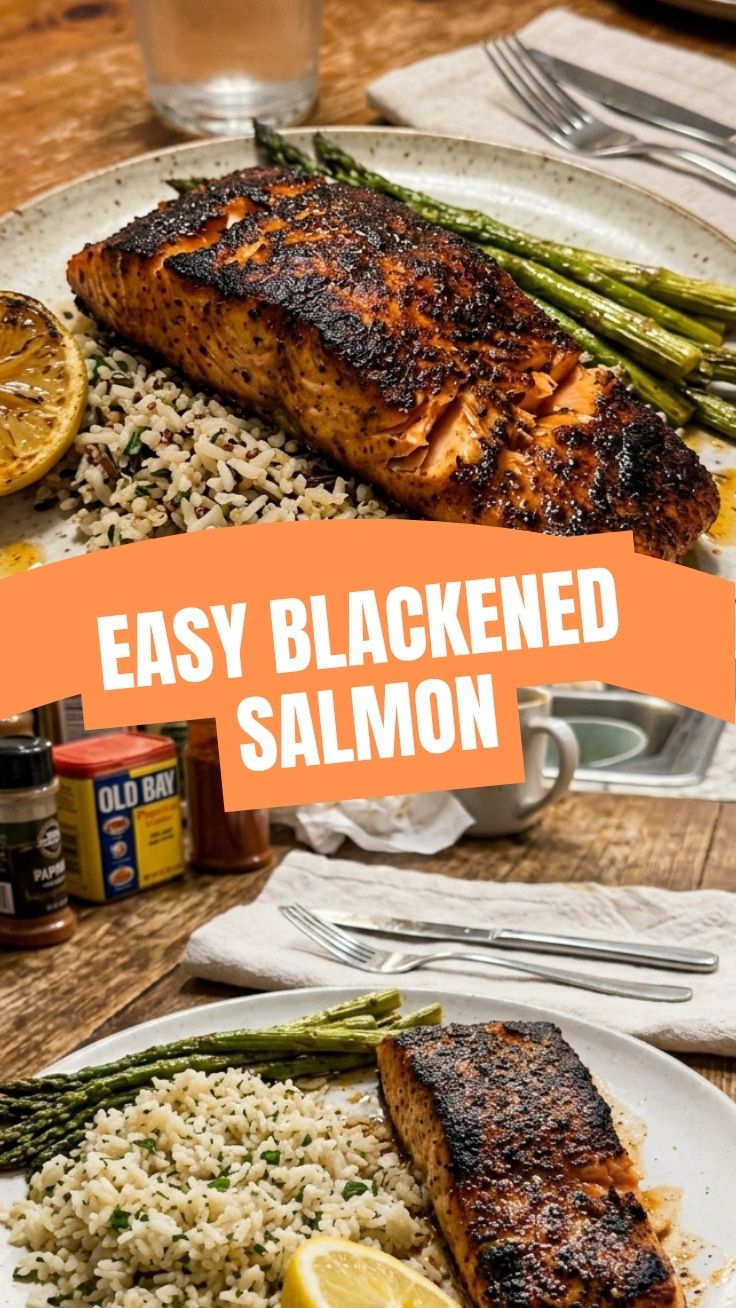
– Serving ideas – Pair with cilantro‑lime rice, roasted asparagus, or a crunchy coleslaw to cut the richness.
Common Mistakes to Avoid
– Skipping the drying step – Wet salmon won’t form a crust. Pat until tacky.
– Overcrowding the pan – Cook in batches; crowding lowers temperature and steams the fish.
– Using too low heat – The skillet must be screaming hot to achieve a blackened crust without overcooking the interior.
– Flipping too early – Let the crust develop fully; if it sticks, wait 30 more seconds.
– Not accounting for carryover cooking – Remove salmon at 125°F; it will rise to 130°F while resting.
– Ignoring smoke – This dish produces smoke naturally. Open a window and turn on a fan, but don’t lower heat prematurely.
Storage & Meal Prep Tips
– Refrigeration – Store cooled leftovers in an airtight container for up to 3 days.
– Freezing – Wrap individual fillets tightly in plastic wrap then foil; freeze for up to 1 month. Thaw overnight in the fridge.
– Reheating – Best in a low oven (300°F) for 5–7 minutes, or in a dry skillet over low heat to re‑crisp the crust. Avoid microwaving—it makes fish rubbery.
– Meal prep – Cook a double batch on Sunday. Flake into salads, tacos, or grain bowls throughout the week. The blackened flavor holds up beautifully.
Conclusion
Perfecting Blackened Salmon at home is a game‑changer for weeknight dinners. With a hot skillet, a bold spice blend, and a few simple techniques, you can recreate that iconic crust and juicy interior in under 20 minutes. Whether you stick to this classic version or explore a milder Cajun Salmon variation, you’ll have a versatile, nutritious, and deeply satisfying dish. Give it a try tonight, share your results with friends, or experiment with the variations above. Your taste buds—and your family—will thank you.
FAQs
1. Can I use frozen salmon for blackening?
Yes, but thaw completely in the refrigerator overnight and pat very dry. Frozen fish retains more moisture, so expect a slightly less crisp crust. Increase cook time by 1–2 minutes per side.
2. My blackened salmon tastes burnt. What went wrong?
Two culprits: heat too high or seasoning too thick. Use medium‑high, not high, and apply a thin, even layer of seasoning. Blackening should be dark but not bitter. If it’s bitter, reduce cayenne slightly.
3. Is blackened salmon the same as Cajun salmon?
Close, but not identical. Blackened Salmon uses a simple paprika‑cayenne blend cooked at extreme heat. Cajun Salmon often includes herbs like thyme, oregano, and sometimes a touch of Worcestershire or hot sauce, giving it a more layered, earthy heat.
4. How do I keep the seasoning from falling off?
Dry the salmon well, then press the seasoning firmly onto the fish. Let it sit 5 minutes before cooking so the spices adhere. Also, don’t move the fillet immediately—let the crust set before flipping.
5. Can I make this without a cast‑iron skillet?
Absolutely. Use a heavy stainless‑steel or nonstick pan, but note that nonstick won’t produce as dark a crust. Preheat it well and use a high‑smoke‑point oil like avocado oil.
Proven way to grow a perfect Blackened Salmon meal
Ingredients
Equipment
Method
- Pat the salmon fillets dry with paper towels; this helps create a crispy crust. Melt the butter in a small bowl.
- In another small bowl, combine all the blackening seasoning ingredients until well mixed.
- Dip each salmon fillet into the melted butter, ensuring both sides are coated. Then, dredge each fillet generously in the blackening seasoning, pressing lightly to adhere.
- Heat a large cast-iron skillet over high heat until it is smoking hot. Carefully place the seasoned salmon fillets, skin-side up, into the hot skillet.
- Cook for 3-5 minutes per side, depending on the thickness of the fillets, until a dark, crusty sear forms and the salmon easily flakes with a fork.
- Remove the salmon from the skillet and serve immediately. Garnish with fresh parsley or lemon wedges, if desired.