The Ultimate Turkey Tenderloin Recipe: Juicy, Flavorful, and Foolproof
Have you ever wondered why restaurant-quality turkey always seems impossibly moist while your home-cooked version turns out dry? The secret lies not in magic, but in mastering the perfect Turkey Tenderloin—a lean, quick-cooking cut that delivers all the rich flavor of a whole bird in under an hour. Whether you’re craving a weeknight protein boost or testing new Thanksgiving Turkey Recipes for a smaller gathering, learning to cook this cut at home saves money, reduces waste, and lets you control every seasoning and technique. In this data-driven guide, I’ll walk you through the exact science behind a golden, juicy tenderloin that rivals any holiday spread.
Ingredients & Kitchen Tools
For the Turkey Tenderloin
– 1½ lbs turkey tenderloin (or two ¾-lb tenderloins) – The star protein; look for even thickness for uniform cooking.
– 2 tbsp olive oil – Helps conduct heat and brown the surface; avocado oil works too.
– 1 tsp kosher salt – Essential for moisture retention; use ¾ tsp fine sea salt if substituting.
– ½ tsp black pepper – Freshly ground offers more aroma.
– 1 tsp garlic powder – Adds savory depth without burning.
– 1 tsp dried rosemary – Or 1 tbsp fresh, minced; thyme or sage are excellent swaps.
For the Herb Butter Basting (Optional but Recommended)
– 3 tbsp unsalted butter, softened – Creates a glossy, flavorful crust.
– 1 tbsp fresh parsley, chopped – For color and freshness.
– 1 tsp lemon zest – Brightens the rich meat.
Kitchen Tools
– Cast-iron skillet – Best for even searing and oven-to-stovetop transitions; stainless steel works too.
– Instant-read thermometer – Non-negotiable for perfect doneness (165°F / 74°C).
– Tongs – For flipping without piercing the meat.
– Cutting board – Preferably with a groove to catch juices.
– Aluminum foil – For resting and tenting.
Optional Substitutions
– Dairy-free: Use vegan butter or extra olive oil for basting.
– Gluten-free: This recipe is naturally gluten-free; just verify spice blends.
– Herb swap: Replace rosemary with 1 tsp Italian seasoning or poultry blend.
Prep Time & Cooking Schedule
| Stage | Time | Notes |
|——-|——|——-|
| Prep | 10 minutes | Pat dry, season, make herb butter (if using). |
| Rest (optional) | 30 minutes | Let seasoned meat come to room temp for even cooking. |
| Sear | 4–6 minutes | High heat on stovetop for golden crust. |
| Roast | 18–22 minutes | Oven at 400°F (200°C) until internal temp hits 160°F. |
| Rest | 10 minutes | Tent with foil; carryover cooking raises temp to 165°F. |
| Total | ~1 hour | Hands-on time only ~15 minutes. |
Pro tip: If you’re short on time, skip the resting step—just extend oven cooking by 2–3 minutes and rest for 5 minutes instead. For meal prep, you can marinate the tenderloin overnight in olive oil, herbs, and a splash of lemon juice.
Step-by-Step Instructions
1. Preheat and prep: Set your oven to 400°F (200°C). Pat the Turkey Tenderloin completely dry with paper towels—moisture is the enemy of a good sear. Season all sides generously with salt, pepper, garlic powder, and rosemary. (For a flavor twist inspired by classic Thanksgiving Turkey Recipes, add ½ tsp smoked paprika and a pinch of rubbed sage.)
2. Sear to perfection: Heat 2 tbsp olive oil in your cast-iron skillet over medium-high heat until shimmering. Place the tenderloin in the pan and cook without moving for 3–4 minutes until a deep golden crust forms. Flip and sear the second side for 2 minutes. Turn the tenderloin to sear the edges for about 30 seconds each. Temperature cue: The internal temp should rise by about 20°F during searing.
3. Baste and roast: If using herb butter, spread it over the top of the seared tenderloin. Transfer the skillet directly to the preheated oven. Roast for 18–22 minutes, or until an instant-read thermometer inserted into the thickest part reads 160°F (71°C). Texture cue: The meat should feel firm but springy when pressed.
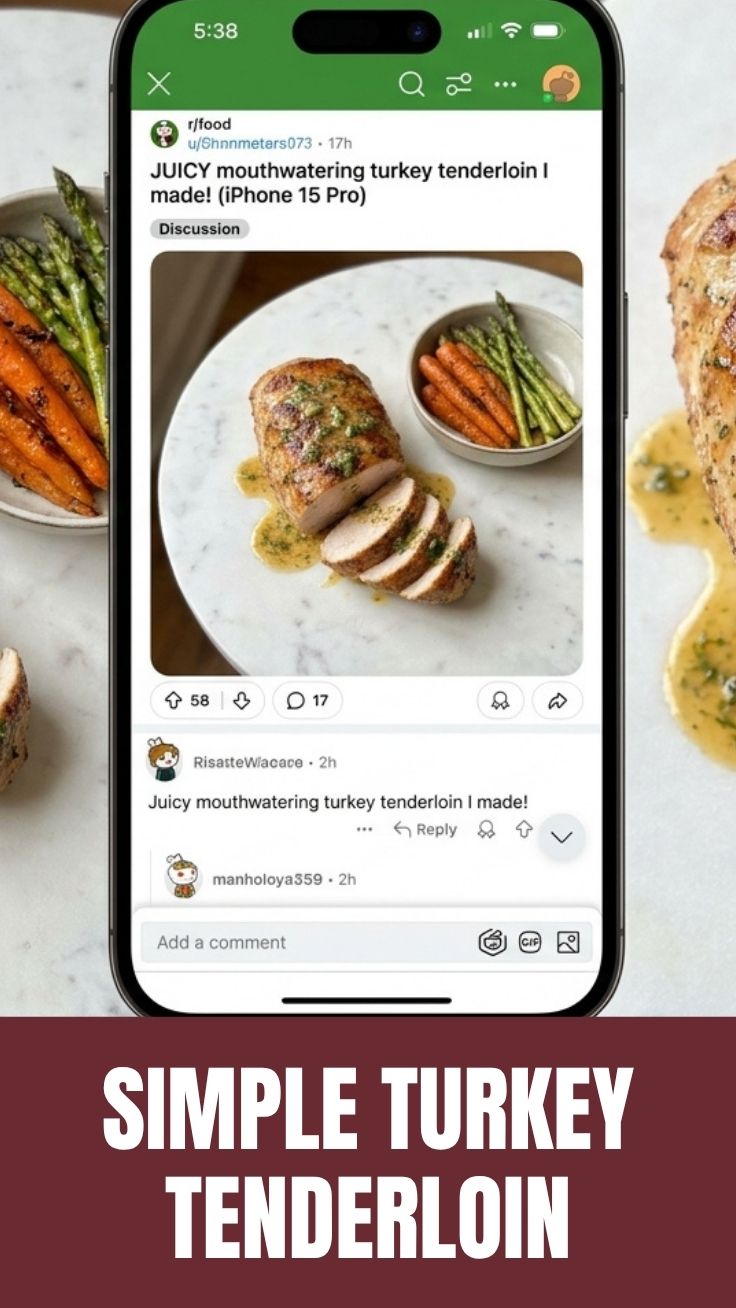
4. Rest and serve: Remove the skillet from the oven and immediately transfer the tenderloin to a cutting board. Tent loosely with foil and let rest for 10 minutes. Slice against the grain into ½-inch medallions. For visual appeal, drizzle any pan juices over the slices before serving.
Key tip: Avoid overcooking—turkey tenderloin is lean and dries quickly past 165°F. Use your thermometer religiously.
Nutritional Benefits & Advantages
A 4-ounce serving of roasted turkey tenderloin provides approximately 180 calories, 34g protein, and 4g fat—making it one of the leanest, most protein-dense meats available. It’s rich in B vitamins (particularly B6 and B12), selenium (a powerful antioxidant), and phosphorus (essential for bone health). Compared to chicken breast, turkey tenderloin offers marginally more iron and zinc, supporting immune function and oxygen transport.
This recipe is naturally low-carb, gluten-free, and keto-friendly (0g carbs per serving). For athletes or those managing weight, the high protein-to-calorie ratio supports satiety and muscle repair. The olive oil provides heart-healthy monounsaturated fats, while the herb blend adds anti-inflammatory compounds like rosmarinic acid from rosemary.
Tips Variations & Cooking Advice
Flavor Variations
– Mediterranean: Marinate with lemon juice, oregano, and minced garlic before searing. Serve with tzatziki.
– Spicy Southwest: Rub with chili powder, cumin, and lime zest. Finish with a cilantro-lime crema.
– Asian-inspired: Brine briefly in soy sauce and ginger, then glaze with honey-sriracha during the last 5 minutes of roasting.
Cooking Methods
– Grill: Sear over high heat for 3–4 minutes per side, then move to indirect heat and cook until 160°F.
– Air fryer: Preheat to 375°F, cook for 15–18 minutes, flipping halfway. No need for extra oil if the tenderloin is lean.
– Sous vide: Cook at 145°F for 1–2 hours, then sear in a blazing-hot pan for 60 seconds per side—ultra-juicy results.
Dietary Adaptations
– Dairy-free: Use olive oil or coconut oil for basting instead of butter.
– Whole30: Skip the butter and use ghee or avocado oil.
– Lower sodium: Use a salt-free herb blend and reduce added salt to ½ tsp.
Common Mistakes to Avoid
1. Skipping the dry: Patting the meat dry is non-negotiable. Wet meat steams instead of searing, producing a gray, tough exterior.
– Fix: Use paper towels and let the seasoned meat sit uncovered in the fridge for 15 minutes if you have time.
2. Overcrowding the pan: If your tenderloin doesn’t fit comfortably, use a larger skillet or cook in batches.
– Fix: If searing two small tenderloins, ensure at least 1 inch of space between them for proper browning.
3. Trusting visual cues over temperature: A golden crust doesn’t guarantee doneness. Always use a thermometer.
– Fix: Calibrate your thermometer annually by testing it in ice water (should read 32°F) and boiling water (212°F at sea level).
4. Slicing too soon: Cutting into meat immediately after roasting forces precious juices onto the cutting board.
– Fix: Set a timer for 10 minutes after removing from the oven—resist the urge to slice earlier.
Storage & Meal Prep Tips
– Refrigeration: Store leftover sliced turkey in an airtight container for up to 4 days. Add a splash of broth or olive oil to keep it moist.
– Freezing: Wrap individual portions in plastic wrap, then foil, and freeze for up to 3 months. Thaw overnight in the fridge before reheating.
– Reheating: For best texture, reheat in a 300°F oven for 10–12 minutes (covered with foil) or in a skillet with a tablespoon of water over medium-low heat. Avoid microwaving—it can dry out the meat unevenly.
– Meal prep: Slice the tenderloin and portion into salads, wraps, or grain bowls for quick lunches. The cooked meat also works beautifully in soups or casseroles.
Conclusion
Mastering the perfect Turkey Tenderloin transforms this humble cut into a centerpiece-worthy dish that rivals any holiday spread. By following the sear-roast-rest method, you ensure a golden crust, tender interior, and flavor that adapts to any cuisine—from classic herb-forward profiles to global spice blends. And while this recipe shines on its own, it also makes a fantastic addition to your repertoire of Thanksgiving Turkey Recipes for intimate gatherings or year-round comfort meals. Give it a try this week, and tag your results—I’d love to see your golden, juicy creation! For more quick protein recipes and holiday inspiration, explore our full collection of foolproof poultry dishes.
FAQs
Can I use a frozen turkey tenderloin?
Yes, but thaw it completely in the refrigerator (24 hours per 1½ lbs) before cooking. Cooking from frozen leads to uneven doneness and a dry exterior.
What if I don’t have an instant-read thermometer?
A meat thermometer with a probe is ideal, but you can also check by slicing into the thickest part—juices should run clear, and the meat should no longer be pink. However, this method is less reliable for food safety.
How do I prevent the herb butter from burning?
Apply the butter after searing (just before the oven stage) and ensure your oven temperature doesn’t exceed 400°F. The butter will melt and baste the meat without scorching.
Can I brine the tenderloin?
Absolutely! A quick 30-minute brine in 4 cups water + ¼ cup salt + 2 tbsp sugar boosts juiciness and flavor. Rinse and pat dry before seasoning.
What’s the best way to reheat without drying?
Reheat in a 300°F oven, covered with foil and a splash of broth, for 10 minutes. For individual portions, use a skillet with a cover and a tablespoon of water over low heat.
Quick way to grow 5 Turkey Tenderloin recipes
Ingredients
Equipment
Method
- Preheat your oven to 375°F (190°C) and prepare a baking dish or sheet with parchment paper.
- Pat the turkey tenderloins dry with paper towels to ensure even cooking and browning.
- In a small bowl, mix together the olive oil, salt, black pepper, garlic powder, and paprika to create a flavorful rub.
- Rub the seasoning mixture generously all over the turkey tenderloins, ensuring they are fully coated.
- Place the seasoned tenderloins on the prepared baking dish or sheet, leaving some space between each piece.
- Roast for 20-25 minutes, or until the internal temperature reaches 165°F (74°C) using a meat thermometer. The exact time may vary based on the thickness of the tenderloins.
- Remove the turkey from the oven and let it rest for 5-10 minutes before slicing. This helps the juices redistribute, keeping the turkey moist.
- Slice the turkey tenderloin against the grain into 1/2-inch thick pieces and serve immediately with your favorite side dishes.