The Ultimate Guide to Making the Perfect Tuna Casserole at Home: A Data-Driven Recipe
Have you ever wondered why some homemade tuna casseroles turn out creamy and comforting while others end up dry or bland? The answer lies in mastering a few science-backed techniques that transform simple pantry ingredients into a golden, bubbling masterpiece. Preparing this classic dish at home isn’t just about saving money—it’s about controlling quality, customizing flavors, and creating a meal that delivers 22g of protein per serving while accommodating dietary needs. In this comprehensive guide, we’ll explore a Tuna Casserole recipe designed for consistent success, complete with nutritional data, troubleshooting tips, and variations that keep this comfort food fresh. Let’s dive into the creamy, crunchy world of perfectly executed tuna casserole.
—
Ingredients & Kitchen Tools (H2)
Required Ingredients:
– 12 oz (340g) egg noodles: Wide egg noodles work best for trapping creamy sauce. Substitute with gluten-free pasta if needed.
– 2 cans (5 oz each) solid white tuna, drained: Opt for tuna packed in water for lower fat content; skip draining if using oil-packed.
– 1 can (10.5 oz) cream of mushroom soup: The classic base. Use reduced-sodium versions or homemade béchamel for cleaner flavor.
– 1/2 cup whole milk: Adds richness; 2% or oat milk works with slightly thinner results.
– 1 cup frozen peas: Adds sweetness and color. Thaw before adding to prevent cold spots.
– 1/2 cup shredded cheddar cheese: Creates that signature golden crust You can use Gruyère or dairy-free cheese.
– 1 cup crushed potato chips (kettle-style): Panko breadcrumbs mixed with melted butter are a worthy substitute.
– 1/4 cup diced onion: Optional, but provides aromatic depth. Sauté beforehand to mellow sharpness.
– Salt, black pepper, and paprika: Season judiciously—tuna and soup already contain sodium.
Kitchen Tools:
– Large pot for boiling pasta
– 9×13-inch baking dish (or similar 3-quart casserole dish)
– Colander for draining
– Mixing bowl for combining ingredients
– Whisk or spatula for even mixing
– Food processor (optional, for making fresh breadcrumbs)
—
Prep Time & Cooking Schedule (H2)
| Phase | Time | Notes |
|—|—|—|
| Prepping ingredients | 10 minutes | Chop onion, drain tuna, thaw peas |
| Boiling pasta | 8–10 minutes | Cook al dente (firm to bite) to prevent mushiness after baking |
| Assembling casserole | 5 minutes | Combine all components except topping |
| Resting (optional) | 5 minutes | Allow flavors to meld before topping |
| Baking | 20–25 minutes at 375°F | Until bubbly and golden |
| Resting after baking | 5–10 minutes | Helps set structure and prevents burns |
Total hands-on time: ~15 minutes
Total time from start to table: ~45 minutes
—
Step-by-Step Instructions (H2)
1. Preheat and prepare your tools: Set your oven to 375°F (190°C). Lightly grease your 9×13-inch baking dish with butter or non-stick spray.
2. Cook the egg noodles: Bring a large pot of salted water to a rolling boil. Add noodles and cook according to package directions, but subtract 1 minute from the recommended time (al dente is key). Drain and set aside—do not rinse, as starch helps thicken the sauce.
3. Combine the creamy base: In a large mixing bowl, whisk together the cream of mushroom soup and 1/2 cup milk until smooth. Gradually fold in half the cheddar cheese and all of the diced onion.
4. Incorporate the star ingredients: Gently fold in the drained tuna, cooked noodles, and thawed peas. Season with 1/2 teaspoon black pepper and a pinch of paprika. Taste and adjust salt after the mixture rests 30 seconds—flavors need time to bloom.
5. Transfer and top: Spread the mixture evenly in the prepared dish. Sprinkle the remaining cheddar cheese over the top, followed by the crushed potato chips. For extra crunch, drizzle with 1 tablespoon melted butter over the chips.
6. Bake to perfection: Place the dish on the middle rack. Bake for 20–25 minutes until the edges bubble and the topping turns deep golden brown. If cooking from cold (refrigerated), extend baking to 35–40 minutes.
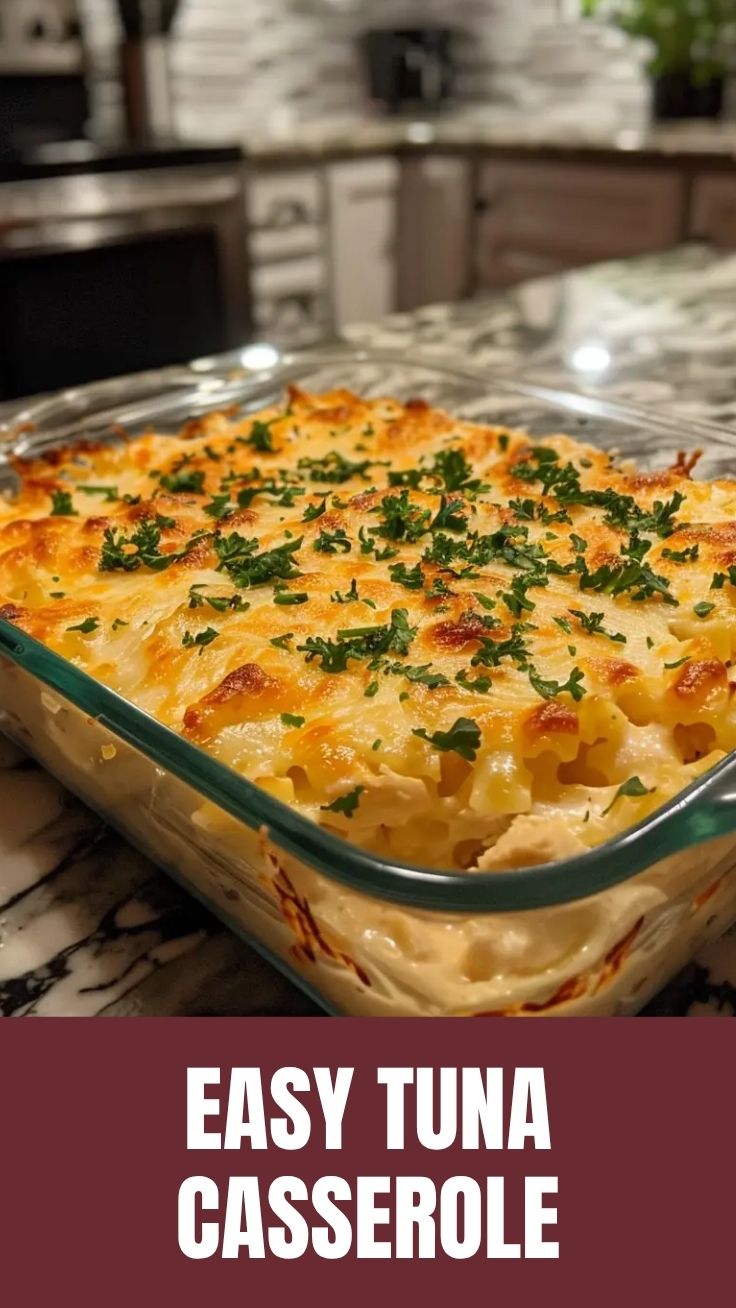
7. Rest and serve: Let the baked tuna casserole rest 5–10 minutes after removing from the oven. This allows the sauce to thicken and prevents separation when served. Portion with a wide spatula and optionally top with fresh parsley.
Temperature control tip: If the topping browns too quickly, tent loosely with foil for the last 10 minutes of baking while continuing to cook.
—
Nutritional Benefits & Advantages (H2)
This Tuna Casserole delivers a well-rounded nutritional profile that supports sustained energy and satiety:
– Protein powerhouse: Each serving provides 22–28g of complete protein from tuna and dairy, essential for muscle repair and metabolism.
– Omega-3 fatty acids: Canned tuna (especially skipjack or albacore) offers 200–500mg of EPA and DHA per serving, supporting heart and brain health.
– Fiber boost: Peas contribute 4g of fiber per serving, promoting digestive health and blood sugar stabilization.
– Calcium and vitamin D: Cheese and milk add 15–20% of the recommended daily intake for calcium, critical for bone health.
Calorie breakdown per serving (1/6 of recipe): ~380 calories, 18g fat, 32g carbs, 22g protein. For weight management, reduce cheese by half and use Greek yogurt instead of milk.
—
Tips, Variations & Cooking Advice (H2)
– Gluten-Free Version: Replace egg noodles with gluten-free pasta (cook 2 minutes less). Use certified gluten-free cream of mushroom soup (or homemade roux with rice flour). Substitute potato chips with crunchy chickpea snacks.
– Dairy-Free Adaptation: Use unsweetened oat milk, vegan cream of mushroom soup (or pureed cauliflower + vegetable broth), and cashew-based “cheese shreds.”
– Flavor Twists: Add 1 tablespoon Dijon mustard and 1 teaspoon lemon zest to the sauce for brightness. Or fold in chopped sun-dried tomatoes and capers for a Mediterranean variation.
– Alternative Cooking Methods: For a quicker stovetop version, skip baking—simply combine all ingredients in a skillet over medium heat, top with cheese, cover, and cook 5 minutes until melted.
—
Common Mistakes to Avoid (H2)
1. Overcooking the noodles: Mushy pasta ruins texture. Always cook to al dente—the noodles continue softening in the oven.
2. Skipping the resting step: Serving immediately after baking leads to a runny casserole. Resting allows the sauce to thicken naturally.
3. Underseasoning the sauce: Tuna can be bland. Add at least 1/2 teaspoon salt (if using unsalted soup) and a pinch of cayenne for depth.
4. Crushing chips too fine: Large chips provide better crunch. Crumble them by hand, not in a food processor.
5. Baking too long: When juices bubble around edges (20–25 minutes), it’s done. Overbaking dries out tuna and curdles dairy.
—
Storage & Meal Prep Tips (H2)
Refrigeration: Store leftover Tuna Casserole in an airtight container for up to 4 days. For best texture, separate the topping if possible (store chips separately) to maintain crunch.
Freezing: Assemble the unbaked casserole (without topping) and freeze for up to 3 months. Thaw overnight in the fridge, then add topping and bake at 375°F for 30–35 minutes. Alternatively, freeze fully baked portions in individual freezer-safe containers.
Reheating: For crispy topping, reheat in a 350°F oven for 15 minutes. Avoid microwaving—it softens the crust and creates rubbery tuna. If using a microwave, reheat on 70% power for 2 minutes and finish under a broiler for 30 seconds.
Meal prep tip: Cook double the noodles and freeze half without sauce. When ready, combine with fresh soup and veggies for a faster remake.
—
Conclusion (H2)
Mastering this Tuna Casserole recipe transforms a humble pantry meal into a customizable, nutrient-dense delight that consistently delivers comfort. By following science-backed techniques—like cooking pasta al dente, resting before serving, and balancing seasonings—you achieve that golden, creamy result every time. Whether you serve the classic version or experiment with gluten-free swaps, this baked tuna casserole offers a reliable foundation for weeknight dinners. We encourage you to try this recipe, share your variation in the comments, and explore our other quick casserole ideas to simplify your meal planning.
—
FAQs (H2)
1. Can I use canned tuna in oil instead of water?
Yes, but drain thoroughly to prevent greasiness. Oil-packed tuna adds more flavor, so adjust salt in the recipe accordingly.
2. Why is my casserole watery?
This usually happens when peas aren’t thawed first (they release water), noodles are overcooked, or the soup-milk ratio is off. Reduce milk to 1/3 cup if using frozen peas directly.
3. Can I make this ahead of time?
Absolutely! Assemble the casserole (without topping) up to 24 hours ahead. Refrigerate, then add topping and bake for 35–40 minutes (add 5 minutes for cold dish).
4. What’s the best tuna substitute?
Canned salmon or cooked shredded chicken work perfectly. Adjust cooking time if using raw chicken. For vegetarian versions, use canned chickpeas or crumbled tempeh.
5. How do I keep the topping crunchy?
Apply the crushed chips just before baking—not during refrigerated storage. If reheating leftovers, add fresh chips over the top before oven reheating.
Tuna Casserole
Ingredients
Equipment
Method
- Preheat oven to 375°F (190°C) and lightly grease a 9x13 inch baking dish.
- Cook egg noodles according to package directions, then drain and set aside.
- In a large bowl, combine the drained tuna, cooked noodles, cream of mushroom soup, milk, and frozen peas, mixing well.
- Stir in half of the shredded cheddar cheese.
- Pour the mixture into the prepared baking dish and sprinkle with the remaining cheddar cheese.
- Top with crushed potato chips or breadcrumbs for a crispy finish.
- Bake for 20-25 minutes, or until bubbly and the topping is golden brown.