Why This Sweet Potato Casserole Will Steal the Show at Your Holiday Table
Have you ever wondered why some holiday sides disappear before the turkey even gets carved? The answer often lies in that perfect balance of creamy, sweet, and crunchy textures. Preparing this beloved dish at home isn’t just about following a recipe—it’s about creating a memory that will have your guests asking for seconds. When you master the art of the Sweet Potato Casserole, you unlock a versatile side that pairs beautifully with any main course. While many confuse it with a Sweet Potato Pie, this casserole offers a savory-sweet profile that stands on its own as a centerpiece dish. The value of preparing this from scratch means you control the sweetness, the texture, and the quality of ingredients—no canned shortcuts needed.
—
Ingredients & Kitchen Tools
For the Sweet Potato Base:
– 4 medium sweet potatoes (about 2 lbs) – Look for firm, unblemished potatoes; orange-fleshed varieties work best for natural sweetness
– ½ cup unsalted butter – Softened to room temperature; use vegan butter for a dairy-free option
– ⅓ cup packed brown sugar – Light or dark; dark adds deeper molasses notes
– 2 large eggs – Free-range preferred; flax eggs work for vegan adaptation
– 1 teaspoon vanilla extract – Pure extract over imitation for richer flavor
– ½ teaspoon ground cinnamon – Ceylon cinnamon is milder and sweeter
– ¼ teaspoon ground nutmeg – Freshly grated if possible
– ⅛ teaspoon ground cloves – Optional but adds warmth
For the Pecan Topping:
– 1 cup chopped pecans – Toasted for 5 minutes at 350°F for deeper flavor
– ½ cup packed brown sugar – Mix with ¼ cup all-purpose flour or almond flour for gluten-free
– ¼ cup unsalted butter – Melted and slightly cooled
Kitchen Tools:
– 9×13-inch baking dish or 2-quart casserole dish
– Large pot for boiling sweet potatoes
– Hand mixer or stand mixer (or strong arm and a potato masher)
– Mixing bowls (medium and large)
– Sharp knife and vegetable peeler
– Measuring cups and spoons
– Spatula for spreading
—
Prep Time & Cooking Schedule
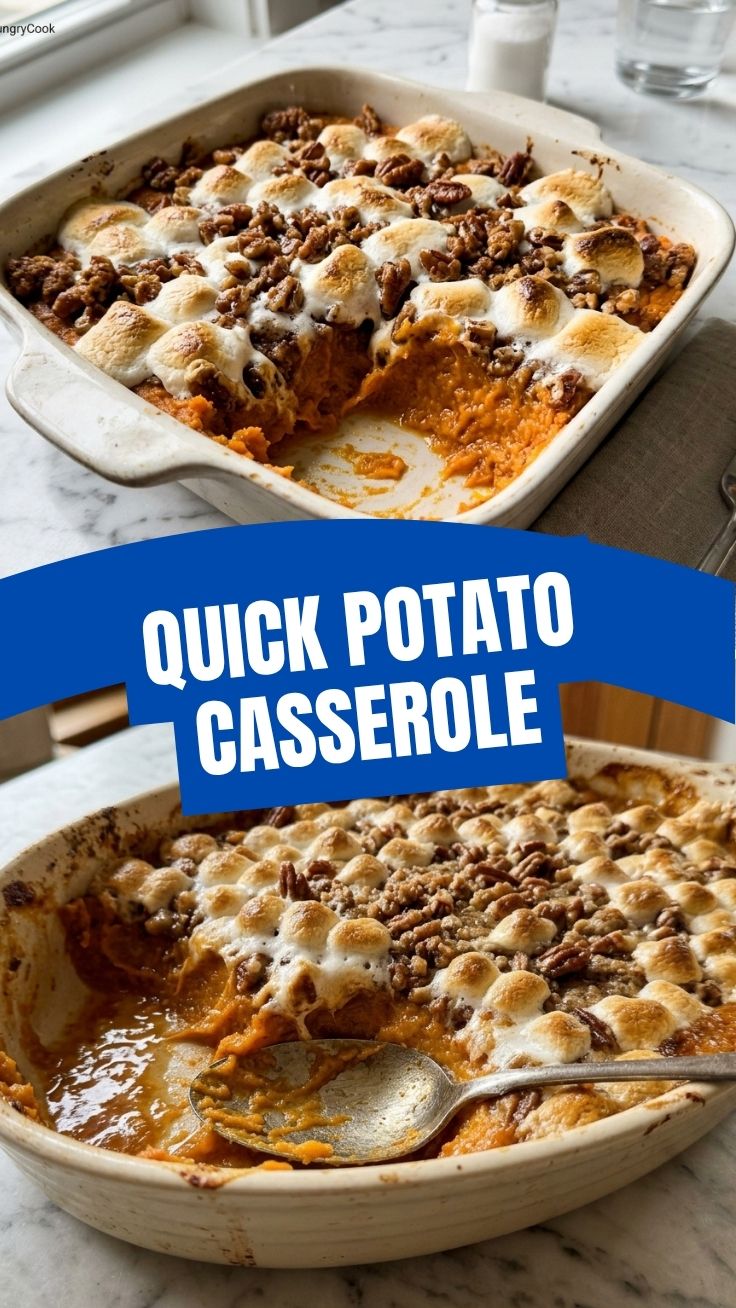
Total Time: 1 hour 15 minutes
Prep Time: 25 minutes (includes peeling, boiling, and mashing)
Cook Time: 40–45 minutes
Resting Time: 10 minutes (essential for set texture)
Pro Tip: This casserole is ideal for make-ahead holidays. You can prepare the sweet potato base and topping separately up to 2 days in advance. Assemble and bake just before serving. The resting time allows the casserole to firm up, making it easier to slice and serve without turning into a soupy mess.
—
Step-by-Step Instructions
1. Prepare the Sweet Potatoes – Peel and cube the sweet potatoes into 1-inch chunks. Place them in a large pot and cover with cold water by 1 inch. Add a pinch of salt. Bring to a boil, then reduce to a simmer. Cook for 12–15 minutes until fork-tender. Drain well and let steam dry for 2 minutes—this prevents a watery casserole.
2. Mash and Mix Base – Transfer the hot sweet potatoes to a large mixing bowl. Add the softened butter, brown sugar, eggs, vanilla, cinnamon, nutmeg, and cloves. Beat with a hand mixer on medium speed until smooth and creamy, about 3 minutes. Taste and adjust sweetness—you want it slightly sweeter than you think, as the savory topping will balance it.
3. Assemble the Casserole – Preheat your oven to 350°F. Grease the baking dish with butter or cooking spray. Spread the sweet potato mixture evenly in the dish. In a separate small bowl, combine the chopped pecans, brown sugar, and melted butter. Sprinkle this topping evenly over the sweet potato base. Temperature control note: If you notice the topping browning too quickly, loosely tent the dish with foil halfway through baking.
4. Bake to Perfection – Bake for 40–45 minutes until the topping is golden brown and the edges are bubbly. The center should be set but slightly jiggly—it will firm up as it rests. Texture cue: Insert a butter knife into the center; it should come out clean or with just a few moist crumbs.
5. Rest and Serve – Let the casserole rest for 10 minutes before serving. This allows the starches to settle and the flavors to meld. Scoop generously and watch it disappear. Remember, this Sweet Potato Casserole is a versatile dish that can stand alone as a side or even be served as a dessert-like treat, though it’s quite different from a traditional Sweet Potato Pie in texture and sweetness level.
—
Nutritional Benefits & Advantages
Sweet potatoes are nutritional powerhouses packed with beta-carotene (vitamin A), fiber, and potassium. This casserole retains more nutrients than boiling alone because the orange flesh absorbs the butter and spices, making the fat-soluble vitamins more bioavailable. Each serving provides approximately 4 grams of fiber, 15% of daily vitamin C, and significant manganese for bone health. The pecans add healthy monounsaturated fats and magnesium, which supports muscle function and sleep quality. Compared to traditional candied yams, this version has about 30% less added sugar while still delivering rich flavor.
—
Tips Variations & Cooking Advice
Flavor Twists:
– Maple Bourbon: Replace brown sugar with ¼ cup maple syrup and add 2 tablespoons bourbon to the base
– Coconut Crunch: Substitute coconut oil for butter and top with toasted coconut flakes instead of pecans
– Spiced Chai: Add ½ teaspoon cardamom and ¼ teaspoon ginger to the spice mix
Dietary Adaptations:
– Gluten-Free: Use almond flour or oat flour in the topping instead of all-purpose flour
– Dairy-Free: Replace butter with vegan butter or coconut oil; use flax eggs (1 tablespoon ground flax + 3 tablespoons water per egg)
– Low-Sugar: Use monk fruit sweetener or stevia blend; reduce topping by half
Alternative Cooking Methods:
– Instant Pot: Pressure cook peeled cubed sweet potatoes with 1 cup water for 8 minutes, then mash and proceed
– Air Fryer: Cook in a smaller dish at 320°F for 20 minutes, checking frequently
– Slow Cooker: Cook on low for 4 hours, but note the topping won’t crisp—broil for 3 minutes at the end
—
Common Mistakes to Avoid
1. Overcooking the Sweet Potatoes – Boiling too long makes them waterlogged. Test with a fork at 12 minutes; they should be tender but not falling apart.
2. Skipping the Resting Period – Hot casserole is runny casserole. Give it that 10-minute rest, or even 20 minutes if you can wait.
3. Overmixing the Base – Beating too long develops gluten and makes the casserole gummy. Mix just until smooth.
4. Burning the Topping – Pecans brown quickly. Check at 30 minutes; if the topping is dark, tent with foil for the remaining 10–15 minutes.
5. Using Cold Ingredients – Cold butter and eggs won’t incorporate smoothly, leading to lumps. Bring everything to room temperature before starting.
—
Storage & Meal Prep Tips
Refrigeration: Store leftovers in an airtight container for up to 5 days. The topping will soften slightly, but the flavor improves overnight.
Freezing: This casserole freezes beautifully. Cool completely, wrap tightly in plastic wrap and then foil, and freeze for up to 3 months. Thaw overnight in the refrigerator before reheating.
Reheating: For best texture, reheat in a 350°F oven for 15–20 minutes. The microwave works in a pinch (2–3 minutes on high), but the topping will be soft. For a crispy topping refresh, broil for 2 minutes after reheating.
Make-Ahead: Assemble the base and topping separately. Store base in the baking dish covered with plastic wrap, and topping in a sealed bag. Combine and bake fresh on serving day.
—
Conclusion
This Sweet Potato Casserole recipe delivers the perfect balance of creamy, sweet, and crunchy elements that make it a holiday favorite. Unlike a Sweet Potato Pie, this casserole offers a savory edge that complements roasted meats beautifully. The key takeaways are controlling moisture by draining potatoes well, allowing the casserole to rest before serving, and customizing the sweetness to your preference. This dish is forgiving enough for beginners yet impressive enough for seasoned cooks. Try it for your next gathering, share your results in the comments, and explore our other holiday side dishes for more inspiration.
—
FAQs
Can I use canned sweet potatoes instead of fresh?
Yes, but drain them very well and reduce the brown sugar by 2 tablespoons since canned sweet potatoes are often packed in syrup. The texture will be softer, so consider adding 2 tablespoons of almond flour to the base for structure.
How do I make this casserole less sweet?
Reduce the brown sugar in the base to ¼ cup and skip the topping or use a savory crumble of crushed crackers, herbs, and Parmesan instead. You can also add a pinch of salt to balance the sweetness.
Why did my casserole turn out watery?
This usually happens from undercooking the sweet potatoes (they release water during baking) or skipping the resting period. Make sure to cook potatoes until fork-tender and drain thoroughly. If it’s already watery, bake uncovered for an additional 10 minutes to evaporate excess moisture.
Can I add marshmallows to this recipe?
Absolutely! Add a layer of mini marshmallows on top during the last 5 minutes of baking. Watch carefully—they burn quickly. For a gooey version, place them under the pecan topping.
What can I substitute for pecans?
Walnuts, sliced almonds, or pepitas (pumpkin seeds) all work well. For a nut-free version, use crushed pretzels, toasted oats, or even crushed cornflakes mixed with melted butter and brown sugar.
Quick way to grow sweet potato casserole in 5 easy steps
Ingredients
Equipment
Method
- To grow sweet potato slips, suspend a sweet potato halfway in water using toothpicks and place it in a sunny spot, refreshing the water every few days.
- Once the slips grow to about 6 inches with leaves and roots, gently twist them off the potato.
- Place the removed slips in water for a few days to further develop their roots.
- Plant the rooted slips in a container filled with potting soil, burying them up to the first leaves.
- Place the container in a sunny location that receives at least 6-8 hours of direct sunlight daily and keep the soil consistently moist.