Unleash Your Inner Baker: Crafting the Perfect Homemade Sourdough Loaf
Have you ever dreamt of that irresistible aroma of freshly baked bread filling your home? The crackling crust, the soft, airy interior, and that distinct tangy flavor – it’s the stuff culinary dreams are made of. While store-bought bread has its place, there’s an unparalleled satisfaction in creating your own, especially when it comes to the revered Sourdough Bread. Beyond the incredible taste, baking at home allows you to control every ingredient, fostering a deeper connection to your food. This comprehensive guide will equip you with the knowledge and confidence to master this ancient culinary art, starting with a robust Sourdough Starter, the living heart of your loaf.
Ingredients & Kitchen Tools
Crafting an exceptional Sourdough Bread requires a few essential items. Here’s what you’ll need:
- Active Sourdough Starter (100g): This is the magic potion, a fermented mixture of flour and water thriving with wild yeasts and bacteria. Ensure it’s active and bubbly before use.
- Bread Flour (400g): High protein content (12-14%) is crucial for developing strong gluten, essential for sourdough’s structure. All-purpose flour can work, but bread flour yields superior results.
- Warm Water (300g): Around 90-95°F (32-35°C) is ideal, as it helps activate the yeast in your starter.
- Fine Sea Salt (8g): Enhance flavor and regulate fermentation. Avoid iodized salt as it can inhibit yeast activity.
- Large Mixing Bowl: For combining ingredients and bulk fermentation.
- Dough Scraper: Indispensable for handling sticky dough and cleaning surfaces.
- Banneton Basket (or a bowl lined with floured kitchen towel): Provides support during proofing and gives the loaf its signature shape.
- Dutch Oven (with lid): Creates a steamy environment for a beautiful crust and even bake.
- Parchment Paper: Prevents sticking and makes transferring the dough easier.
- Lame (or a very sharp razor blade): For scoring the dough, allowing it to expand gracefully.
Prep Time & Cooking Schedule
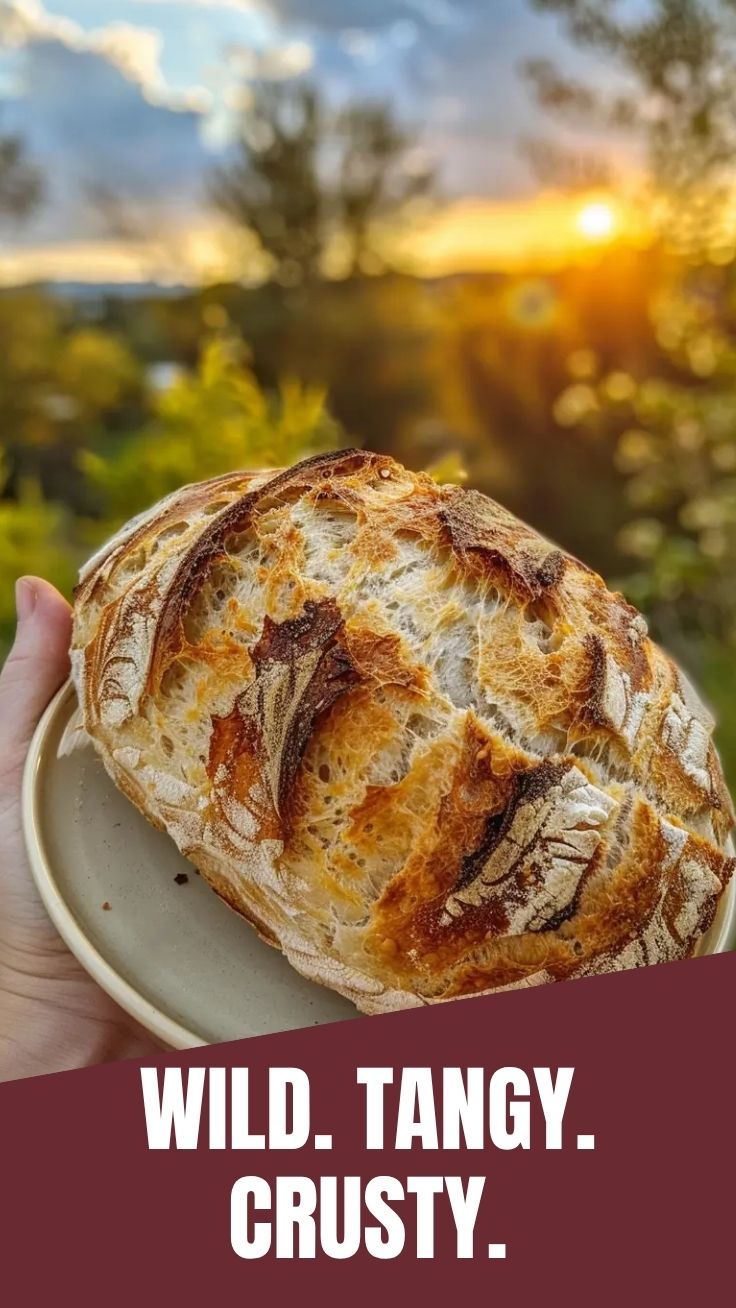
Baking Sourdough Bread is a journey that unfolds over several hours, primarily due to resting and fermentation times. Planning is key!
- Prep Time: 20-30 minutes (active mixing and shaping)
- Bulk Fermentation (First Rise): 4-6 hours (or overnight in a cooler environment)
- Proofing (Second Rise): 1-4 hours at room temperature, or 8-12 hours in the refrigerator (cold proof)
- Bake Time: 40-50 minutes
Context: The long fermentation times are crucial for developing sourdough’s characteristic flavor and texture. Don’t rush these steps! Cold proofing in the refrigerator significantly enhances flavor and makes shaping easier the next day.
Step-by-Step Instructions
1. Autolyse (20 minutes): In a large bowl, combine the bread flour and warm water until no dry spots remain. Cover and let it rest for 20 minutes. This allows the flour to fully hydrate and gluten to begin developing.
2. Mix in Starter & Salt: Add your active Sourdough Starter and salt to the autolysed dough. Mix thoroughly, either by hand or with a stand mixer on low speed, until well combined. The dough will be shaggy at first.
3. Stretch and Folds (3-4 sets, 30 minutes apart): Over the next 1.5-2 hours, perform “stretch and folds.” Gently stretch a portion of the dough upwards and fold it over itself towards the center. Rotate the bowl and repeat until you’ve gone around once. Cover and rest for 30 minutes between sets. This builds gluten strength and introduces air.
4. Bulk Fermentation (1st Rise): After the stretch and folds, cover the bowl and let the dough ferment at room temperature (around 75°F / 24°C) for 4-6 hours, or until it has increased by about 30-50% in volume and shows signs of activity (small bubbles). For enhanced flavor, you can cold ferment in the refrigerator overnight (8-12 hours).
5. Pre-Shape (20 minutes rest): Gently tip the dough onto a lightly floured surface. Using a dough scraper, gently shape it into a round or oval. Avoid degassing it too much. Cover and let it rest for 20 minutes.
6. Final Shape: Lightly flour your banneton basket. Shape the dough tightly into your desired form (round or oval) using tension to create a smooth surface. Place it seam-side up in the banneton. This allows the dough to relax and develop its final structure.
7. Proofing (2nd Rise): Cover the banneton. Proof at room temperature for 1-4 hours, or cold proof in the refrigerator for 8-12 hours. The dough is ready when it springs back slowly when gently poked (a “finger dent test”).
8. Preheat Oven & Dutch Oven: At least 30 minutes before baking, place your Dutch oven with its lid inside the oven and preheat to 475°F (245°C).
9. Score & Bake: Carefully remove the hot Dutch oven. Gently invert the proofed dough onto a piece of parchment paper. Using your lame, score your Sourdough Bread with a beautiful design (a single long score down the center is common). Carefully transfer the dough on the parchment paper into the hot Dutch oven.
10. Bake Covered: Bake with the lid on for 20 minutes to trap steam and promote oven spring.
11. Bake Uncovered: Remove the lid and reduce oven temperature to 450°F (230°C). Continue baking for another 20-30 minutes, or until the crust is a deep golden brown and the internal temperature reaches 200-210°F (93-99°C).
12. Cool: Transfer the loaf to a wire rack and let it cool completely for at least 1-2 hours before slicing. This allows the crumb to set and flavors to fully develop.
Nutritional Benefits & Advantages
Homemade Sourdough Bread offers more than just exceptional taste. The long fermentation process of the Sourdough Starter breaks down complex carbohydrates and gluten, making it potentially easier to digest for some individuals compared to conventional bread. It also increases the bioavailability of certain vitamins and minerals, acting as a natural probiotic. Furthermore, without commercial yeast, sourdough boasts a lower glycemic index, contributing to more stable blood sugar levels.
Tips, Variations & Cooking Advice
- Flavor Boosting: For a richer flavor, consider adding a tablespoon of whole wheat flour to your dough. You can also mix in herbs like rosemary, spices like caraway seeds, or even grated cheese during the shaping stage.
- Ingredient Swaps: Experiment with different flours – whole wheat, rye, or spelt can be used in small percentages (up to 20-30%) for varying textures and flavors.
- Alternative Baking: If you don’t have a Dutch oven, you can bake sourdough on a baking stone or heavy baking sheet. To create steam, place a tray of hot water on the bottom rack of your oven during the first part of baking.
- Scaling: Adjust ingredient quantities proportionally for larger or smaller loaves.
Common Mistakes to Avoid
- Using an Inactive Starter: A weak or inactive Sourdough Starter will lead to a dense, flat loaf. Always ensure it’s bubbly and passes the float test (a small spoonful floats in water) before using.
- Under-Proofing: An under-proofed loaf will be dense with a tight crumb and can burst awkwardly during baking. Learn to recognize the signs of a properly proofed dough.
- Over-Proofing: Conversely, an over-proofed dough will be slack, difficult to handle, and may collapse in the oven.
- Slicing Too Soon: Resist the urge to slice warm bread! The internal structure is still setting, and cutting too early can result in a gummy texture.
- Not Enough Steam: Insufficient steam in the oven leads to a thin, pale crust and limits oven spring. The Dutch oven is your best friend here.
Storage & Meal Prep Tips
Your homemade Sourdough Bread is best enjoyed fresh, but can be stored effectively.
- Room Temperature: Store whole bread at room temperature, cut-side down on a cutting board, or in a breathable bread bag for 2-3 days. Avoid airtight containers, which can make the crust soggy.
- Freezing: For longer storage, slice the cooled loaf and freeze slices in a freezer-safe bag for up to 3 months.
- Reheating: Thaw frozen slices and toast or warm in the oven for a “freshly baked” experience. A whole loaf can be revitalized by a quick 10-15 minute bake in a 350°F (175°C) oven.
Conclusion
Baking your own Sourdough Bread is a incredibly rewarding experience that transcends merely creating food; it’s a journey into patience, science, and sensory delight. With a little practice and attention to detail, especially regarding your active Sourdough Starter, you’ll be producing loaves that rival any artisan bakery. We encourage you to embark on this delicious adventure, experiment with flavors, and most importantly, enjoy the process. Share your beautiful creations in the comments below – we’d love to see them!
FAQs
Q1: How do I know if my sourdough starter is active enough?
A1: An active starter will have many bubbles on the surface and sides, smell pleasantly tangy, and pass the float test (a small spoonful will float when dropped into water).
Q2: Can I use all-purpose flour instead of bread flour?
A2: While you can, bread flour with its higher protein content (for gluten development) is highly recommended for the best texture and structure in sourdough.
Q3: My bread is flat and dense. What went wrong?
A3: This is often due to an inactive starter, under-proofed dough, or insufficient gluten development during the stretch and folds. Review your starter’s activity and dough handling.
Q4: How do I get a really crispy crust?
A4: Baking in a preheated Dutch oven is crucial for creating steam, which yields a crispy crust. Ensure your oven is hot enough and the Dutch oven is fully preheated.
Q5: What’s the “float test” for a sourdough starter?
A5: To perform the float test, take a small spoonful of your fed and active sourdough starter and gently drop it into a glass of water. If it floats, it’s ready to use! If it sinks, it may need more time to activate or another feeding.
Sourdough Bread
Ingredients
Equipment
Method
- The night before baking, feed your sourdough starter and let it sit at room temperature for 8-12 hours until active and bubbly.
- In a large bowl, combine the active starter, flour, water, and salt. Mix until a shaggy dough forms, then cover and let it rest for 30 minutes.
- Perform a series of stretch and folds every 30 minutes for the next 2 hours. Gently stretch the dough from one side, fold it over, and repeat with all four sides.
- After the folds, let the dough bulk ferment at room temperature for another 2-4 hours, or until it has doubled in size.
- Gently turn the dough out onto a lightly floured surface and shape it into a round or oval. Place the shaped dough into a floured banneton or bowl, cover, and refrigerate overnight (8-12 hours) for cold proofing.
- Preheat your oven to 450°F (230°C) with a Dutch oven inside for at least 30 minutes. Carefully transfer the cold dough into the hot Dutch oven, score the top with a sharp knife, and bake with the lid on for 20 minutes.
- Remove the lid and continue to bake for another 20-25 minutes, or until the crust is deeply golden brown. Let the bread cool completely on a wire rack before slicing and serving.