Master the Art of Homemade Focaccia Bread: A Golden, Savory Delight
Ever wondered what makes bakery-fresh Focaccia Bread so irresistibly fluffy on the inside and perfectly crisp on the outside? Forget store-bought imitations; preparing this iconic Italian flatbread at home isn’t just about baking – it’s about crafting an experience. In this comprehensive guide, we’ll unlock the secrets to creating an extraordinary Artisan Focaccia that will impress even the most discerning palates. Imagine the aroma filling your kitchen, the golden crust glistening with olive oil, and the soft, airy crumb just begging to be torn and dipped. Learning to bake your own focaccia is more than a culinary skill; it’s a journey into flavour, offering a truly rewarding and delicious experience that far surpasses any pre-made alternative.
Ingredients & Kitchen Tools
Crafting the perfect focaccia requires a thoughtful selection of ingredients and the right tools. Here’s what you’ll need:
Ingredients:
- Active Dry Yeast (2 ¼ teaspoons): The leavening agent that gives focaccia its characteristic airy texture.
- Warm Water (1 ½ cups, 105-115°F / 40-46°C): Activates the yeast; crucial for proper dough rise.
- Granulated Sugar (1 teaspoon): Feeds the yeast, helping it become active.
- All-Purpose Flour (3 ½ – 4 cups): The primary structural component of the bread. Use bread flour for an even chewier texture.
- Extra Virgin Olive Oil (¼ cup for dough, 2-3 tablespoons for topping, plus more for the pan): Adds richness, flavour, and contributes to the crispy crust. Don’t skimp on quality here!
- Fine Sea Salt (1 teaspoon for dough, ½ teaspoon for topping): Enhances flavour and balances sweetness.
- Flaky Sea Salt (1-2 teaspoons, optional): For an elegant finish and burst of salty flavour on the crust.
- Rosemary Sprigs (2-3, fresh): Classic focaccia topping for aromatic essence.
- Cherry Tomatoes (½ cup, halved): Adds bursts of juicy sweetness (optional, but highly recommended).
Kitchen Tools:
- Large Mixing Bowl: For combining ingredients and allowing the dough to rise.
- Stand Mixer with Dough Hook Attachment (optional): Makes kneading much easier, but hand kneading is perfectly fine.
- Measuring Cups & Spoons: For accurate ingredient proportions.
- 9×13 Inch Baking Pan (or similar size): Essential for shaping and baking the focaccia. A dark pan can lead to a crispier bottom crust.
- Plastic Wrap or Clean Kitchen Towel: For covering the dough during proofing.
- Pastry Brush: For olive oil application.
- Oven: For baking!
- Wire Rack: For cooling the baked focaccia.
Prep Time & Cooking Schedule
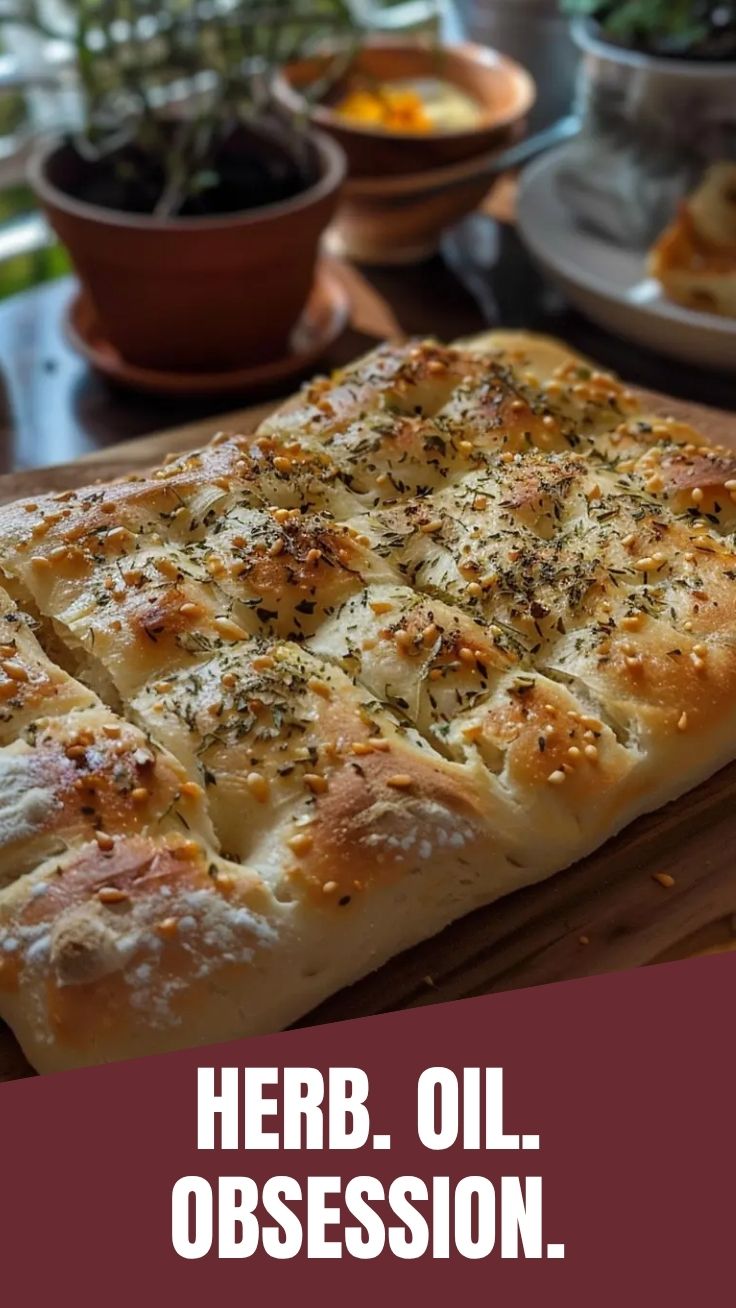
Planning is key for perfect focaccia. This recipe involves a few resting periods, but the active preparation time is minimal.
- Active Prep Time: 20-30 minutes
- First Proofing (Rise): 1-1.5 hours
- Second Proofing (Rise in pan): 30-45 minutes
- Bake Time: 20-25 minutes
- Cooling Time: 15-20 minutes
Total Time: Approximately 3-4 hours. This schedule makes it ideal for a leisurely weekend project or an afternoon baking session.
Step-by-Step Instructions
Follow these detailed steps to achieve a perfectly golden and irresistible Focaccia Bread.
1. Activate the Yeast: In your large mixing bowl (or stand mixer bowl), combine the warm water, granulated sugar, and active dry yeast. Stir gently and let it sit for 5-10 minutes until foamy. This indicates the yeast is active and ready to work its magic.
2. Combine Ingredients: Add the ¼ cup of olive oil and 1 teaspoon of fine sea salt to the yeast mixture. Gradually add the all-purpose flour, one cup at a time, mixing until a shaggy dough forms.
3. Knead the Dough: If using a stand mixer, attach the dough hook and knead on medium-low speed for 8-10 minutes until the dough is smooth, elastic, and pulls away from the sides of the bowl. If kneading by hand, turn the dough out onto a lightly floured surface and knead for 10-12 minutes, stretching and folding until it’s pliable and smooth. This thorough kneading is crucial for developing the gluten structure that yields a perfectly textured Artisan Focaccia.
4. First Rise: Lightly grease the mixing bowl with olive oil. Place the dough in the bowl, turning it once to coat. Cover the bowl with plastic wrap or a clean kitchen towel and let it rise in a warm, draft-free place for 1 to 1.5 hours, or until doubled in size.
5. Prepare the Baking Pan: Drizzle a generous amount of olive oil (about 2 tablespoons) into your 9×13 inch baking pan, ensuring the entire bottom and sides are well coated.
6. Transfer and Dimple: Gently transfer the risen dough into the prepared baking pan. Using your fingertips, gently press and stretch the dough to fill the pan, being careful not to deflate it too much. Once evenly distributed, use your oiled fingertips to create characteristic dimples all over the surface of the dough.
7. Second Rise: Drizzle the dough with 1-2 tablespoons of olive oil. Scatter the fresh rosemary sprigs and halved cherry tomatoes (if using) evenly over the top. Sprinkle with the ½ teaspoon of fine sea salt and flaky sea salt. Cover the pan loosely with plastic wrap or a kitchen towel and let it rise again for 30-45 minutes. Preheat your oven to 400°F (200°C) during the last 15 minutes of this rise.
8. Bake: Bake for 20-25 minutes, or until the Focaccia Bread is golden brown on top and cooked through. The crust should be crisp, and the bottom should also have a nice golden hue.
9. Cool: Once baked, immediately transfer the focaccia out of the pan onto a wire rack to cool slightly. Drizzle with a little more extra virgin olive oil if desired.
Nutritional Benefits & Advantages
Beyond its incredible taste, homemade focaccia offers several nutritional advantages. Made from simple, whole ingredients, it’s a good source of carbohydrates for energy. Using high-quality extra virgin olive oil adds healthy monounsaturated fats, which are beneficial for heart health. If you opt for whole wheat flour, you’ll boost its fiber content, aiding digestion. Furthermore, controlling the ingredients yourself means avoiding the artificial additives and preservatives often found in commercial breads. It’s a satisfying and versatile bread that can be enjoyed in moderation as part of a balanced diet.
Tips, Variations & Cooking Advice
- Flavor Boosts: Experiment with toppings! Beyond rosemary and cherry tomatoes, consider thinly sliced red onions, olives, sun-dried tomatoes, or even a sprinkle of parmesan cheese.
- Herb Power: Fresh herbs like thyme, oregano, or a mix of Italian herbs can be fantastic substitutes or additions to rosemary.
- Gluten-Free Option: For a gluten-free version, use a high-quality gluten-free all-purpose flour blend (one that contains xanthan gum) and follow the recipe. The rise might be slightly different, but the flavour will still be delicious.
- Overnight Cold Ferment: For a more complex flavour development, after the first rise, punch down the dough, place it in an oiled bowl, cover tightly, and refrigerate overnight (8-16 hours). Let it come to room temperature for about an hour before proceeding with shaping and the second rise.
- Crispy Bottom: For an ultra-crispy bottom crust, bake the focaccia directly on a preheated pizza stone or baking steel for the last 10 minutes of baking.
Common Mistakes to Avoid
- Using Cold Water: Water that’s too cold won’t activate the yeast, leading to a flat dough.
- Over-flouring: Adding too much flour can result in a dense, dry focaccia. The dough should be soft and slightly tacky, not stiff.
- Not Enough Olive Oil: Focaccia needs olive oil, both in the dough and on top, for flavour, texture, and a beautiful crust. Don’t be shy!
- Under-kneading: Insufficient kneading won’t develop the gluten, leading to a less airy texture. Take your time with this step.
- Rushing the Rise: Dough needs time to proof properly. Rushing the rise will result in a less airy and flavourful bread.
- Over-baking: Baking for too long can dry out the focaccia. Keep an eye on it and remove it when golden brown.
Storage & Meal Prep Tips
Leftover focaccia is a rare delight, but if you have any, here’s how to keep it fresh:
- Room Temperature: Store cooled focaccia in an airtight container or wrapped tightly in plastic wrap at room temperature for up to 2-3 days.
- Refrigeration: While focaccia can be refrigerated, it tends to dry out faster. If you must, wrap it very tightly and consume within 2-3 days.
- Freezing: For longer storage, slice the cooled focaccia into individual portions. Wrap each portion tightly in plastic wrap, then place them in a freezer-safe bag. It can be frozen for up to 1-2 months.
- Reheating: To revive leftover focaccia, sprinkle lightly with water and reheat in a preheated oven at 350°F (175°C) for 5-10 minutes, or until warmed through and slightly crisp. You can also toast slices in a toaster oven.
Conclusion
Baking your own Focaccia Bread is a truly rewarding culinary experience. From the satisfying process of kneading the dough to the irresistible aroma filling your home and the pure joy of biting into a perfectly textured slice, this recipe demystifies the art of creating a phenomenal Artisan Focaccia. We hope this guide empowers you to master this classic Italian staple and bring a taste of Italy into your kitchen. Don’t hesitate to experiment with toppings and make it your own! Share your focaccia creations with us in the comments below – we’d love to see them!
FAQs
Q1: My focaccia didn’t rise properly. What went wrong?
A1: This is usually due to inactive yeast (water too cold or too hot), old yeast, or not enough kneading to develop gluten. Ensure your water temperature is correct (105-115°F) and give the yeast enough time to proof.
Q2: Can I make this focaccia recipe ahead of time?
A2: Yes! You can prepare the dough up to the first rise, punch it down, cover it tightly, and refrigerate it overnight (8-16 hours). Let it come to room temperature for about an hour before proceeding with shaping and the second rise.
Q3: What are the best uses for homemade focaccia?
A3: Focaccia is incredibly versatile! Enjoy it as an appetizer with olive oil and balsamic vinegar, slice it horizontally for sandwiches, serve it alongside soups or salads, or use it as a base for pizza.
Q4: My focaccia crust isn’t as crispy as I’d like. Any tips?
A4: Ensure your oven is fully preheated, don’t skimp on the olive oil in the pan and on top of the dough, and consider baking it directly on a preheated pizza stone or baking steel for the last part of the baking.
Q5: Can I add cheese to the focaccia?
A5: Absolutely! Shredded Parmesan, Pecorino Romano, or even a mix of Italian cheeses can be sprinkled over the top during the second rise or half-way through baking for a delicious cheesy focaccia.
Proven way to grow perfect Focaccia Bread
Ingredients
Equipment
Method
- In a large bowl, whisk together the warm water, yeast, and sugar; let it sit for 5 minutes until foamy.
- Stir in the flour, salt, and olive oil until a shaggy dough forms, then knead for 5-7 minutes until smooth and elastic.
- Place the dough in a lightly oiled bowl, turning to coat, then cover and let it rise in a warm place for 1-1.5 hours until doubled in size.
- Gently transfer the dough to a parchment-lined baking sheet, dimple it all over with your fingertips, and drizzle with olive oil.
- Sprinkle with fresh rosemary and flaky sea salt, then let it rise for another 20-30 minutes.
- Bake at 400°F (200°C) for 20-25 minutes, or until golden brown.