Chimichurri Steak: The Bold, Herbaceous Dish That Elevates Any Dinner
Have you ever taken a bite of perfectly seared beef, only to wish it had that bright, garlicky punch of fresh herbs? That’s exactly what a well-made Chimichurri Steak delivers. Preparing this iconic Argentine-inspired dish at home isn’t just rewarding — it saves you money, lets you control every ingredient, and ensures the steak is cooked exactly to your liking. In less than 30 minutes, you can transform a simple ribeye or sirloin into a restaurant-quality meal. The secret lies in balancing the char of the meat with the vibrant acidity of fresh parsley, oregano, garlic, and olive oil. And if you’ve ever wondered how to perfect that condiment, a reliable Chimichurri sauce recipe is the backbone of this entire experience.
—
Ingredients & Kitchen Tools
| Ingredients | Quantity / Notes |
|—————-|———————-|
| Ribeye or sirloin steak (1-inch thick) | 2 steaks (~10 oz each); allow to come to room temp |
| Fresh parsley (flat-leaf) | 1 cup packed; stems removed |
| Fresh oregano (or 1 tsp dried) | 2 tbsp fresh leaves |
| Garlic cloves | 4–5, minced |
| Red wine vinegar | 3 tbsp |
| Extra-virgin olive oil | ½ cup |
| Red pepper flakes | ½ tsp (adjust for heat) |
| Salt & black pepper | To taste |
| Lemon juice (optional) | 1 tbsp for brightness |
Kitchen Tools: Cast-iron skillet or heavy-bottomed pan, chef’s knife, cutting board, mixing bowl, whisk, instant-read thermometer, tongs, small food processor (optional but speeds up sauce).
Optional Substitutions: Use flank steak, skirt steak, or New York strip. Substitute cilantro for half the parsley for a different herb profile. For a milder sauce, reduce garlic or use roasted garlic.
—
Prep Time & Cooking Schedule
| Phase | Time | Notes |
|———–|———-|———–|
| Prep sauce | 10 mins | Chop herbs, mix all sauce ingredients; let sit for 20 mins |
| Bring steak to room temp | 20–30 mins | Remove from fridge, season with salt |
| Cook steak | 6–8 mins (total) | For medium-rare (130–135°F) |
| Rest steak | 5–7 mins | Tent loosely with foil |
| Total active time | ~25 mins | Inactive time while steak rests counts as “cooking schedule” |
Planning tip: Make the chimichurri sauce first — the flavors meld and deepen as the steak cooks. This sauce can also be prepared up to 2 days ahead (store in fridge, bring to room temp before serving).
—
Step-by-Step Instructions
1. Prepare the chimichurri. In a bowl, combine finely chopped parsley, oregano, minced garlic, red pepper flakes, and a pinch of salt. Add red wine vinegar and olive oil. Whisk until emulsified. Taste and adjust acidity or heat. A quality Chimichurri sauce recipe should be vibrant, not too oily, and slightly tangy. Cover and set aside.
2. Season the steak. Pat the steak dry with paper towels. Season generously on both sides with salt and black pepper. Do not oversalt — the chimichurri also carries salt. Let rest at room temperature for 20 minutes.
3. Sear the steak. Heat a cast-iron skillet over high heat until smoking (about 5 minutes). Add a thin layer of neutral oil (avocado or canola). Place steak in pan — it should sizzle immediately. Cook undisturbed for 3–4 minutes per side for medium-rare. Use tongs to sear the edges (30 seconds each). Check internal temp: 130°F for medium-rare, 140°F for medium.
4. Rest and slice. Remove steak to a cutting board. Tent with foil and rest 5–7 minutes. This allows juices to redistribute. Slice against the grain into ½-inch strips.
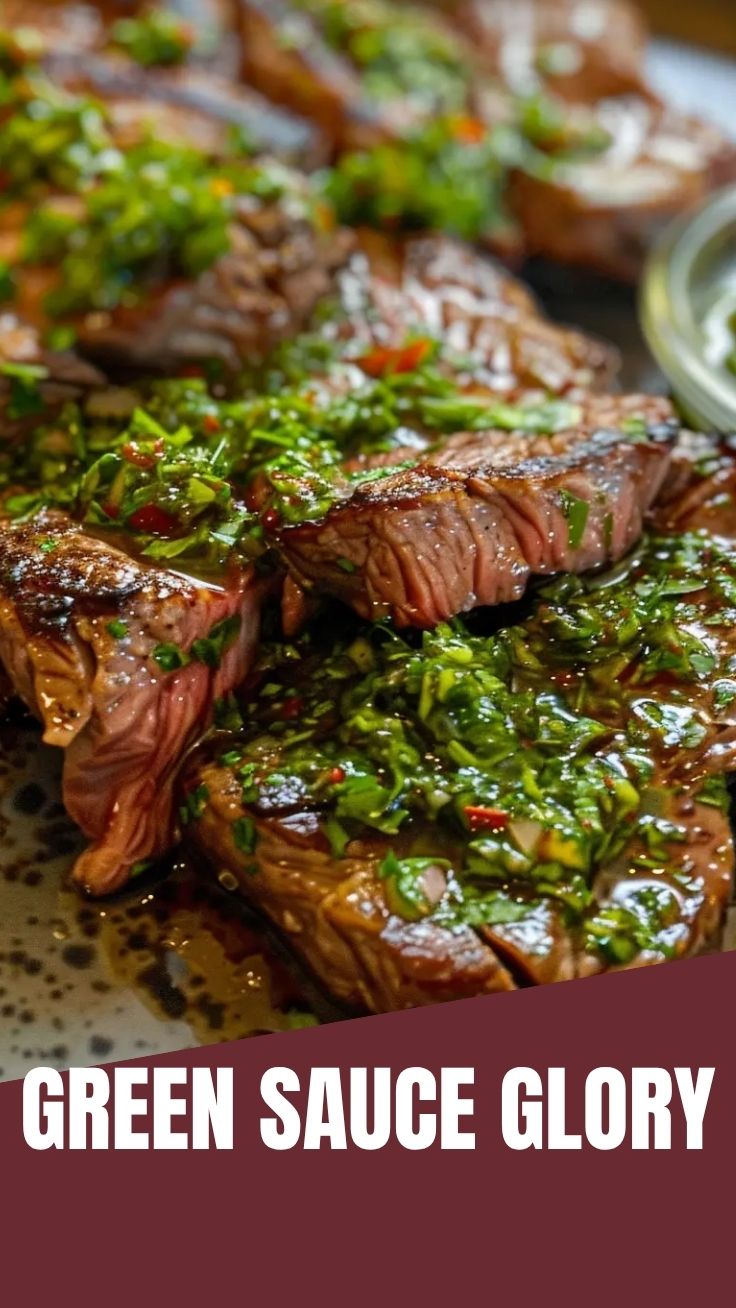
5. Serve. Arrange steak slices on a plate. Spoon generous amounts of chimichurri over the top. The fresh herbs will contrast beautifully with the crusty char. This is the moment your Chimichurri Steak comes to life — every bite balanced between savory beef and herbaceous sauce.
Pro tips: For thicker steaks (1.5 inches), finish in a 400°F oven after searing. Always let steak rest — skipping this step dries out the meat. If your chimichurri is too bitter, add a pinch of sugar or extra vinegar.
—
Nutritional Benefits & Advantages
Chimichurri Steak is not only delicious but also nutrient-dense. A 4-ounce serving of ribeye provides about 25 grams of high-quality protein, iron, zinc, and B vitamins — essential for energy and muscle repair. The chimichurri sauce contributes heart-healthy monounsaturated fats from olive oil, antioxidants from parsley and oregano (including vitamin C and flavonoids), and anti-inflammatory properties from garlic and red pepper. This dish fits well into low-carb, keto, paleo, and gluten-free diets. Its fresh ingredients also support digestion and immunity, making it a balanced meal when paired with roasted vegetables or a light salad.
—
Tips Variations & Cooking Advice
– Flavor twists: Add smoked paprika or cumin to the chimichurri for a smoky edge. Use mint or basil instead of oregano for a different herbal profile.
– Cooking methods: Grill over high heat (450°F) for 3–4 minutes per side; broil on high for 4–5 minutes per side; or sous-vide steak at 130°F for 1 hour, then sear.
– Portion changes: For a larger crowd, double the sauce and batch-cook steak in a hot pan (avoid overcrowding).
– Dietary adaptations: The dish is naturally gluten-free and dairy-free. For lower sodium, reduce salt in both steak and sauce; use low-sodium vinegar if needed.
—
Common Mistakes to Avoid
| Mistake | Solution |
|————-|————-|
| Overcooking steak | Use an instant-read thermometer; remove 5°F before target temp (carryover cooking adds heat) |
| Watery chimichurri | Pat herbs very dry after washing; don’t over-process in food processor |
| Bland sauce | Salt is critical; also taste before serving — add more vinegar or garlic if flat |
| Soggy crust | Ensure steak surface is completely dry before searing; never flip too early |
| Shredded steak when slicing | Always slice against the grain for tenderness |
—
Storage & Meal Prep Tips
Refrigeration: Store leftover steak and chimichurri separately in airtight containers for up to 3 days. The sauce will keep 4–5 days in the fridge — its flavor actually improves after 24 hours.
Freezing: Chimichurri freezes well for up to 3 months. Freeze in ice cube trays, then transfer to a bag. Thaw overnight in the fridge. Steak can be frozen cooked (slice first, wrap tightly) or raw (seasoned, vacuum-sealed) for 3 months.
Reheating: For steak, reheat gently in a skillet with a splash of water or broth over medium-low heat, covered, for 2–3 minutes. Avoid microwave — it toughens meat. Chimichurri should be served at room temperature; if chilled, let it sit out 20 minutes before using.
—
Conclusion
Chimichurri Steak proves that a handful of fresh ingredients and proper technique can produce a meal that’s both quick and memorable. Whether you’re a weekend griller or a weeknight cook, this recipe offers flexibility, bold flavor, and impressive nutritional value. Mastering this dish also means you’ll rely on a go-to Chimichurri sauce recipe that can be adapted for chicken, fish, or roasted vegetables. So fire up your pan, grab some parsley, and treat yourself to sizzling, herbaceous perfection. Share your results #ChimichurriSteak and let us know how you customized it — your twist might inspire another home cook.
—
FAQs
1. Can I use dried herbs for the chimichurri?
Yes, but reduce the quantity by one-third (dried herbs are more concentrated). Let the sauce sit 30 minutes to rehydrate. Fresh herbs deliver brighter flavor, though.
2. What’s the best steak cut for this recipe?
Ribeye and sirloin are excellent due to marbling. Flank or skirt steak work too — just slice thinner against the grain.
3. How do I make chimichurri less spicy?
Reduce or omit red pepper flakes. Use sweet paprika instead for color without heat.
4. Can I make the sauce ahead of time?
Absolutely. Make it up to 2 days in advance. Store in the fridge, but bring to room temperature before serving — cold olive oil will congeal.
5. Why is my chimichurri bitter?
Over-processing parsley in a food processor releases bitter compounds. Hand-chop or pulse only a few times. Also check that your olive oil isn’t rancid — use a fresh bottle.
Best way to grow tender Chimichurri Steak
Ingredients
Equipment
Method
- Pat the steak dry with paper towels, then rub with olive oil, salt, and pepper.
- Let it sit at room temperature for 15-20 minutes before cooking.
- Finely chop parsley, oregano, and minced garlic; combine them in a bowl.
- Stir in red wine vinegar, olive oil, red pepper flakes, and salt; mix well.
- Preheat a grill or cast-iron skillet over high heat.
- Sear the steak for 3-5 minutes per side for medium-rare, or until desired doneness is reached.
- Remove from heat and let rest for 5-10 minutes.
- Slice the steak against the grain into thin strips.
- Drizzle generously with chimichurri sauce before serving.