Why Your Weeknight Dinner Needs This Ultimate Beef Stew Recipe
Have you ever craved a meal that feels like a warm hug on a chilly evening? There’s something deeply satisfying about a bowl of Beef Stew that simmers slowly, filling your home with aromas of rich broth and tender meat. Preparing this classic comfort food at home isn’t just about saving money—it’s about controlling quality, customizing flavors, and creating memories around the dinner table. The beauty of a proper beef stew lies in its simplicity: humble ingredients transform into something extraordinary with time and patience. Whether you’re a seasoned cook or a beginner, mastering this dish will elevate your culinary confidence and impress anyone you serve it to.
Ingredients & Kitchen Tools
For the Beef Stew:
– 2 lbs beef chuck, cut into 1.5-inch cubes (better marbling = more tenderness)
– 3 tbsp all-purpose flour (for coating; substitute with cornstarch for gluten-free)
– 2 tbsp olive oil (for browning; avocado oil works too)
– 1 large onion, diced (yellow onion preferred for sweetness)
– 3 carrots, peeled and sliced into rounds
– 3 celery stalks, chopped
– 4 garlic cloves, minced
– 1 cup red wine (optional; use extra beef broth if skipping)
– 4 cups beef broth (low-sodium recommended for salt control)
– 2 tbsp tomato paste (adds depth and umami)
– 2 bay leaves
– 1 tsp dried thyme
– 1 lb Yukon Gold potatoes, cubed (hold shape better than russets)
– Salt and black pepper to taste
Essential Kitchen Tools:
– Dutch oven or heavy-bottomed pot (6-quart capacity)
– Sharp chef’s knife
– Cutting board
– Wooden spoon
– Measuring cups and spoons
– Ladle
Prep Time & Cooking Schedule
Total Time: 2 hours 30 minutes
Prep Time: 20 minutes
Cook Time: 2 hours 10 minutes
Plan your evening wisely: This Beef Stew requires minimal active work but demands patience. While the initial browning and sautéing take about 15 minutes, the bulk of time is hands-off simmering. Start your cooking by 5:00 PM for a 7:30 PM dinner. The stew actually tastes better the next day, so consider making it a day ahead for optimal flavor development.
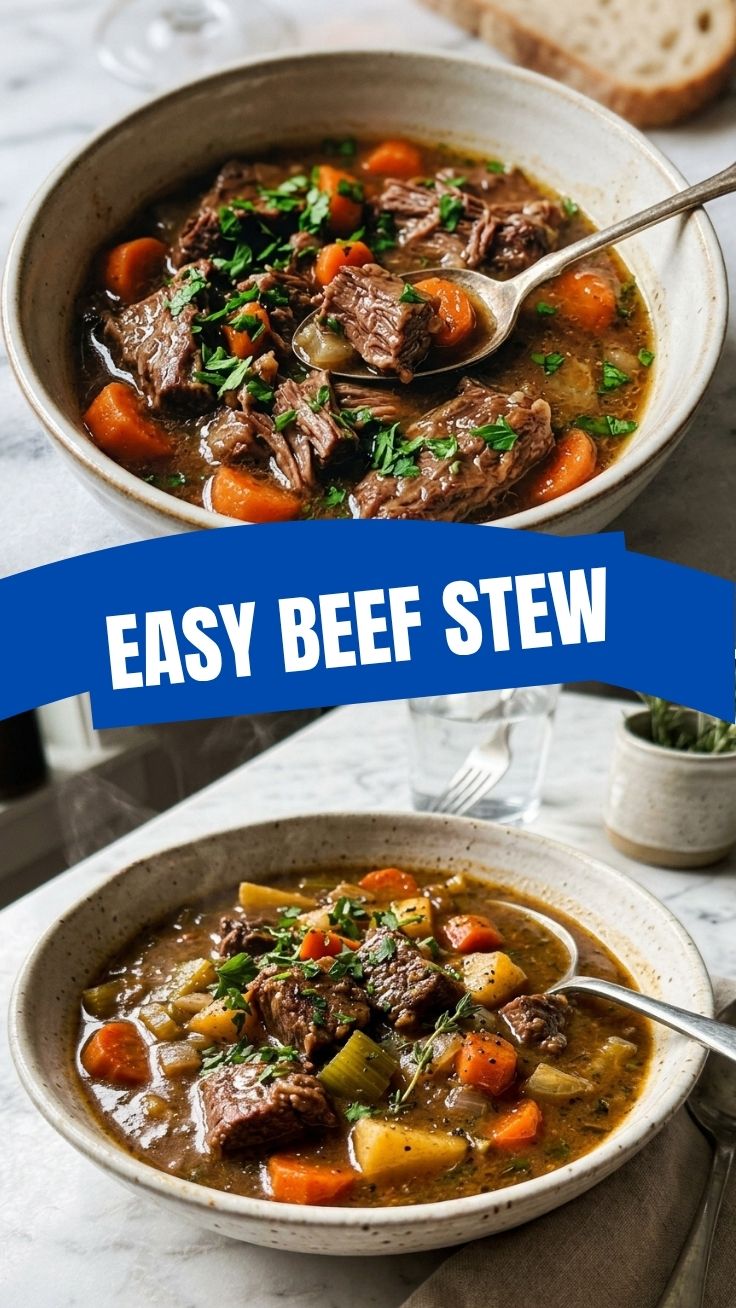
Step-by-Step Instructions
1. Prepare the Beef: Pat beef cubes dry with paper towels (moisture prevents browning). Season generously with salt and pepper. Dust with flour, tossing to coat evenly.
2. Brown in Batches: Heat olive oil in your Dutch oven over medium-high heat. Working in batches (don’t crowd the pot), sear beef cubes on all sides until deep golden brown, about 3-4 minutes per batch. Transfer to a plate.
3. Sauté Aromatics: Reduce heat to medium. Add onion, carrots, and celery. Cook, stirring occasionally, until softened, about 5 minutes. Add garlic and cook 30 seconds until fragrant.
4. Deglaze and Build Base: Pour in red wine (if using), scraping up browned bits from the bottom with your wooden spoon. Let wine reduce by half, about 2 minutes. Stir in tomato paste and cook 1 minute.
5. Simmer to Perfection: Return beef to the pot. Add broth, bay leaves, and thyme. Bring to a gentle boil, then reduce heat to low, cover, and simmer for 1 hour 30 minutes. The key to a successful Beef Stew is maintaining a gentle bubble—never a rolling boil, which toughens meat.
6. Add Potatoes: Stir in cubed potatoes. Continue simmering uncovered for 30-40 minutes, until potatoes are tender and liquid has thickened. Taste and adjust seasoning—you may need more salt depending on your broth.
7. Rest and Serve: Remove bay leaves. Let stew rest 10 minutes before serving. This allows flavors to meld and temperatures to settle. Garnish with fresh parsley if desired.
For perfectly tender meat, look for a fork-tender texture—the beef should pull apart easily without resistance. If your stew seems thin at the end, mix 1 tablespoon cornstarch with 2 tablespoons cold water and stir in; simmer 5 more minutes.
Nutritional Benefits & Advantages
Comfort food can be nutritious too! This Beef Stew provides a powerhouse of nutrients. Beef delivers high-quality protein (about 25g per serving), essential for muscle repair and satiety. It’s also rich in iron, zinc, and B vitamins, particularly B12, which supports energy metabolism and neurological function. The carrots and celery contribute beta-carotene (converted to vitamin A) and antioxidants that combat inflammation. Potatoes offer potassium, vitamin C, and fiber—especially if you keep the skins on. The slow cooking process makes these nutrients more bioavailable, meaning your body absorbs them more efficiently. Plus, bone broth (if used) adds collagen and minerals that support joint health and digestion. This is a complete one-pot meal perfect for active families or anyone needing balanced energy through cooler months.
Tips Variations & Cooking Advice
Flavor Variations:
– Add a tablespoon of balsamic vinegar or Worcestershire sauce for deeper umami
– Toss in 1 cup frozen peas during the last 5 minutes for pops of sweetness
– Stir in ½ cup heavy cream or coconut cream for a creamier texture
Ingredient Swaps:
– Replace beef with lamb or bison for a different protein profile
– Use sweet potatoes instead of Yukon Golds for more fiber and vitamin A
– Substitute beef broth with mushroom broth for a vegetarian base (add extra umami boosters like soy sauce)
Cooking Methods:
– Slow Cooker: After browning beef and sautéing aromatics (don’t skip this step!), transfer everything to a slow cooker. Cook on low 7-8 hours or high 4-5 hours. Add potatoes in the last 2 hours.
– Instant Pot: Use sauté function for browning, then pressure cook on high 35 minutes with natural release. Quick- release and add potatoes, then cook 8 minutes more.
– Dutch Oven (Oven): Brown on stovetop, then transfer covered pot to a 325°F oven for 2-2.5 hours.
Dietary Adaptations:
– Gluten-Free: Substitute flour with 2 tbsp arrowroot powder or use cornstarch slurry after cooking
– Dairy-Free: This recipe is naturally dairy-free, but skip butter-based finishes
– Keto/Low-Carb: Omit potatoes and add 2 cups cauliflower florets in the last 10 minutes; increase celery and mushrooms for bulk
Common Mistakes to Avoid
Mistake #1: Crowding the pot while browning beef. This creates steam instead of searing, resulting in gray, dry meat. Solution: Always brown in single layers with space between pieces.
Mistake #2: Overcooking vegetables from the start. Adding potatoes too early turns them mushy. Solution: Add potatoes only during the final 30-40 minutes of simmering.
Mistake #3: Using lean meat for the stew. Cuts like sirloin or round become tough and dry during long cooking. Solution: Always choose well-marbled chuck or brisket—the fat and connective tissue break down into gelatin, creating a silky, rich broth.
Mistake #4: Forgetting to season properly. Bland beef stew is the number one complaint. Solution: Salt each component progressively—beef, aromatics, broth—and taste before serving. A pinch of salt at the beginning is not enough.
Mistake #5: Rushing the simmer. Low and slow is non-negotiable. Solution: Maintain a gentle simmer (tiny bubbles, not a rolling boil). Covering the pot helps trap moisture and heat, but uncover during the last 30 minutes to thicken the broth.
Storage & Meal Prep Tips
Refrigeration: Cool stew completely (within 2 hours) before transferring to airtight containers. Store up to 4 days. The flavors actually deepen overnight, so day-old stew is often more delicious.
Freezing: Portion into freezer-safe bags or containers, leaving 1 inch of headspace for expansion. Freeze for up to 3 months. For best results, undercook potatoes slightly (they can become mealy when frozen and reheated). Thaw overnight in the refrigerator before reheating.
Reheating: Gentle reheating preserves texture. For stovetop, warm over medium-low heat, stirring occasionally, until steaming (about 10-15 minutes). For microwave, use 70% power in 1-minute intervals, stirring between. Add a splash of broth or water if stew has thickened too much during storage.
Meal Prep Tips: Prep ingredients ahead: cube beef and refrigerate (season right before cooking), chop vegetables and store in separate containers. Brown beef the night before and refrigerate; build the stew the next day. The stew freezes beautifully in individual portions for quick lunches or dinners.
Conclusion
There you have it—a foolproof guide to creating a memorable Beef Stew that warms both body and soul. By following these detailed steps, you’ve learned how to coax maximum flavor from simple ingredients, avoid common pitfalls, and customize the recipe to your preferences. Whether you’re batch-cooking for busy weeknights, impressing dinner guests, or simply cozying up on a rainy Sunday, this dish delivers consistent, satisfying results every time. We’d love to hear about your experience—share your stew photos and variations in the comments below. New to the site? Check out our Beef Stew page for even more tips, and don’t miss this comforting slow-cooked version for busy days. Happy simmering!
FAQs
Q: Can I make this beef stew without wine?
A: Absolutely! Replace wine with an additional 1 cup of beef broth plus 1 tablespoon of Worcestershire sauce or balsamic vinegar to maintain depth.
Q: Why is my beef still tough after 2 hours?
A: The cut of meat matters most. Chuck should be tender after 2 hours; if not, the heat may have been too high (toughening proteins) or your beef was cut from a leaner section. Simmer longer—up to another 30–45 minutes—until fork-tender.
Q: How can I thicken my beef stew without flour?
A: Use a cornstarch slurry (1 tbsp cornstarch + 2 tbsp cold water), or mash a few cooked potatoes and stir them back in for natural body. You can also simmer uncovered for a longer time to reduce liquid.
Q: Can I use frozen vegetables?
A: Yes, but add them later in cooking to avoid mushiness. Frozen carrots and peas can be added during the last 15–20 minutes. Frozen potatoes often become too soft, so stick with fresh if possible.
Q: Why does my stew taste bland?
A: Undersalting is the most common culprit, especially if using low-sodium broth. Add salt in layers throughout cooking. Also consider finishing with a splash of vinegar or lemon juice to brighten flavors, plus a pinch of black pepper and herbs.
Proven Way to Grow 3 Beef Stew
Ingredients
Equipment
Method
- Pat the beef dry with paper towels, then toss it with flour, salt, and pepper in a large bowl to coat.
- Heat olive oil in a large Dutch oven or heavy-bottomed pot over medium-high heat.
- Sear the beef in batches until browned on all sides, then remove the beef and set aside.
- Add onion, carrots, and celery to the pot and cook until softened, about 5-7 minutes.
- Stir in minced garlic and cook for another minute until fragrant.
- Return the beef to the pot, then pour in beef broth, scraping up any browned bits from the bottom.
- Stir in tomato paste, Worcestershire sauce, dried thyme, and bay leaves.
- Bring the stew to a simmer, then reduce heat to low, cover, and cook for 1.5 to 2 hours, or until the beef is tender.
- Add diced potatoes to the stew and continue to cook for 20-30 minutes, or until the potatoes are tender.
- Remove the bay leaves before serving.
- Taste and adjust seasonings as needed.