Why Your Homemade Steak Fajitas Will Outshine Any Restaurant Version
Have you ever wondered why restaurant Steak Fajitas always arrive at your table sizzling, aromatic, and impossibly tender—yet when you try to replicate them at home, the results fall flat? The secret isn’t a special pan or a secret ingredient. It’s understanding the science of heat, the art of marination, and the patience of proper resting. Preparing this iconic Tex-Mex dish at home isn’t just about saving money; it’s about controlling quality, customizing spice levels, and creating that perfect char that no delivery service can replicate. With the right techniques, you can produce restaurant-quality Steak Fajitas that taste even better than takeout—and this guide will show you exactly how.
Ingredients & Kitchen Tools
Essential Ingredients
– 1½ lbs flank steak or skirt steak – The best cuts for fajitas due to their rich beefy flavor; skirt steak is more traditional but flank works beautifully
– 3 bell peppers (mix of red, yellow, green) – For sweetness, color, and texture variety
– 1 large yellow onion – Sliced into half-moons for even caramelization
– 3 cloves garlic – Minced fresh; jarred garlic lacks pungency
– ¼ cup fresh lime juice – About 2 limes; key for tenderizing and flavor
– ¼ cup olive oil – For the marinade and cooking
– 2 tsp chili powder – Use ancho chili for deeper flavor
– 1 tsp cumin – Essential for authentic Tex-Mex aroma
– 1 tsp smoked paprika – Adds subtle smokiness
– Salt and black pepper – Adjust to taste
– Flour or corn tortillas – Warm them before serving
Optional Substitutions
– Soy sauce (1 tbsp) – Adds umami depth to the marinade
– Chipotle powder – For smoky heat instead of regular chili powder
– Gluten-free tamari – Replace soy sauce if needed
– Avocado oil – Higher smoke point for searing
Kitchen Tools
– Cast iron skillet or heavy-bottomed pan (essential for that sizzle)
– Sharp chef’s knife
– Cutting board (preferably large)
– Ziplock bag or glass bowl for marinating
– Tongs for flipping meat
– Meat thermometer (optional but recommended)
Prep Time & Cooking Schedule
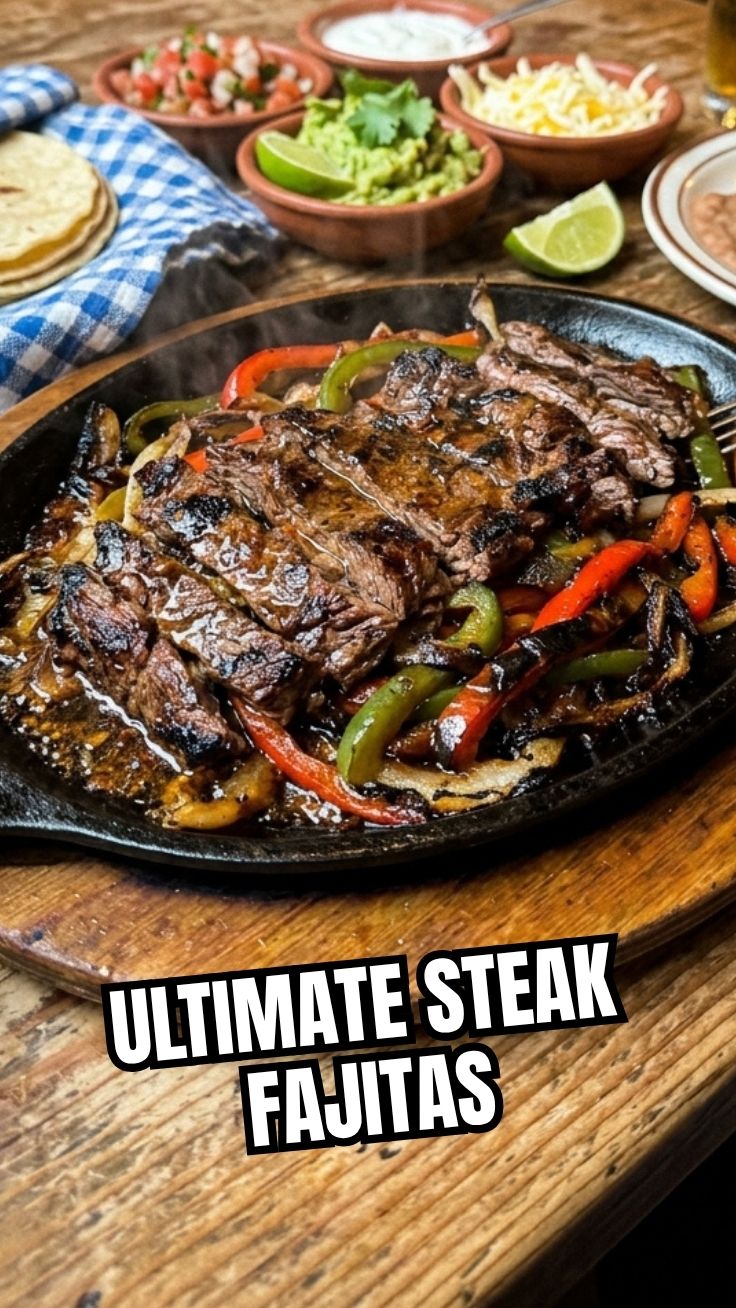
Managing your time is crucial for perfect fajitas. Here’s how to plan:
– Marinating time: 30 minutes minimum (2 hours is ideal for deeper flavor penetration)
– Prep time: 15 minutes for slicing vegetables and mixing marinade
– Cook time: 12–15 minutes total (8 minutes for steak, 5–7 for vegetables)
– Resting time: 10 minutes after cooking steak (non-negotiable for juiciness)
– Total active time: About 30 minutes
Pro scheduling tip: Start marinating the steak first. While it sits, prep your vegetables and warm the tortillas. This sequential approach prevents last-minute rushing and ensures every component is ready simultaneously.
Step-by-Step Instructions
1. Prepare the Marinade
In a medium bowl, whisk together lime juice, olive oil, minced garlic, chili powder, cumin, smoked paprika, 1 tsp salt, and ½ tsp black pepper. If using soy sauce, add it here. This creates a balanced acidic marinade that tenderizes the beef without breaking down the muscle fibers too quickly.
2. Marinate the Steak
Place the flank steak in a ziplock bag or glass dish. Pour the marinade over, seal, and massage to coat evenly. Refrigerate for 30 minutes to 2 hours. Avoid over-marinating (beyond 4 hours) as the acid can make the meat mushy.
3. Prepare the Vegetables
While the steak marinates, slice the bell peppers into ¼-inch strips and the onion into thin half-moons. For even cooking, keep pepper slices uniform in thickness.
4. Sear the Steak
Remove steak from marinade and pat dry with paper towels. Heat a cast iron skillet over high heat until smoking (about 2–3 minutes). Add 1 tbsp oil, then place steak in pan. Sear for 4 minutes per side for medium-rare (internal temp 130°F) or 5 minutes per side for medium (140°F). Do not overcrowd the pan—cook in batches if needed.
Temperature control tip: If the pan is not hot enough, the steak will steam instead of sear, resulting in gray, tough meat. The sizzle should be immediate and aggressive.
5. Rest the Steak
Transfer steak to a cutting board and tent loosely with foil. Rest for 10 minutes. This allows juices to redistribute, preventing a dry, messy cutting board. During this time, you’ll cook the vegetables.
6. Cook the Vegetables
Reduce skillet heat to medium-high. Add 1 tbsp oil, then the sliced onions. Cook for 2 minutes, stirring occasionally, until translucent. Add peppers and continue cooking for 3–4 minutes, until they soften but retain some crunch. Season with a pinch of salt and cumin.
7. Slice and Assemble
Slice the rested steak against the grain into thin strips (about ¼-inch thick). Cutting against the grain shortens muscle fibers, making each bite tender. Combine with vegetables and serve immediately over warm tortillas.
Note on Mexican steak recipes: Many of these techniques are also used in traditional Mexican steak recipes, which emphasize bold marinades, high-heat searing, and fresh citrus—all of which elevate simple ingredients into a memorable meal.
Nutritional Benefits & Advantages
Steak fajitas offer a surprisingly balanced meal profile when prepared thoughtfully:
– High-quality protein: Flank steak provides about 25g of protein per 3-ounce serving, supporting muscle repair and satiety
– Rich in iron and zinc: Crucial for oxygen transport and immune function
– Vitamin C from bell peppers: One red bell pepper contains more vitamin C than an orange
– Antioxidants: Lime juice and chili peppers contain flavonoids that reduce inflammation
– Moderate fat content: When using lean flank steak and minimal oil, this dish can fit into low-carb or keto diets
Dietary advantage: By serving on lettuce wraps instead of tortillas, you can reduce carbohydrates significantly while maintaining the flavor punch.
Tips, Variations & Cooking Advice
Flavor Variations
– Spicy version: Add 1 tsp cayenne pepper or 2 minced chipotles in adobo to the marinade
– Citrus burst: Replace half the lime juice with orange juice for milder acidity
– Herb infusion: Add fresh cilantro and oregano stems to the marinade
Alternative Cooking Methods
– Grill method: Cook steak over direct high heat on a gas or charcoal grill for 4–5 minutes per side. Grill vegetables in a basket.
– Sheet pan method: Slice steak (against grain) raw into strips, toss with marinade and vegetables, spread on baking sheet, and broil at 500°F for 8–10 minutes.
Portion Changes & Dietary Adaptations
– Gluten-free: Use corn tortillas and ensure soy sauce is replaced with tamari or coconut aminos
– Dairy-free: This recipe is naturally dairy-free; avoid cheese toppings
– Lower sodium: Use low-sodium soy sauce and reduce added salt
– Vegetarian option: Replace steak with portobello mushrooms or extra-firm tofu, marinated similarly
Common Mistakes to Avoid
1. Skipping the dry step – Not patting the steak dry before searing prevents the Maillard reaction, resulting in a steamed, gray surface instead of a flavorful crust.
2. Overcrowding the pan – Adding too much meat at once drops the pan temperature, causing steaming. Cook in batches if necessary.
3. Slicing too soon – Cutting steak immediately after cooking releases precious juices onto the cutting board instead of staying inside the meat.
4. Undercooking vegetables – Peppers should still have a slight crunch; mushy veggies lose their bright flavor and texture contrast.
5. Ignoring the grain – Slicing with the grain results in long, chewy strands. Always cut perpendicular to muscle fibers.
Storage & Meal Prep Tips
Refrigeration
– Store leftover steak and vegetables separately from tortillas to prevent sogginess
– Use airtight containers; fajita components stay fresh for 3–4 days
– Tortillas can be stored at room temperature for 2 days or frozen for 1 month
Freezing
– Freeze cooked steak strips in a single layer on a baking sheet, then transfer to a freezer bag. This prevents clumping.
– Do not freeze vegetables—they become waterlogged upon thawing
– Frozen steak maintains quality for 2–3 months
Reheating
– Best method: Reheat steak and vegetables in a hot cast iron skillet with 1 tbsp water for 1–2 minutes to revive texture
– Microwave: Use 50% power for 1-minute intervals to avoid rubbery meat
– Avoid: Boiling or steaming, which makes steak tough
Conclusion
Perfecting Steak Fajitas at home is entirely achievable when you understand the key principles: a well-balanced marinade, screaming hot heat, and careful resting before slicing. This recipe delivers the same sizzle and deep flavor you crave from your favorite restaurant, but with the added satisfaction of knowing exactly what goes into every bite. By mastering the techniques here, you’ll also gain confidence for adapting other Mexican steak recipes that rely on similar methods. The beauty of this dish is its versatility—you can adjust the heat, swap proteins, or even make it vegetarian without losing its bold character. So fire up that skillet, gather your ingredients, and treat yourself to fajitas that will have everyone asking for seconds. If you try this recipe, share your results or tag your photos—we love seeing how your fajitas turn out!
FAQs
1. Can I use a different cut of beef for fajitas?
Absolutely. While flank steak and skirt steak are traditional, sirloin flap meat or tri-tip also work well. Avoid tender cuts like ribeye—they’re too soft and won’t develop the same crust.
2. How do I prevent my steak from becoming tough?
Two critical factors: don’t overcook (medium-rare to medium is best) and slice against the grain. Marinating also helps, but even 15 minutes makes a difference.
3. Can I make this recipe without a cast iron skillet?
Yes. Use a heavy stainless steel pan, carbon steel wok, or even a nonstick skillet. The key is achieving high, even heat. Avoid thin pans that scorch unevenly.
4. Why are my peppers and onions burning before they soften?
Your heat is too high or you’re not stirring enough. Reduce to medium-high and add a splash of water or broth to create steam. Cover briefly to soften, then uncover to evaporate liquid.
5. How long can I marinate the steak overnight?
The marinade contains acid from lime juice, which can break down protein structure over time. Limit marinating to 4 hours maximum if using citrus. For overnight prep, use an oil-based marinade without acid and add lime juice just before cooking.
Proven Way to Grow 3 Steak Fajitas Steak Fajitas
Ingredients
Equipment
Method
- Slice the flank steak against the grain into thin strips. In a bowl, combine lime juice, chili powder, cumin, paprika, garlic powder, onion powder, salt, and black pepper. Add the steak strips to the marinade, ensuring they are well coated, then cover and refrigerate for at least 30 minutes, or up to 2 hours.
- Heat olive oil in a large skillet or cast-iron pan over medium-high heat. Once hot, add the marinated steak in a single layer, cooking for 2-3 minutes per side until seared and cooked to your desired doneness. Remove the steak from the pan and set aside, covering to keep warm.
- In the same skillet, add the sliced bell peppers and onion. Sauté for 5-7 minutes, stirring occasionally, until vegetables are tender-crisp. Return the cooked steak to the skillet with the vegetables and toss to combine, heating through for about 1 minute.
- Serve the steak fajitas immediately with warm tortillas, sour cream, and salsa, or your favorite toppings.