The Ultimate Classic Potato Salad: A Creamy, Tangy Side Dish for Every Occasion
Have you ever bitten into a bland, dry potato salad at a picnic and wondered why such a beloved side dish can fall so flat? The secret to a truly memorable Potato Salad lies not just in the ingredients but in the technique—achieving the perfect balance of creamy, tangy, and tender textures. Preparing this quintessential comfort food at home not only lets you control the quality of every component but also saves you money and guarantees a crowd-pleasing result every time. Whether you are a seasoned cook or a beginner, mastering this recipe will elevate your summer gatherings and holiday feasts. And if you love exploring different variations, you’ll find that Potato Salad Recipes from around the world offer endless inspiration—from German-style with vinegar and bacon to Southern versions loaded with eggs and mustard. In this data‑driven guide, we’ll walk through every step to ensure your homemade potato salad turns out perfectly creamy, never mushy, and bursting with flavor.
—
Ingredients & Kitchen Tools (H2)
Ingredients
– Russet or Yukon Gold potatoes (2 lbs) – Russets break down slightly for creaminess, while Yukon Golds hold shape better. Choose based on your texture preference.
– Large eggs (4) – Hard-boiled and chopped; they add richness and protein.
– Mayonnaise (1 cup) – Use full‑fat for best texture; light mayo can make the salad watery.
– Yellow mustard (2 tbsp) – Provides tang and color; Dijon works too.
– Apple cider vinegar (1 tbsp) – Brightens flavors; white vinegar or lemon juice are alternatives.
– Celery (2 stalks, diced) – Adds crunch; substitute with diced cucumber for freshness.
– Red onion (½ cup, finely diced) – Soak in cold water 10 minutes to mellow sharpness.
– Fresh dill (2 tbsp, chopped) – Classic herb; parsley or chives work similarly.
– Salt and black pepper – To taste; season generously.
– Paprika (optional, for garnish) – Adds color and subtle smokiness.
Kitchen Tools
– Large pot for boiling potatoes
– Colander
– Mixing bowls (at least two)
– Sharp knife and cutting board
– Potato masher (or fork) for partial mashing
– Measuring cups and spoons
– Serving bowl
Optional Substitutions
– Mayonnaise swap: Greek yogurt for a lighter, tangier version (use ½ cup yogurt + ½ cup mayo).
– Egg‑free: Omit eggs and add a handful of chopped pickles for crunch.
– Vegan: Use vegan mayo and omit eggs; add chickpeas for protein.
—
Prep Time & Cooking Schedule (H2)
– Prep time: 15 minutes
– Cook time: 20–25 minutes (boiling potatoes and eggs)
– Chill time: 2 hours minimum (overnight recommended for deeper flavor)
– Total time: ~3 hours
Timing Context
Begin cooking the potatoes and eggs simultaneously. While they boil, chop the celery and onion. After draining, let potatoes steam dry for 5 minutes (this prevents a watery salad). Combine all ingredients while the potatoes are still warm to help them absorb dressing. Allow the salad to rest in the refrigerator for at least 2 hours—the flavors meld beautifully overnight. This dish is perfect for making a day ahead of your event.
—
Step-by-Step Instructions (H2)
1. Boil the Potatoes – Place whole, unpeeled potatoes in a large pot and cover with cold salted water by 1 inch. Bring to a boil, then reduce to a gentle simmer. Cook for 15–20 minutes until fork‑tender (a knife slides in easily but potatoes hold their shape). Tip: Starting with cold water ensures even cooking from the inside out.
2. Boil the Eggs – In a separate saucepan, cover eggs with cold water. Bring to a rolling boil, then cover and remove from heat. Let stand 9–12 minutes for hard‑boiled. Transfer to an ice bath to stop cooking.
3. Prepare Potatoes – Drain potatoes and let them cool just enough to handle. While still warm, peel off skins (optional) and cut into 1‑inch cubes. Place in a large mixing bowl.
4. Partial Mash – Use a potato masher to gently mash about one‑third of the potatoes. This creates a creamy base while leaving chunky pieces intact. Texture cue: Aim for a rustic, not smooth, consistency.
5. Mix the Dressing – In a small bowl, whisk together mayonnaise, mustard, vinegar, ½ tsp salt, and ¼ tsp black pepper. Adjust seasoning to taste—the dressing should be tangy and slightly peppery.
6. Assemble the Salad – Pour the dressing over the warm potatoes. Add diced celery, red onion, and chopped dill. Peel and chop the hard‑boiled eggs, then fold them in gently. Pro tip: Fold, don’t stir, to avoid breaking up the potatoes.
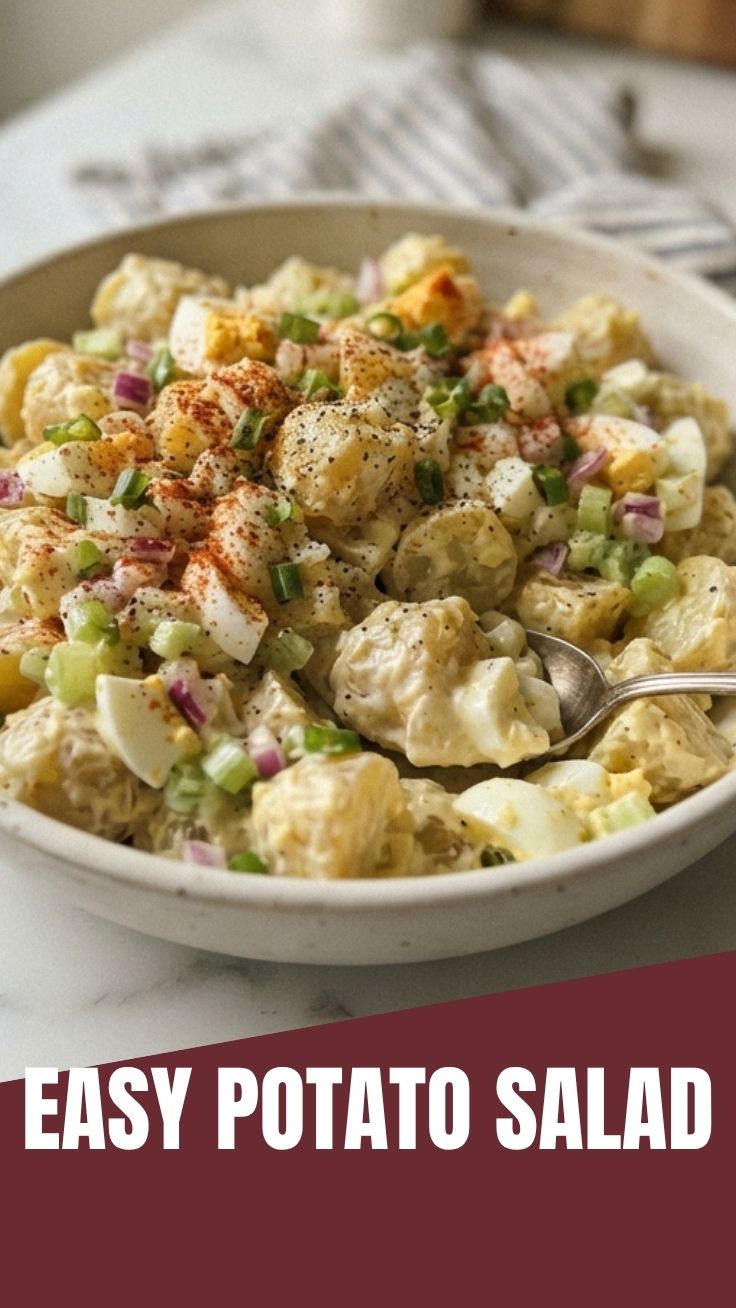
7. Chill and Serve – Cover the bowl and refrigerate for at least 2 hours. Before serving, taste and adjust salt/pepper—cold dishes require a bit more seasoning. Sprinkle with paprika for garnish. This classic Potato Salad recipe pairs wonderfully with grilled meats, and you can explore many Potato Salad Recipes online for ideas to customize it further.
—
Nutritional Benefits & Advantages (H2)
– Potatoes are an excellent source of vitamin C, potassium, and fiber (especially with skin on). They also contain resistant starch when cooled, which supports gut health.
– Eggs provide high‑quality protein, choline for brain health, and lutein for eye health.
– Celery and onion add antioxidants and anti‑inflammatory compounds with very few calories.
– Mayonnaise (in moderation) offers healthy fats that help absorb fat‑soluble vitamins from other ingredients.
– One serving (about ¾ cup) provides roughly 250–300 calories, 18g fat, 22g carbs, and 7g protein, making it a satisfying side that provides sustained energy.
—
Tips, Variations & Cooking Advice (H2)
– Flavor Variations: Add crumbled bacon, chopped pickles, or a teaspoon of pickle juice for extra tang. For a smoky twist, stir in ½ tsp smoked paprika.
– Ingredient Swaps: Use sweet potatoes for a healthier, sweeter take (reduce cooking time slightly). Replace mayonnaise with ranch dressing for a herby spin.
– Cooking Methods: Roast the potatoes instead of boiling for a richer, caramelized flavor. Toss cubed raw potatoes with oil and roast at 400°F (200°C) for 25 minutes, then assemble.
– Dietary Adaptations: Gluten‑free naturally (always check mustard labels). For dairy‑free, ensure your mayonnaise contains no milk. Vegan version uses vegan mayo and omits eggs.
– Portion Changes: Double the recipe for a crowd—simply use a larger pot. If halving, reduce cooking time slightly and check potatoes early.
—
Common Mistakes to Avoid (H2)
– Overcooking Potatoes – They become waterlogged and mushy. Test with a fork 2 minutes before the suggested time. Solution: Cook whole, unpeeled potatoes and start checking at 15 minutes.
– Dressing Too Thin – Using hot potatoes with excess water dilutes the sauce. Solution: Let potatoes steam dry in the colander for 5 minutes after draining.
– Underseasoning – Cold potatoes mute flavors. Solution: Add a little extra salt and pepper after chilling, and taste before serving.
– Adding Eggs Too Early – They can break down into the dressing if mixed aggressively. Solution: Fold in eggs last, very gently.
– Skipping the Chill Time – Serving warm results in a loose, unappetizing salad. Solution: Always refrigerate at least 2 hours; overnight is best.
—
Storage & Meal Prep Tips (H2)
– Refrigeration: Store in an airtight container for up to 4 days. The flavor improves after 24 hours.
– Freezing: Not recommended—mayonnaise‑based salads separate and become watery upon thawing. If you must freeze (e.g., for a freezer meal), omit the eggs and mayo, then add fresh after thawing.
– Reheating: This salad is served cold. If you prefer it at room temperature, let it sit out for 15–20 minutes before serving. Do not microwave, as heat will cause the mayonnaise to break.
– Meal Prep: Cut and boil potatoes up to 2 days ahead; store cooked, unpeeled potatoes in the fridge. Assemble the salad up to one day before your event.
—
Conclusion (H2)
Mastering the perfect Potato Salad is all about balancing creaminess, crunch, and tang—and now you have every tool and tip to do it consistently. By following the precise step‑by‑step instructions, avoiding common pitfalls, and experimenting with variations, you can create a side dish that outshines any store‑bought version. Whether you are planning a backyard barbecue, a holiday potluck, or a simple weeknight dinner, this recipe delivers reliable, delicious results. And remember, the world of Potato Salad Recipes is vast—try adding roasted red peppers, fresh herbs, or even a dollop of sour cream to make it your own. I encourage you to give this recipe a try, share your successful results with friends, and explore our other homestyle cooking guides. Happy cooking!
—
FAQs (H2)
1. Can I use red potatoes or other varieties?
Yes! Red potatoes hold their shape well and have a waxy texture, making them ideal if you prefer a firmer salad. Yukon Golds are the goldilocks choice—creamy yet sturdy.
2. How do I avoid a bland potato salad?
Season generously at every stage: salt the boiling water, add enough mustard and vinegar to the dressing, and taste after chilling. A pinch of sugar can also balance the acidity.
3. Can I make this recipe dairy‑free or vegan?
Absolutely. Substitute mayonnaise with a vegan mayo (e.g., made from aquafaba) and omit the eggs. Add a can of drained chickpeas or chopped olives for extra texture and protein.
4. Why did my salad become watery after refrigeration?
Excess moisture from the potatoes or from not draining them thoroughly before mixing is the culprit. To fix a watery salad, stir in an extra tablespoon of mayonnaise or a handful of crushed potato chips just before serving.
5. How long does potato salad last at room temperature?
Food safety guidelines recommend discarding any potato salad left out for more than 2 hours (1 hour if the temperature is above 90°F/32°C). Always keep it chilled until serving time and return leftovers promptly to the refrigerator.
Quick way to grow Potato Salad for a Crowd
Ingredients
Equipment
Method
- Wash and peel the potatoes, then cut them into 1-inch cubes.
- Place the potato cubes in a large pot and cover with cold water. Add a generous pinch of salt to the water.
- Bring the water to a boil and cook the potatoes for 15-20 minutes, or until fork-tender.
- Drain the potatoes thoroughly and let them cool for a few minutes.
- In a large bowl, combine the cooled potatoes, chopped celery, red onion, and hard-boiled eggs.
- In a separate small bowl, whisk together the mayonnaise, Dijon mustard, apple cider vinegar, fresh dill, salt, and black pepper.
- Pour the dressing over the potato mixture and gently fold until everything is well combined.
- Cover the bowl and refrigerate for at least 30 minutes before serving to allow the flavors to meld.