Healthy Overnight Oats Recipe: A Simple & Nutritious Breakfast
Have you ever woken up craving a delicious, ready-to-eat breakfast that requires zero morning effort? If so, you’re in for a treat with these creamy, customizable Overnight Oats. Preparing this dish at home not only saves you time but also lets you control every ingredient—no added sugars, preservatives, or artificial flavors. Whether you’re a busy professional, a parent on the go, or simply someone who loves a wholesome start to the day, this no-cook method transforms simple oats into a rich, pudding-like meal. And if you’re looking for endless inspiration, exploring different overnight oats recipes can keep your breakfast rotation exciting and nutrient-dense. Within the first few bites, you’ll understand why this make-ahead breakfast has become a global phenomenon.
Ingredients & Kitchen Tools
Ingredients:
– Rolled oats – ½ cup (use certified gluten-free if needed). Old-fashioned oats work best; instant oats become mushy.
– Milk – ½ cup (dairy, almond, oat, or soy). For extra creaminess, use full-fat coconut milk.
– Yogurt – ¼ cup Greek yogurt for protein. Substitute with dairy-free yogurt for vegan version.
– Chia seeds – 1 tablespoon (adds thickness and omega-3s). Can be replaced with ground flaxseed.
– Sweetener – 1–2 teaspoons maple syrup, honey, or agave. Optional for savory versions.
– Vanilla extract – ½ teaspoon (or cinnamon, cocoa powder, etc.).
– Pinch of salt – Balances sweetness.
– Toppings – Fresh berries, sliced banana, nuts, seeds, nut butter, or shredded coconut.
Kitchen Tools:
– Mason jar or airtight container – 8–12 oz capacity with lid.
– Measuring cups and spoons – For precision.
– Spoon or small whisk – To mix ingredients thoroughly.
– Cutting board and knife – For prepping toppings.
Prep Time & Cooking Schedule
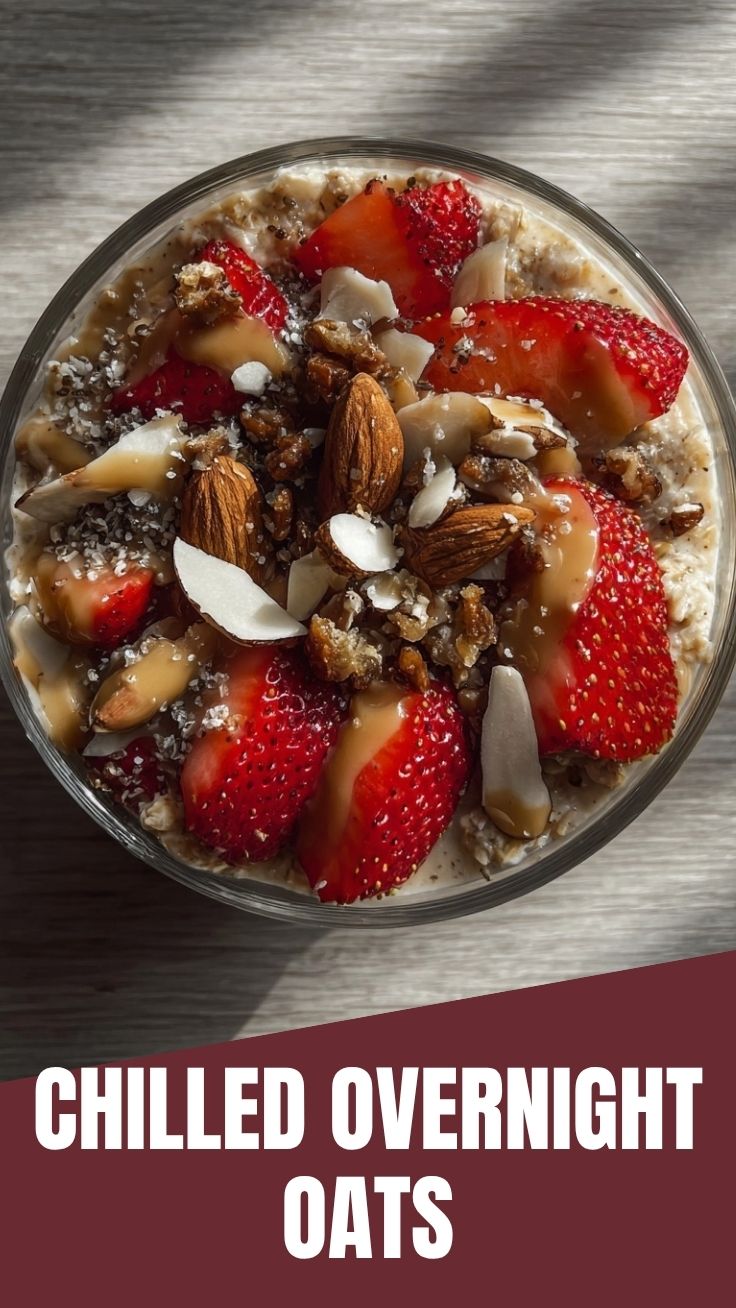
Prep time: 5 minutes | Resting time: 4 hours minimum (overnight best) | Total wait: 8–12 hours for optimal texture.
The beauty of this recipe is that you prepare it the night before. Combine all base ingredients in your jar, stir well, seal, and refrigerate. While you sleep, the oats absorb the liquid, chia seeds gel, and flavors meld. In the morning, simply stir, add toppings, and enjoy. If you’re short on time, a 4-hour soak still yields acceptable results, but overnight gives the creamiest consistency.
Step-by-Step Instructions
1. Select your jar – Choose a clean mason jar or container with a tight-fitting lid. Leave at least an inch of headspace for expansion.
2. Add dry ingredients – Pour in ½ cup rolled oats, 1 tablespoon chia seeds, and a pinch of salt. Shake gently to combine.
3. Pour in liquids – Add ½ cup milk, ¼ cup Greek yogurt, ½ teaspoon vanilla extract, and your preferred sweetener.
4. Mix thoroughly – Use a spoon to stir until all oats are submerged and no dry pockets remain. For even distribution, shake the jar with the lid closed.
5. Refrigerate – Place the jar in the fridge for at least 4 hours, ideally overnight (8–12 hours).
6. Morning assembly – Remove from fridge, stir well. If too thick, add a splash of milk. Top with fresh fruit, nuts, seeds, or a drizzle of nut butter.
7. Adjust texture – For a thinner consistency, add more milk before serving. For thicker, reduce liquid slightly next time.
> Pro tip: When preparing these Overnight Oats, let the jar sit at room temperature for 5 minutes before eating if you prefer a less chilly breakfast. Also, if you’re experimenting with new flavors, many overnight oats recipes recommend adding spices or extracts at the mixing stage for deeper infusion.
Nutritional Benefits & Advantages
Overnight oats are a powerhouse of nutrition. A single serving (using the base ingredients above) provides approximately:
– Calories: 300–350 (depending on milk and yogurt choice)
– Protein: 15–18g from oats, Greek yogurt, and chia seeds
– Fiber: 8–10g, supporting digestive health and satiety
– Healthy fats: Omega-3s from chia seeds
– Calcium & Vitamin D: From milk (or fortified alternatives)
The slow absorption of complex carbohydrates from oats provides steady energy without blood sugar spikes. Chia seeds add antioxidants and help keep you full until lunch. This meal is also naturally gluten-free when using certified oats, and can be made vegan by swapping yogurt and milk. Moreover, the no-cook method preserves heat-sensitive nutrients like B vitamins.
Tips Variations & Cooking Advice
– Flavor variations: Swap vanilla for almond extract, add cocoa powder for chocolate version, or mix in pumpkin puree and pumpkin spice for fall vibes.
– Ingredient swaps: Use oat milk for extra creaminess; coconut yogurt for tropical twist; or protein powder (mix with a little milk first to avoid clumps).
– Dietary adaptations:
– Gluten-free: Use certified gluten-free rolled oats.
– Vegan: Use plant-based milk and yogurt, and a liquid sweetener.
– Low-sugar: Skip sweetener and use mashed banana or unsweetened applesauce.
– Portion changes: Double or halve the recipe easily. For meal prep, make 4–5 jars at once for the week.
– Warm method: If you prefer a hot breakfast, microwave the soaked oats for 1–2 minutes, stirring halfway. Add extra liquid to prevent drying.
Common Mistakes to Avoid
– Using instant oats: They turn into a mushy paste. Stick with old-fashioned rolled oats.
– Not enough liquid: The ratio should be roughly 1:1 oats to liquid, plus yogurt. Too dry? Add a splash of milk before serving.
– Skipping the stir before refrigeration: Dry oats on top won’t hydrate evenly. Mix thoroughly.
– Over-sweetening: Flavors intensify overnight. Start with less sweetener than you think.
– Forgetting headspace: Oats and chia seeds expand. Leave room to avoid spillage when shaking.
– Using too many chia seeds: More than 1.5 tablespoons per ½ cup oats can create a gelatinous, unappealing texture.
Storage & Meal Prep Tips
– Refrigeration: Keep sealed jars in the fridge for up to 5 days. Stir before each serving and add toppings fresh.
– Freezing: You can freeze the base (without toppings) in airtight containers for up to 3 months. Thaw overnight in the fridge, then stir and add toppings.
– Reheating: While overnight oats are meant to be served cold, you can warm them in the microwave (30–45 seconds) or on the stovetop with a splash of milk. Stir frequently to avoid sticking.
– Meal prep: Prepare multiple jars on Sunday for grab-and-go breakfasts all week. Keep toppings separate until serving to maintain crunch.
Conclusion
Mastering the art of Overnight Oats is a game-changer for anyone seeking a nourishing, no-fuss breakfast. With this guide, you now have the tools to create endless variations—from classic berry to decadent chocolate—all while controlling nutrition and flavor. Remember that trying different overnight oats recipes can keep your morning routine exciting and aligned with your dietary goals. Give this recipe a try tonight, and wake up to a creamy, satisfying meal that fuels your day. Share your favorite topping combinations in the comments below—we’d love to hear your creations!
FAQs
1. Can I use steel-cut oats instead of rolled oats?
Steel-cut oats require much longer soaking time (at least 24 hours) and remain chewy. Rolled oats are recommended for the best texture.
2. Why are my overnight oats too watery?
You may have used too much liquid or not enough chia seeds. Try reducing milk by 2 tablespoons or adding an extra teaspoon of chia. Also, check that you refrigerated for at least 4 hours.
3. How can I make overnight oats without yogurt?
Simply omit the yogurt and increase the milk by ¼ cup. The chia seeds still provide thickness. For a tangy flavor, add a squeeze of lemon juice.
4. Can I add fruit before refrigerating?
Yes, but softer fruits like berries or mango can become mushy. Firmer fruits like diced apple or pear hold up better. For best freshness, add fresh fruit just before serving.
5. Are overnight oats safe to eat after 5 days?
While they may still be safe if stored properly (under 40°F), texture and flavor decline after 5 days. It’s best to consume within 3–4 days for optimal taste. Always smell and inspect before eating.
Quick way to grow 5 Overnight Oats
Ingredients
Equipment
Method
- Combine all ingredients in a jar or container and stir well.
- Cover and refrigerate overnight (or at least 4 hours).
- Prepare basic overnight oats and stir in mixed berries.
- Refrigerate overnight and enjoy cold.
- Prepare basic overnight oats and stir in peanut butter and sliced banana.
- Refrigerate overnight for a creamy and fruity breakfast.
- Prepare basic overnight oats and mix in grated apple and cinnamon.
- Refrigerate overnight to infuse the flavors.
- Prepare basic overnight oats and fold in diced mango, pineapple, and shredded coconut.
- Refrigerate overnight for a taste of the tropics.