Have You Ever Wanted Restaurant-Quality Korean BBQ in 30 Minutes?
Have you ever craved those savory, sweet, and spicy flavors of Korean cuisine but assumed it was too complicated to replicate at home? Let me change your mind. This Korean Beef Bowl delivers deep umami richness using simple pantry staples, rivaling even the most authentic bulgogi you’ve enjoyed at your favorite spot. The best part? You can prepare it in under half an hour, making it perfect for busy weeknights when takeout feels tempting but homemade goodness calls your name. By cooking at home, you control the sodium, customize spice levels, and save money—all while enjoying a satisfying, protein-packed meal.
—
Ingredients & Kitchen Tools
For the Beef Bowl (Serves 4)
– 1 lb ground beef (80/20 blend – the fat keeps it juicy)
– ¼ cup soy sauce (use tamari for gluten-free version)
– 3 tbsp brown sugar (or honey for a different sweetness profile)
– 2 tbsp toasted sesame oil (essential for that nutty, smoky aroma)
– 4 cloves garlic, minced (fresh garlic is non-negotiable here)
– 1 tsp fresh ginger, grated (adds warmth without overpowering)
– 1 tbsp gochujang (Korean chili paste – skip if you prefer mild)
– 2 cups cooked short-grain rice (sticky rice holds the bowl together)
– 1 cup spinach (quickly wilted in the pan)
– 1 carrot, julienned (adds crunch and color)
– ½ zucchini, thinly sliced (optional but recommended)
– Toasted sesame seeds and sliced green onions for garnish
Kitchen Tools
– Large non-stick skillet or wok
– Rice cooker or pot with lid
– Wooden spatula
– Small mixing bowl (for sauce)
– Knife and cutting board
—
Prep Time & Cooking Schedule
– Prep Time: 10 minutes (chop garlic, grate ginger, julienne carrot)
– Cook Time: 15 minutes (beef cooks in under 5, veggies take 3–4, assembly is instant)
– Resting Time: 2–3 minutes (letting the beef rest after cooking improves texture)
– Total: Under 30 minutes from start to table
This timeline works perfectly for a quick dinner: start the rice first (or use leftover rice), prep veggies while the rice cooks, and finish everything in one skillet.
—
Step-by-Step Instructions
1. Cook the rice according to package directions. While it simmers, prepare your sauce by whisking together soy sauce, brown sugar, gochujang, and 1 tablespoon of sesame oil in a small bowl.
2. Heat your skillet over high heat until it’s smoking slightly. Add the remaining sesame oil, then crumble in the ground beef. Let it sear without moving for 2 minutes – this creates desirable browning. Break it up, add garlic and ginger, and cook until beef is fully browned (about 3–4 minutes).
3. Pour in the sauce and reduce heat to medium. Stir continuously for 1–2 minutes until the liquid thickens and glazes the meat. You’ll notice the beef becomes glossy and caramelized – that’s the magic of the sugar interacting with the soy sauce.
4. Push the beef to one side of the pan. Add spinach and carrots to the empty space, tossing until spinach wilts (about 1 minute). This one-pan method keeps cleanup minimal while allowing flavors to mingle.
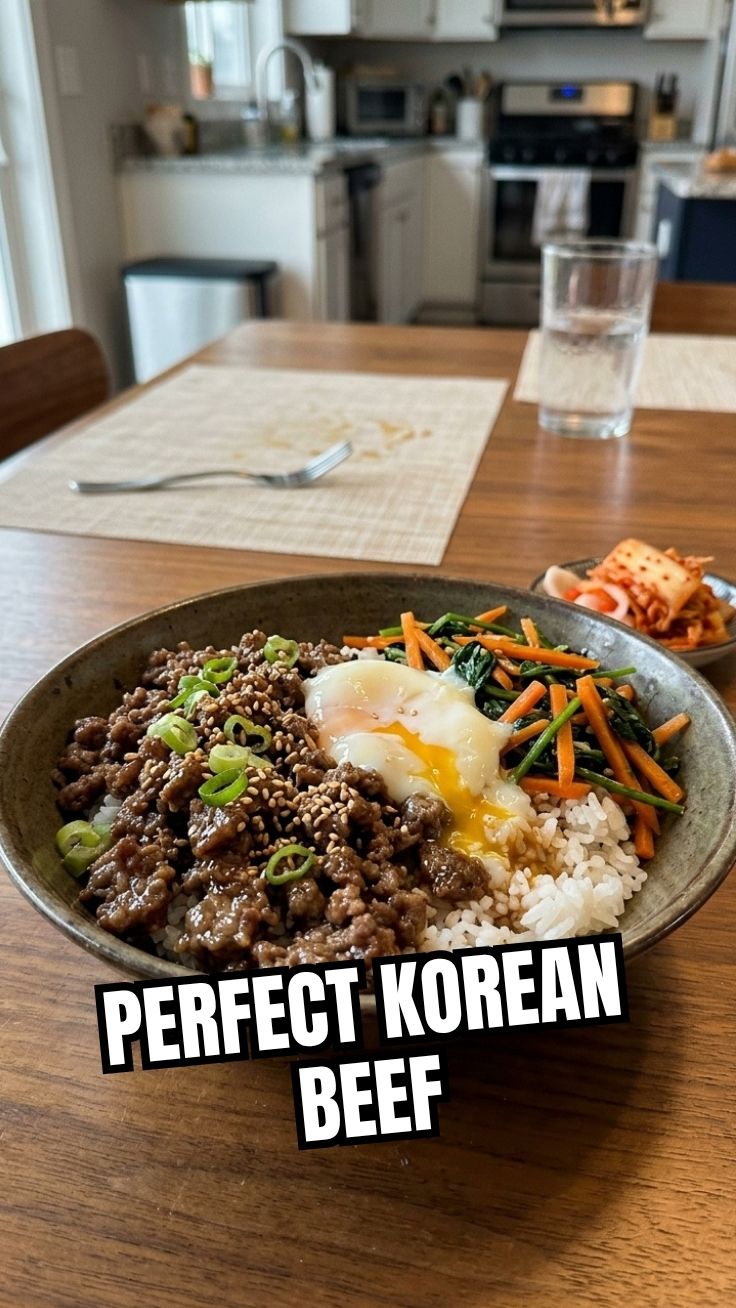
5. Assemble your bowls: Divide rice among four bowls, top with the beef mixture, arrange wilted spinach and carrots, and garnish with sesame seeds and green onions.
> Pro tip: As you assemble the final Korean Beef Bowl, the layered flavors of caramelized beef and fresh vegetables will remind you of classic bulgogi, but with a quicker preparation that requires no marinating overnight.
—
Nutritional Benefits & Advantages
This bowl isn’t just delicious – it’s nutritionally balanced. Ground beef provides high-quality protein (approximately 25g per serving) and iron for energy. Spinach adds vitamin K, folate, and antioxidants. Carrots contribute beta-carotene for eye health, while sesame oil offers healthy unsaturated fats.
The advantage of homemade over takeout is significant: you control the sodium (reduce soy sauce by half if needed), use fresh vegetables without preservatives, and adjust spice levels to suit dietary needs. For athletes or busy parents, it’s a complete meal in one bowl – protein, carbs, and vegetables working together.
—
Tips Variations & Cooking Advice
Flavor Twists
– Spicy version: Add ½ teaspoon red pepper flakes or extra gochujang.
– Sweet & smoky: Replace brown sugar with maple syrup and add smoked paprika.
– Low-carb option: Serve over cauliflower rice or lettuce cups rather than white rice.
Cooking Advice
– Don’t skip the high-heat searing step – it develops the Maillard reaction that makes beef taste deeply savory.
– Taste the sauce before adding it to the pan; if it’s too salty, add a teaspoon of rice vinegar to balance.
Dietary Adaptations
– Gluten-free: Use tamari or coconut aminos instead of soy sauce.
– Dairy-free: Naturally dairy-free, but check gochujang labels (most are).
– Vegetarian: Substitute crumbled tofu or tempeh for beef, pressing it dry first for better browning.
—
Common Mistakes to Avoid
1. Overcooking the beef: Ground beef dries out fast. Cook just until no longer pink – about 4–5 minutes total – then remove from heat immediately.
2. Skipping toasted sesame oil: Regular sesame oil lacks the nutty depth that defines this dish. Don’t substitute.
3. Not seasoning rice: Plain rice leaves the bowl flat. Toss hot rice with a teaspoon of rice vinegar and a pinch of salt for authentic flavor.
4. Overcrowding the pan: If you double the recipe, cook beef in batches. Too much meat at once causes steaming instead of browning.
5. Adding sauce too early: Let the beef get a good sear first. Adding sauce prematurely prevents caramelization.
—
Storage & Meal Prep Tips
– Refrigeration: Store beef and rice separately in airtight containers. They’ll stay fresh for 3–4 days.
– Freezing: Beef mixture freezes beautifully for up to 3 months. Rice doesn’t freeze well – make fresh rice when reheating.
– Reheating: For best texture, reheat beef in a skillet over medium heat with a splash of water to restore moisture. Microwave works but may dry out the meat slightly.
– Meal prep strategy: Cook double the beef on Sunday, then assemble bowls with fresh vegetables throughout the week. The beef’s flavor actually deepens overnight.
—
Conclusion
Creating this Korean Beef Bowl at home transforms a takeout favorite into a personalized, healthy, and affordable meal. Whether you’re a longtime fan of bulgogi or new to Korean flavors, this recipe delivers the same satisfying depth with far less time and effort. The beauty lies in its versatility – you can swap proteins, adjust spice, or make it gluten-free without losing the soul of the dish. I encourage you to try it tonight, share your creation on social media, and explore related recipes like Korean bibimbap or japchae for even more flavorful adventures.
—
FAQs
1. Can I use chicken or pork instead of beef?
Absolutely! Ground chicken or pork works well – just ensure you cook them to the proper internal temperature (165°F for poultry). For a leaner option, add an extra tablespoon of sesame oil to prevent dryness.
2. How do I reduce the sweetness without losing flavor?
Cut the brown sugar to 2 tablespoons and add 1 tablespoon of rice vinegar. The acidity balances the remaining sweetness while brightening the overall taste.
3. What can I substitute for gochujang?
Mix 1 tablespoon sriracha with 1 teaspoon miso paste (or soy sauce) for a similar spicy-umami profile. Alternatively, skip it entirely for a milder dish that still tastes fantastic.
4. Is this meal prep friendly?
Yes – cook the beef and rice separately, then assemble fresh. The beef keeps for 3 days in the fridge, and you can freeze it for up to 3 months. Reheat gently to maintain tenderness.
5. Why is my beef turning out dry?
Two likely culprits: overcooking or using extra-lean beef (93/7 or leaner). Stick with 80/20 ground beef and cook just until browned – about 4 minutes total. The fat renders beautifully and keeps the meat moist.
Quick way to grow Korean Beef Bowl
Ingredients
Equipment
Method
- First, combine soy sauce, brown sugar, sesame oil, minced garlic, grated ginger, rice vinegar, and red pepper flakes in a bowl to create the marinade.
- Next, add the thinly sliced beef sirloin to the marinade, ensuring it's thoroughly coated.
- Allow the beef to marinate for at least 15 minutes, or for more flavor, refrigerate for 30 minutes to an hour.
- Heat a large skillet or wok over medium-high heat.
- Add the marinated beef to the hot skillet and cook for 5-7 minutes, stirring occasionally, until it is browned and cooked through.
- Do not overcrowd the pan; cook the beef in batches if necessary to ensure even cooking and browning.
- Divide the cooked rice among four serving bowls.
- Top each bowl of rice with the cooked Korean beef.
- Finally, garnish with sliced scallions and sesame seeds, then serve immediately.