The Secret to Restaurant-Quality Hummus at Home (It’s Easier Than You Think)
Have you ever wondered why store-bought hummus never tastes as creamy and vibrant as the version served at your favorite Mediterranean spot? The answer lies not in exotic ingredients but in a simple technique that transforms chickpeas into a velvety dip. Making Hummus from scratch gives you total control over texture, flavor, and freshness—and it takes less than 15 minutes of active work. Whether you’re a seasoned cook or a kitchen newbie, this guide will walk you through every step to create a dip that rivals any restaurant. In this post, I’ll share a foolproof Hummus recipe that uses pantry staples to deliver a smooth, nutty, and tangy result every time.
—
Ingredients & Kitchen Tools
Core Ingredients
– 1 can (15 oz) chickpeas – Also called garbanzo beans. Drain and rinse well; the liquid (aquafaba) can be saved for vegan meringues.
– 3 tbsp tahini – Sesame paste. Stir before measuring because it separates.
– 2 tbsp fresh lemon juice – About half a lemon. Use freshly squeezed for brightness.
– 1 small garlic clove – Mince or grate it. Start with one, then add more if desired.
– 3 tbsp ice-cold water – The secret to extra creaminess. Add more if needed.
– 2 tbsp extra-virgin olive oil – For drizzling on top. A good-quality oil makes a difference.
– ½ tsp salt – Sea salt or kosher salt works best.
– ¼ tsp cumin – Optional, but adds warmth.
Optional Substitutions
– Tahini → Sunflower seed butter (for nut-free version)
– Olive oil → Avocado oil (milder flavor)
– Lemon juice → White wine vinegar (less bright but still tangy)
Kitchen Tools
– Food processor or high-speed blender
– Rubber spatula
– Fine-mesh strainer (for rinsing chickpeas)
– Small bowl for lemon juice and water
– Measuring spoons
—
Prep Time & Cooking Schedule
– Active prep time: 10 minutes
– Total time: 10 minutes (plus optional 30-minute resting for flavor development)
– Chilling time: 30 minutes to 1 hour if you prefer cold hummus
The actual cooking is zero—everything is raw. But I recommend letting the finished hummus sit in the fridge for at least 30 minutes before serving. This allows the garlic and lemon to mellow and meld together. Plan ahead if you want the flavors to shine.
—
Step-by-Step Instructions
1. Prepare the chickpeas – Drain and rinse the chickpeas in a fine-mesh strainer. For extra-smooth Hummus, remove the skins: pinch each chickpea gently to pop out the inner skin. This step is optional but yields a silkier texture.
2. Blend tahini and lemon juice – In your food processor, combine tahini and lemon juice. Blend for 30 seconds until thick and pale. This pre-emulsifies the tahini, avoiding bitterness.
3. Add garlic, salt, and cumin – Process again for 10 seconds. Scrape down the sides.
4. Add chickpeas – Add half the chickpeas and process for 15 seconds. Then add the remaining chickpeas and blend for 30 seconds until a thick paste forms.
5. Stream in ice water – With the motor running, slowly pour in the ice-cold water. Continue blending for 2–3 minutes. Stop and scrape the bowl halfway. The hummus should be very smooth and slightly warm from friction.
6. Season and adjust – Taste and add more salt, lemon juice, or garlic. If too thick, add water 1 tablespoon at a time.
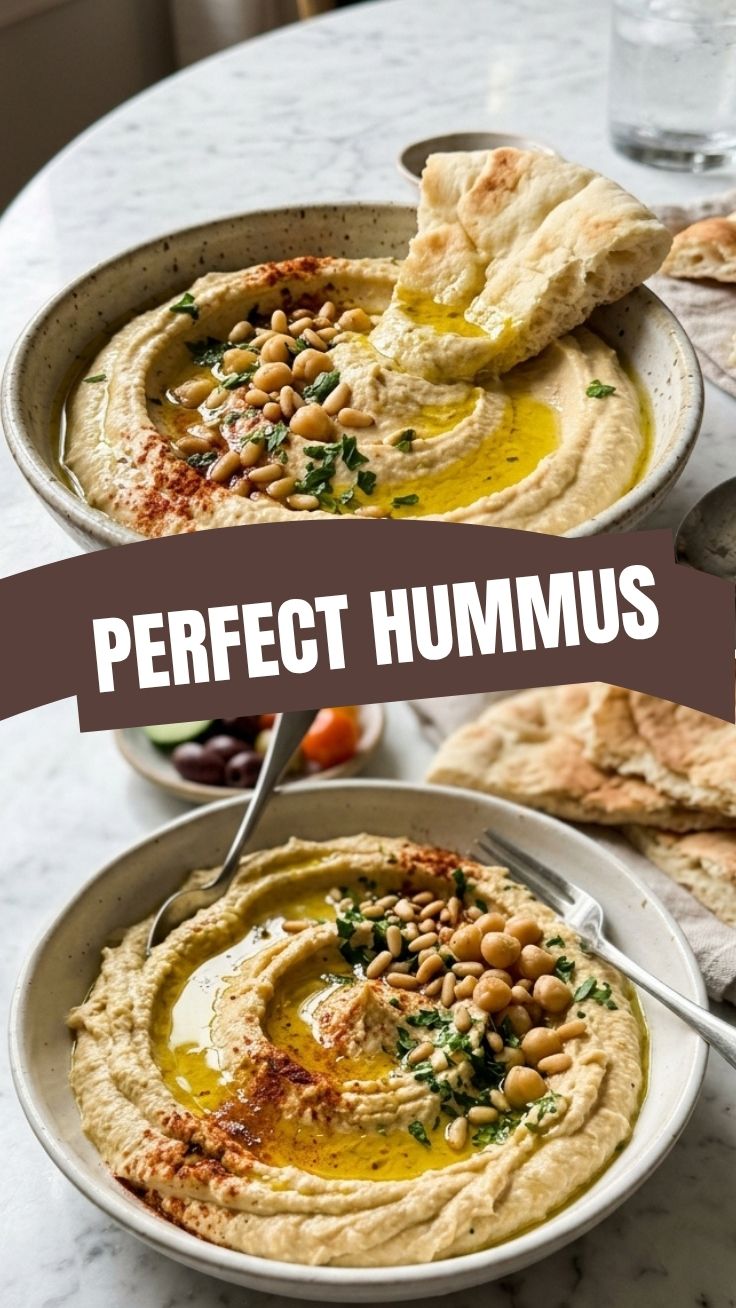
7. Finish with olive oil – Transfer to a serving bowl. Drizzle olive oil on top and optionally sprinkle paprika or sumac. Serve immediately or refrigerate.
Pro tip: For an ultra-creamy Hummus recipe, let the food processor run for a full 3 minutes. Patience is the key ingredient.
—
Nutritional Benefits & Advantages
Hummus is a nutritional powerhouse. Chickpeas provide plant-based protein and fiber, which support digestive health and keep you full. Tahini adds healthy fats and calcium. A 2-tablespoon serving contains about 70 calories, 4g fat, 6g carbs, and 2g protein. It’s naturally gluten-free, dairy-free, and vegan. The combination of fiber and protein makes it a low-glycemic snack that stabilizes blood sugar. Plus, the olive oil drizzle supplies antioxidants that combat inflammation.
—
Tips Variations & Cooking Advice
Flavor Variations
– Roasted red pepper: Blend with ½ cup jarred roasted red peppers.
– Spicy harissa: Add 1–2 teaspoons harissa paste.
– Avocado: Replace ¼ cup chickpeas with ½ ripe avocado for a green twist.
– Beetroot: Add ¼ cup cooked beets for vibrant color.
Dietary Adaptations
– Oil-free: Omit olive oil from the recipe (use water to thin) and skip the drizzle.
– Low-sodium: Use no-salt-added chickpeas and reduce salt.
– Nut-free: Already nut-free; just double-check tahini is pure sesame.
Cooking Methods
– If using dried chickpeas, soak overnight, boil until tender, and reserve some cooking liquid instead of water. This gives an even deeper flavor.
—
Common Mistakes to Avoid
1. Skipping the tahini pre-blend – Tahini tastes bitter if not emulsified with acid first. Always blend with lemon juice before adding other ingredients.
2. Using room-temperature water – Ice-cold water reduces friction and prevents the hummus from becoming pasty.
3. Overprocessing without scraping – The blades can’t reach everything. Stop twice to scrape down the bowl.
4. Adding too much garlic – Raw garlic can overpower. Start with a small clove.
5. Not removing chickpea skins – This is the single biggest barrier to smoothness. If you hate peeling, use canned chickpeas from a brand that pre-peels (some do).
—
Storage & Meal Prep Tips
– Refrigeration: Store in an airtight container for 5–7 days. Press plastic wrap directly onto the surface to prevent a skin from forming.
– Freezing: Hummus freezes well for up to 3 months. Portion into small containers or ice cube trays. Thaw overnight in the fridge. Stir well before serving.
– Reheating: If you prefer warm hummus, microwave in 10-second bursts stirring between, or spoon into a skillet over low heat. Add a splash of water if it thickens.
– Meal prep: Make a double batch on Sunday. Use as a dip, sandwich spread, or salad dressing thickener all week.
—
Conclusion
Homemade hummus transforms a simple snack into a canvas for creativity and nourishment. Whether you enjoy it plain or with roasted vegetables, this Hummus will quickly become a fridge staple. The Hummus recipe I’ve shared is forgiving and adaptable—feel free to adjust the garlic, lemon, or tahini to your taste. I encourage you to make a batch this week, dip a warm pita into it, and taste the difference fromscratch makes. Share your creation on social media or leave a comment below—I’d love to hear how it turned out!
—
FAQs
Q: Can I use dried chickpeas instead of canned?
A: Yes. Soak ⅔ cup dried chickpeas overnight, then boil for 1–1½ hours until very soft. Reserve the cooking liquid and use 3–4 tablespoons to thin the hummus. The flavor is deeper and more nutty.
Q: My hummus is too thick. How do I fix it?
A: Add ice-cold water 1 tablespoon at a time while the food processor runs. Stop when it reaches a soft, scoopable consistency. You can also add a little more olive oil or lemon juice.
Q: Why is my hummus bitter?
A: Bitterness usually comes from tahini that wasn’t blended with lemon juice first, or from using too much garlic. Try adding a pinch of sugar or more salt to mask bitterness, but prevention is better.
Q: Can I make oil-free hummus?
A: Absolutely. Skip the olive oil in the blend and use water or aquafaba as the liquid. The texture will be slightly less rich but still creamy. Drizzle with a little extra lemon juice instead of oil.
Q: How long will hummus last at room temperature?
A: For food safety, don’t leave hummus out for more than 2 hours. If serving at a party, place the bowl over a bed of ice to keep it cool.
How to grow Hummus with 3 tips
Ingredients
Equipment
Method
- Combine chickpeas, tahini, lemon juice, garlic, cumin, and salt in a food processor.
- Blend until smooth, slowly adding ice water tablespoon by tablespoon until desired consistency is reached.
- Transfer the hummus to a serving bowl, drizzle with olive oil, and garnish with paprika and fresh parsley.