Why This Chilled Soup Deserves a Spot in Your Summer Kitchen
Have you ever wondered why a bowl of cold vegetables can taste so refreshingly satisfying? The answer lies in the magic of Gazpacho (Classic), a vibrant Andalusian staple that transforms humble garden produce into a silky, flavor-packed meal. Preparing this Spanish recipe at home not only saves you money compared to restaurant versions but also lets you control the freshness, texture, and seasoning to your exact liking. With no cooking required and minimal prep, it’s the ultimate no-fuss summer dish—perfect for busy weeknights or elegant gatherings. Ready to blend your way to a chilled bowl of goodness? Let’s dive in.
—
Ingredients & Kitchen Tools
Ingredients
– Ripe tomatoes (1.5 lbs / 680 g) – Use Roma or vine-ripened for sweetness; peel if desired.
– Cucumber (1 medium) – English or Persian cucumber works best; peel if waxed.
– Red bell pepper (1 medium) – Adds sweetness and color; remove seeds.
– Garlic (1–2 cloves) – Adjust according to your raw garlic tolerance.
– Extra-virgin olive oil (¼ cup / 60 ml) – A fruity, high-quality oil elevates the soup.
– Sherry vinegar (2 tablespoons) – Traditional; substitute red wine vinegar if needed.
– Day-old bread (1 slice, crust removed) – Sofrito thickener; omit for gluten-free version.
– Cold water (½ cup / 120 ml) – Adjust for desired consistency.
– Salt (to taste) – Preferably fine sea salt.
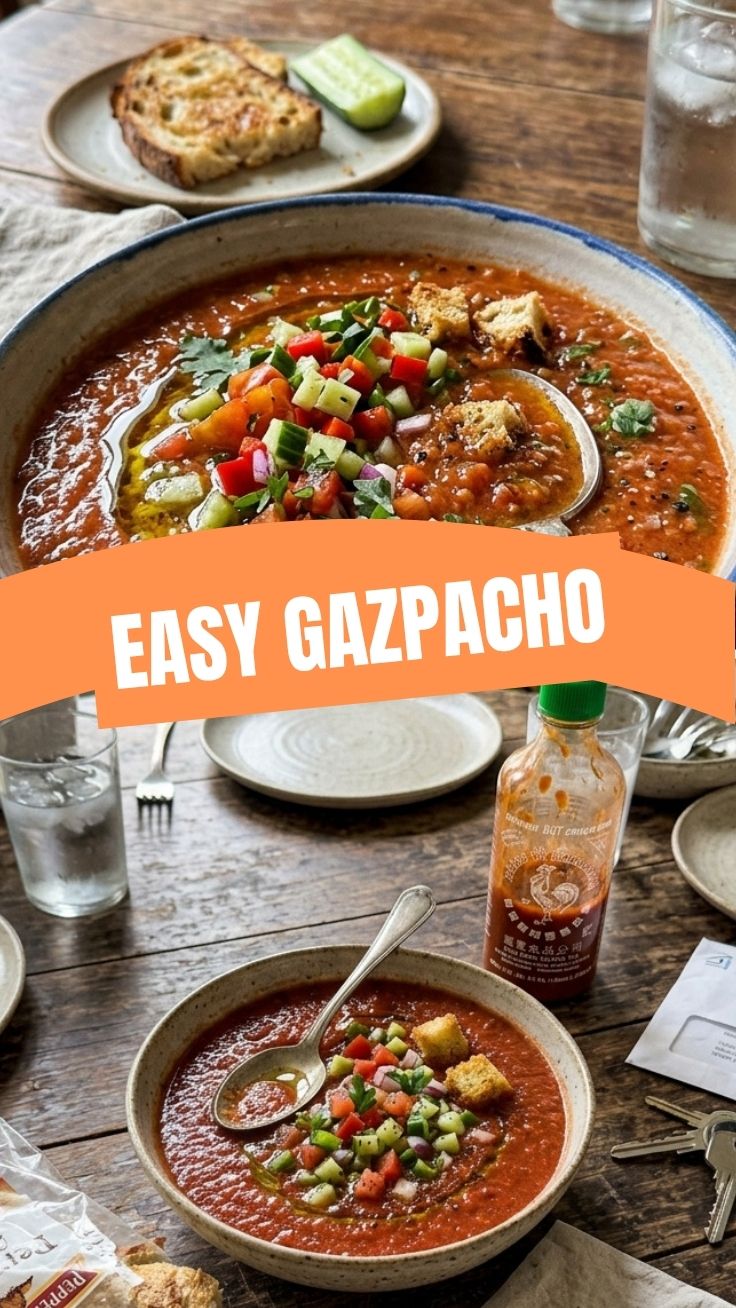
– Optional garnishes: diced cucumber, croutons, chopped parsley, or a drizzle of olive oil.
Kitchen Tools
– Blender or food processor
– Large bowl or pitcher
– Fine-mesh strainer (optional, for silkiest texture)
– Knife and cutting board
– Measuring cups and spoons
– Storage container (for chilling)
—
Prep Time & Cooking Schedule
– Prep time: 15 minutes
– Chilling time: Minimum 2 hours (ideally 4–6 hours or overnight)
– Total time: 2 hours 15 minutes (mostly inactive)
Plan ahead: The longer the soup rests in the fridge, the more the flavors meld. Make it in the morning for a refreshing lunch or dinner.
—
Step-by-Step Instructions
1. Prepare the vegetables – Roughly chop tomatoes, cucumber, and bell pepper into 1-inch chunks. Coarsely chop the garlic.
2. Soak the bread – In a small bowl, soak the bread slice in cold water for 2–3 minutes. Squeeze out excess liquid.
3. Blend everything – In a blender, combine chopped vegetables, soaked bread, olive oil, sherry vinegar, and ¼ cup cold water. Blend at high speed until completely smooth—about 1–2 minutes. For a Gazpacho (Classic) texture, aim for a creamy consistency with slight graininess from the seeds. If too thick, add remaining water gradually.
4. Season and adjust – Add salt to taste. Balance acidity with a pinch of sugar if needed. Taste and add more vinegar or olive oil until it sings.
5. Strain (optional) – For a velvety finish, pass through a fine-mesh strainer. Discard solids.
6. Chill thoroughly – Transfer to a container and refrigerate at least 2 hours. Cold temperature is essential for a true Spanish recipe experience.
7. Serve – Ladle into bowls and top with your favorite garnishes.
—
Nutritional Benefits & Advantages
This low-calorie, nutrient-dense soup is a powerhouse of vitamins and antioxidants. Tomatoes provide lycopene (linked to heart health), cucumbers offer hydration and silica for skin, bell peppers deliver vitamin C, and olive oil supplies healthy monounsaturated fats. A single bowl contains roughly 120–150 calories, making it an excellent light lunch or appetizer. Plus, it’s naturally vegan, dairy-free, and gluten-free (when bread is omitted) – perfect for various dietary needs.
—
Tips Variations & Cooking Advice
– Flavor swaps: Replace sherry vinegar with balsamic for a sweeter base, or add a jalapeño for heat.
– Texture variations: For a chunkier “country-style” gazpacho, pulse the blender a few times instead of pureeing fully.
– Dietary adaptations: Omit the bread for a gluten-free version; the soup will be thinner but still delicious. Add a tablespoon of soaked chia seeds to thicken naturally.
– Makes ahead: The soup tastes even better the next day – flavors deepen with time.
– Serving idea: Freeze in small portions and serve as a savory granita in summer.
—
Common Mistakes to Avoid
– Using underripe tomatoes – They lack sweetness and acidity. Always choose ripe, fragrant tomatoes.
– Over-blending – Too much speed creates froth. Blend until smooth but stop before air bubbles form.
– Skipping the chill – Warm gazpacho is bland. Always chill thoroughly to let the flavors shine.
– Oversalting early – Flavors intensify during chilling; add minimal salt initially and adjust after refrigerating.
– Not balancing acid – Too much vinegar can dominate; taste and adjust with a touch of sugar or extra olive oil.
—
Storage & Meal Prep Tips
– Refrigeration: Store in an airtight container for up to 4–5 days. Stir before serving (separation is natural).
– Freezing: Gazpacho freezes well for up to 3 months. Thaw overnight in the fridge and blend briefly to re-emulsify.
– Reheating: Not recommended – enjoy cold. If soup has thickened, stir in a splash of cold water or ice cubes.
– Meal prep: Chop and freeze tomato/cucumber/bell pepper in portions, labeled with date. Blend directly from frozen with soaked bread and liquids for instant gazpacho.
—
Conclusion
Making a bowl of Gazpacho (Classic) is one of the simplest ways to enjoy fresh produce while honoring a beloved Spanish recipe. With just a blender and a few minutes, you create a dish that is cooling, nourishing, and deeply satisfying. I encourage you to experiment with garnishes and share your results with friends—tag your photos and let us know how it turned out! For more no-cook summer ideas, check our related content.
—
FAQs
1. Can I make gazpacho without a blender?
Yes! Finely dice all vegetables and mash them with a mortar and pestle or mix by hand for a rustic texture.
2. How long does homemade gazpacho last in the fridge?
Up to 5 days when stored in an airtight container. Stir well before serving.
3. Why is my gazpacho watery?
Often caused by overzealous cucumber or tomatoes with high water content. Drain diced cucumber briefly before blending, or reduce the water in the recipe.
4. Can I substitute canned tomatoes?
Yes, but opt for fire-roasted or high-quality San Marzano tomatoes to maintain flavor. Drain some liquid to avoid a thin soup.
5. Is gazpacho always served cold?
Traditionally yes, but you can serve it at room temperature if you prefer. However, authentic flavor and texture are best after thorough chilling.
Gazpacho (Classic)
Ingredients
Equipment
Method
- Firstly, combine all chopped vegetables (tomatoes, cucumber, bell peppers, red onion, garlic), the soaked bread, olive oil, red wine vinegar, and cold water in a large blender. Ensure that all ingredients are well-incorporated to achieve a smooth consistency.
- Secondly, blend the mixture until very smooth; if the gazpacho is too thick for your liking, you can add a little more cold water until the desired consistency is reached. Once blended, taste and season with salt and pepper as needed, adjusting to your preference.
- Finally, for the best flavor, chill the gazpacho in the refrigerator for at least 2 hours, or ideally overnight, to allow the flavors to meld. Serve cold, garnished with finely diced cucumber and bell pepper if desired.