The Ultimate Guide to Making Fresh Tomato Sauce (Summer) at Home
Have you ever tasted a tomato sauce so vibrant it instantly transports you to a sun-drenched Italian countryside? That’s the magic of summer tomatoes. When basil is fragrant, tomatoes are heavy with sweetness, and you can practically taste the season in every bite. Why settle for jarred sauce when you can capture this fleeting perfection? Preparing your own Fresh Tomato Sauce (Summer) at home is not only rewarding but also healthier and more economical. And once you master the basics, you can explore a world of Seasonal Tomato Sauce Recipes to enjoy year-round. Let’s dive into a recipe that celebrates peak-season produce.
—
Ingredients & Kitchen Tools
Ingredients (serves 4):
– 2 lbs (900 g) ripe Roma or San Marzano tomatoes (juiciest and lowest in seeds; any garden tomato works)
– 3 cloves garlic, smashed (adjust to taste)
– ¼ cup extra-virgin olive oil (use a fruity one for raw finish)
– 1 small bunch fresh basil (about 10 leaves)
– 1 tsp salt (plus more for adjusting)
– ½ tsp black pepper
– ¼ tsp red pepper flakes (optional, for heat)
– 1 tbsp tomato paste (optional, for deeper color and richness)
Kitchen Tools:
– Large pot or Dutch oven (heavy-bottomed prevents scorching)
– Wooden spoon or silicone spatula
– Chef’s knife and cutting board
– Food mill or immersion blender (for smooth sauce)
– Colander and large bowl (for blanching tomatoes)
– Ladle and storage jars/containers
Optional Substitutions:
– Replace fresh tomatoes with canned whole San Marzano for a winter-friendly version
– Use garlic powder (½ tsp) if garlic sensitivity is a concern
– Swap basil for fresh oregano or thyme for a different herbal profile
—
Prep Time & Cooking Schedule
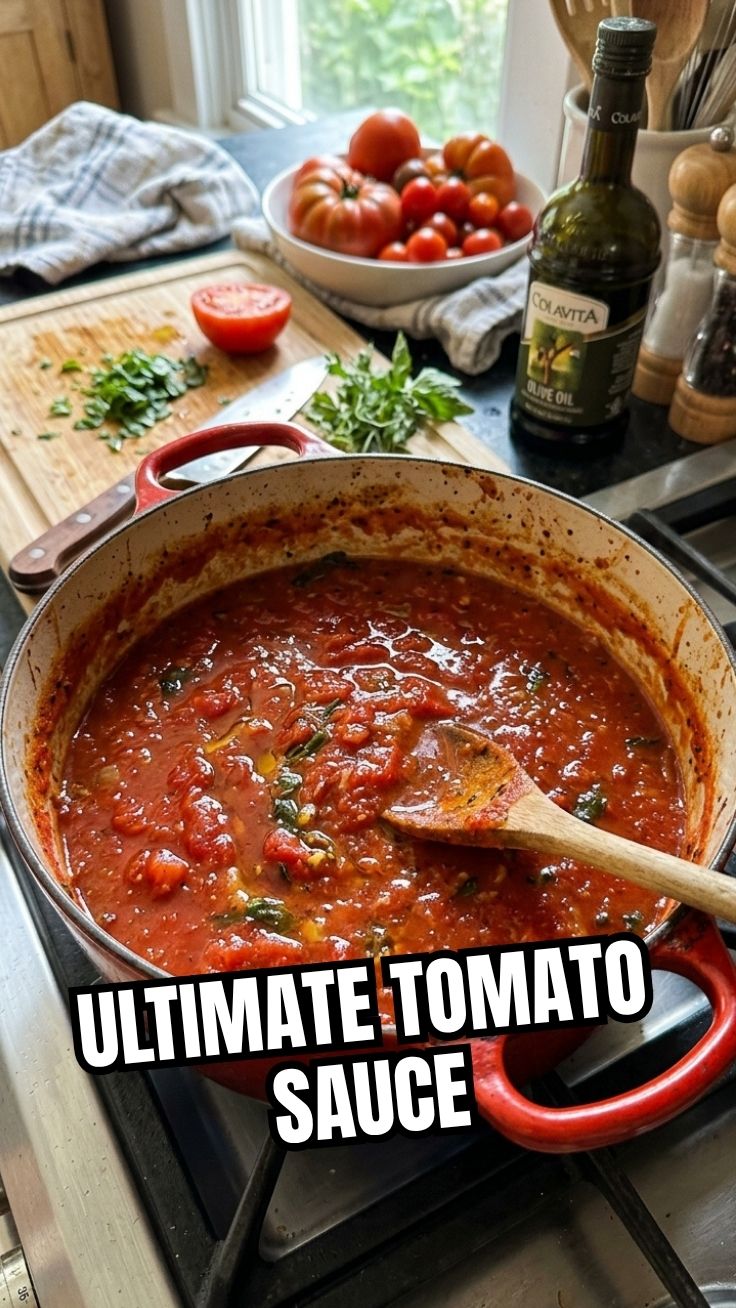
– Prep time: 15 minutes (washing, blanching, peeling, chopping)
– Cook time: 30–45 minutes (simmering until thick)
– Total time: approximately 1 hour
– Resting time: 10 minutes after cooking (flavors meld beautifully)
Plan to make this sauce on a weekend morning when you can enjoy the aromas filling your kitchen. It’s a perfect “set it and stir occasionally” recipe that pairs with pasta, gnocchi, or grilled vegetables.
—
Step-by-Step Instructions
1. Blanch the tomatoes: Bring a large pot of water to a boil. Score a small “X” on the bottom of each tomato. Drop them in for 30–60 seconds, then transfer to an ice-water bath. The skins will slip off easily. Core and roughly chop the peeled tomatoes.
2. Sauté the aromatics: In your heavy-bottomed pot, warm the olive oil over medium heat. Add smashed garlic and cook until fragrant (about 1 minute). Do not brown the garlic—it turns bitter. Immediately add the chopped tomatoes, salt, pepper, and red pepper flakes if using.
3. Simmer with basil: Bring the mixture to a gentle boil, then reduce heat to low. Tear the basil leaves and stir them in. Cook uncovered for 25–35 minutes, stirring occasionally, until the sauce thickens and reduces by about one-third. Taste a spoonful—the Fresh Tomato Sauce (Summer) should be bright, sweet, and slightly tangy.
4. Adjust consistency and seasoning: If you prefer a smooth sauce, use an immersion blender or pass through a food mill. For chunkier texture, leave as is. Add a pinch of sugar if the tomatoes taste too acidic. For a deeper flavor, stir in that tablespoon of tomato paste and simmer 5 more minutes.
5. Final touch: Remove from heat, check salt, and stir in a drizzle of fresh olive oil. Let rest for 10 minutes before serving. This base works perfectly in Seasonal Tomato Sauce Recipes—try folding it into zucchini noodles or use it as a pizza sauce.
—
Nutritional Benefits & Advantages
This homemade summer sauce is a powerhouse of nutrition. Fresh tomatoes are rich in lycopene—a potent antioxidant that supports heart health and may reduce cancer risk. Cooking tomatoes actually increases lycopene bioavailability, especially when paired with healthy fats like olive oil. A single serving (about ½ cup) provides:
– Vitamin C: Over 20% of daily needs (immune support)
– Vitamin K1: 10% DV (bone health)
– Potassium: 8% DV (blood pressure regulation)
– Fiber: 2 g (digestive health)
– Calories: only ~90 per serving (low-calorie but satisfying)
Plus, there’s zero added sugar, no preservatives, and controlled sodium—unlike most commercial jarred sauces. It’s naturally gluten-free, vegan, and Whole30-friendly.
—
Tips Variations & Cooking Advice
– Flavor variations: Add a splash of balsamic vinegar at the end for tang, or roast the tomatoes first for a smoky twist.
– Ingredient swaps: Use yellow or cherry tomatoes for a sweeter, milder sauce. Replace basil with mint or parsley for a unique aromatic profile.
– Cooking method: For a richer sauce, bake the tomatoes and garlic in a 400°F oven for 20 minutes before simmering.
– Dietary adaptations: This sauce is already gluten-free and dairy-free. For a lower-carb option, serve over spaghetti squash—check out the link to Seasonal Tomato Sauce Recipes for more ideas.
– Portion changes: Double the recipe and freeze in 1-cup portions for quick weeknight meals.
—
Common Mistakes to Avoid
– Not peeling the tomatoes: Even if you blend later, skins create a bitter, papery texture. Always blanch and peel.
– Overcooking the garlic: Burnt garlic ruins the entire sauce. Remove peel, smash lightly, and add only after oil is warm—never hot.
– Skipping the resting period: Fresh sauce needs a few minutes off heat for flavors to marry. Serve it immediately and it may taste flat.
– Using underripe tomatoes: No amount of sugar can fix mealy, pale summer tomatoes. Choose ones that yield slightly to pressure and smell sweet at the stem.
– Stirring too little: A thick sauce can scorch. Stir every 5–7 minutes, especially in the final 10 minutes.
—
Storage & Meal Prep Tips
– Refrigeration: Store in an airtight container for up to 5 days. The flavor actually improves after a day.
– Freezing: Cool completely, then transfer to freezer-safe bags or jars (leave 1-inch headroom for expansion). Lasts up to 6 months. Thaw overnight in the fridge.
– Reheating: Warm in a saucepan over low heat, stirring occasionally. If the sauce separates, whisk in a teaspoon of olive oil. Avoid microwaving on high—it can make the sauce watery.
– Meal prep: Make a big batch on Sunday, then use it for pasta Monday, as a dip for roasted veggies Tuesday, and as a base for shakshuka Wednesday.
—
Conclusion
Making your own Fresh Tomato Sauce (Summer) is a celebration of peak-season produce—simple, fast, and deeply satisfying. By following these steps, you’ll capture the essence of summer in a jar. And don’t stop here: explore other Seasonal Tomato Sauce Recipes to enjoy this versatility all year. Try this sauce tonight, share your results, and let the bright flavors speak for themselves. Which dish will you pour it over first?
—
FAQs
1. Can I use canned tomatoes instead of fresh?
Absolutely. In winter, substitute 2 cans (14 oz each) of whole San Marzano tomatoes. Crush them by hand before cooking. The sauce will be slightly darker but still delicious.
2. How do I fix a sauce that tastes too acidic?
Add a pinch of sugar (or grated carrot) to balance acidity. A tablespoon of cream or butter also works if you’re not vegan.
3. Why is my sauce watery?
You may have used overripe tomatoes or not simmered long enough. Continue cooking uncovered for 10–15 more minutes to let excess moisture evaporate.
4. Can I make this sauce in a slow cooker?
Yes! After blanching and peeling tomatoes, combine all ingredients in a slow cooker. Cook on low for 4–6 hours. The texture will be very soft—blend at the end if desired.
5. How do I scale the recipe for a crowd?
Easily double or triple. The only change: use a larger pot and expect a slightly longer reduction time. Freeze leftover sauce in ice cube trays for single-serving pasta nights.
Best way to grow 3x Fresh Tomato Sauce (Summer)
Ingredients
Equipment
Method
- Select a sunny location in your garden that receives at least 6-8 hours of direct sunlight per day, as tomatoes thrive in ample sunlight.
- Prepare the soil by enriching it with compost or aged manure to provide essential nutrients and improve drainage.
- Plant your tomato seeds indoors 6-8 weeks before the last frost date, or if using seedlings, plant them directly outdoors after the danger of frost has passed.
- Install tomato cages or stakes at the time of planting to provide support as the plants grow, preventing them from sprawling and keeping the fruit off the ground.
- Water regularly, especially during dry spells, ensuring the soil remains consistently moist but not waterlogged to encourage healthy growth and fruit development.
- Monitor your plants for pests and diseases, applying organic pest control methods or appropriate treatments as needed to protect your harvest.
- Harvest ripe tomatoes when they are firm, fully colored, and easily detach from the vine, indicating peak flavor and readiness for use in your sauce.