The Ultimate Falafel Bowl: A Fresh, Flavor-Packed Mediterranean Meal You Can Make at Home
Have you ever craved a meal that’s both hearty and healthy, bursting with vibrant flavors and satisfying textures? If you’ve ever ordered a Falafel Bowl at a restaurant and wondered how to recreate that magic in your own kitchen, you’re in the right place. Preparing this dish at home isn’t just about saving money—it’s about controlling the quality of ingredients, customizing the flavors to your liking, and enjoying a truly fresh, nutrient-dense meal. This bowl is a celebration of Mediterranean Food, combining crispy chickpea fritters, creamy tahini sauce, crunchy vegetables, and fluffy grains into one perfect bite. Let’s dive into how you can build this masterpiece from scratch.
Ingredients & Kitchen Tools
For the Falafel:
– 1 can (15 oz) chickpeas, drained and rinsed (or 1.5 cups cooked) – Do not use canned chickpeas that are too soft; they should be firm for the best texture.
– 1/2 cup fresh parsley, chopped – Adds a bright, herbaceous note.
– 1/4 cup fresh cilantro, chopped – Optional but highly recommended for depth.
– 1 small onion, roughly chopped – Red or yellow works well.
– 3 cloves garlic – Adjust to your garlic tolerance.
– 1 tsp ground cumin – The backbone of falafel flavor.
– 1 tsp ground coriander – Adds a citrusy warmth.
– 1/2 tsp salt – Plus more to taste.
– 1/4 tsp black pepper – Freshly ground is best.
– 1/2 tsp baking powder – Helps the falafel stay light and fluffy.
– 2–3 tbsp all-purpose flour (or chickpea flour for gluten-free) – Binds the mixture without making it dense.
– Oil for frying (vegetable, canola, or avocado) – For deep frying or pan frying.
For the Bowl Base:
– 1 cup cooked quinoa, brown rice, or couscous – Choose your favorite grain.
– 1 cup mixed greens or arugula – For a fresh, peppery base.
– 1/2 cup cherry tomatoes, halved – Adds sweetness and acidity.
– 1/2 cucumber, diced – Cool and crunchy.
– 1/4 cup red onion, thinly sliced – Soak in cold water for 10 minutes to mellow the bite.
– 1/4 cup Kalamata olives – Optional but adds a briny punch.
– 1/4 cup crumbled feta cheese – Omit for dairy-free.
For the Lemon Tahini Dressing:
– 1/4 cup tahini – Stir well before measuring.
– 2 tbsp lemon juice – Freshly squeezed is non-negotiable.
– 1 tbsp olive oil – Extra virgin for best flavor.
– 1 clove garlic, minced – Or 1/2 tsp garlic powder.
– 2–3 tbsp warm water – To thin to drizzling consistency.
– Salt and pepper to taste – Start with 1/4 tsp salt.
Kitchen Tools:
– Food processor or high-speed blender
– Large mixing bowl
– Small skillet or deep fryer (or baking sheet for oven method)
– Baking sheet lined with parchment paper (if baking)
– Measuring cups and spoons
– Chef’s knife and cutting board
– Colander
– Whisk or small jar for dressing
Prep Time & Cooking Schedule
– Prep Time: 20 minutes (includes chopping, mixing, and making dressing)
– Cook Time: 15–20 minutes (frying or baking falafel)
– Resting Time: 10 minutes (for the falafel mixture to firm up in the fridge)
– Total Time: Approximately 45–50 minutes
Planning Tip: You can prep the falafel mixture and dressing up to 24 hours in advance. Store the mixture in the fridge and the dressing in a sealed jar. Cook the falafel just before serving for the crispiest results. Cook your grain of choice ahead of time and keep it refrigerated for up to 3 days.
Step-by-Step Instructions
1. Prepare the Falafel Mixture: In a food processor, combine the drained chickpeas, parsley, cilantro, onion, garlic, cumin, coriander, salt, and pepper. Pulse until the mixture is coarse and holds together when pressed—do not over-process into a paste. Transfer to a bowl, stir in the baking powder and 2 tablespoons of flour. Mix gently. If the mixture feels too wet, add the remaining tablespoon of flour. Cover and refrigerate for 10 minutes.
2. Shape the Falafel: Using lightly oiled hands, form the mixture into 12–14 small balls or patties (about 1.5 inches in diameter). Press gently to flatten slightly—this ensures even cooking.
3. Cook the Falafel: Heat 1 inch of oil in a small skillet to 350°F (175°C). Fry the falafel in batches for 3–4 minutes per side, until deep golden brown and crispy. Drain on paper towels. For a healthier option, bake at 375°F (190°C) for 20–25 minutes, flipping halfway, or air fry at 375°F for 12–15 minutes.
4. Make the Lemon Tahini Dressing: In a small bowl, whisk together tahini, lemon juice, olive oil, and minced garlic. Slowly add warm water while whisking until the dressing is smooth and pourable. Season with salt and pepper. Tip: If the dressing seizes up, add a splash more warm water and whisk vigorously.
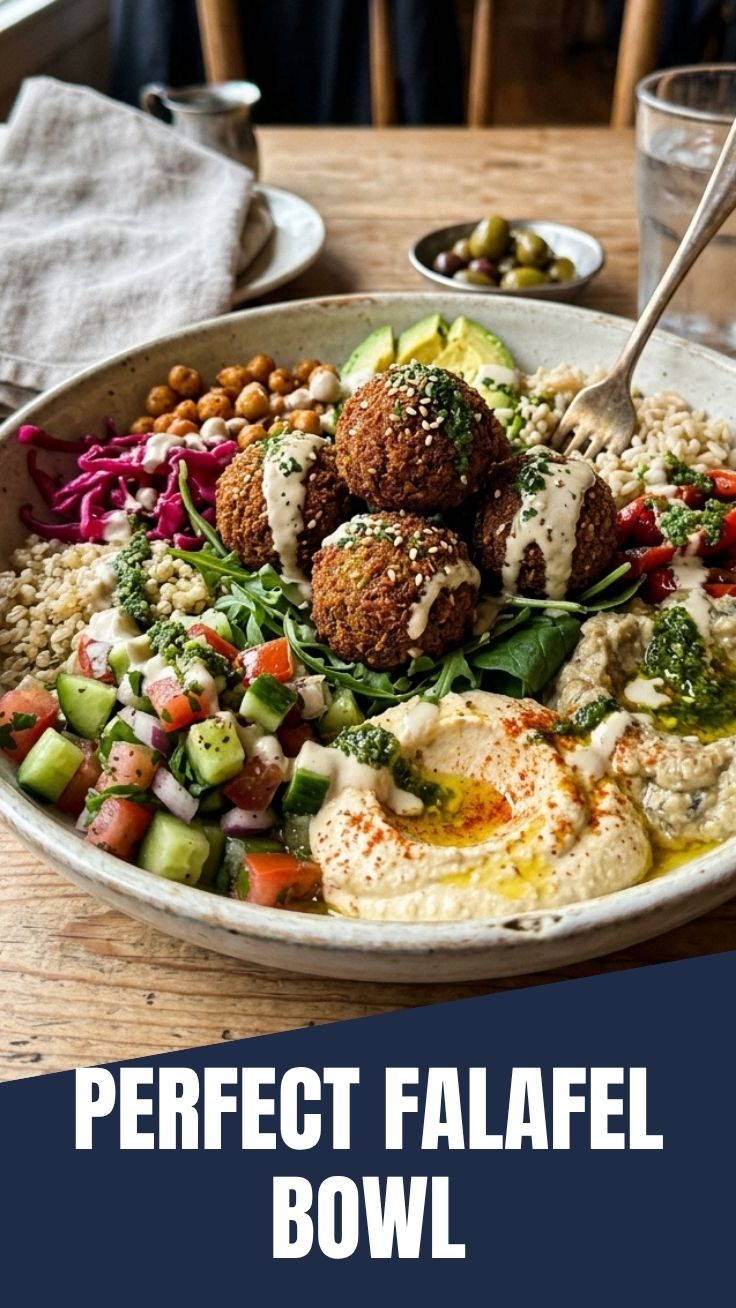
5. Assemble the Bowl: Start with a base of greens and cooked grain. Arrange the falafel, tomatoes, cucumber, red onion, olives, and feta on top. Drizzle generously with the lemon tahini dressing. Serve immediately.
Pro Tip: For the crispiest falafel, ensure the oil is hot enough before frying. Drop a tiny piece of the mixture into the oil—if it sizzles immediately, you’re ready. Also, don’t skip the resting step; it helps the falafel hold their shape during cooking. This Falafel Bowl is a perfect example of how Mediterranean Food can be both nourishing and incredibly satisfying.
Nutritional Benefits & Advantages
This bowl is a powerhouse of nutrition. Chickpeas are rich in plant-based protein and fiber, which support digestive health and keep you full longer. Tahini provides healthy fats, calcium, and iron, while the fresh vegetables deliver a spectrum of vitamins and antioxidants. Quinoa or brown rice adds complex carbohydrates for sustained energy. The combination of herbs and spices like cumin and coriander also offers anti-inflammatory properties. Plus, this meal is naturally vegetarian and can easily be made vegan by omitting the feta.
Tips Variations & Cooking Advice
– Flavor Variations: Add a pinch of smoked paprika or cayenne to the falafel mixture for heat. Swap the tahini dressing for a yogurt-based sauce (mix Greek yogurt with lemon, garlic, and dill).
– Ingredient Swaps: Use sweet potatoes or roasted cauliflower instead of grains for a low-carb option. Replace chickpeas with black beans for a different twist.
– Cooking Methods: Air frying yields the crispiest results with less oil. For a no-fry version, pan-sear the falafel in a non-stick skillet with a tablespoon of oil.
– Dietary Adaptations: For gluten-free, use chickpea flour or oat flour in the falafel. For dairy-free, skip the feta or use a vegan alternative.
Common Mistakes to Avoid
– Over-processing the falafel mixture: This leads to dense, gummy falafel. Pulse until just combined—you want small chunks of chickpea visible.
– Skipping the resting time: The mixture needs time to firm up; otherwise, the falafel may fall apart in the oil.
– Using wet chickpeas: Pat the canned chickpeas dry with a paper towel before adding them to the food processor. Excess moisture ruins the texture.
– Overcrowding the pan: Fry in small batches to maintain oil temperature and ensure even browning.
– Forgetting to season the dressing: Tahini can be bland on its own. Taste and adjust salt, lemon, and garlic until it’s bright and savory.
Storage & Meal Prep Tips
– Refrigeration: Store assembled bowls (without dressing) in airtight containers for up to 3 days. Keep the dressing separate to prevent sogginess.
– Freezing: Cooked falafel freeze beautifully. Place them on a baking sheet in a single layer, freeze until solid, then transfer to a freezer bag. They keep for up to 3 months. Reheat in an air fryer or oven at 375°F for 8–10 minutes.
– Reheating: For best texture, reheat falafel in a skillet with a splash of oil or in the oven. Microwaving will make them soft.
– Meal Prep Strategy: Cook a batch of falafel and grain on Sunday. Chop vegetables and store them separately. Assemble bowls fresh each day for lunch or dinner.
Conclusion
Building your own Falafel Bowl at home is a rewarding experience that brings the vibrant, wholesome flavors of Mediterranean Food straight to your table. With crispy, golden falafel, a creamy lemon tahini dressing, and a rainbow of fresh toppings, this bowl is a complete meal that’s as nutritious as it is delicious. Whether you’re meal prepping for the week or impressing dinner guests, this recipe is versatile, forgiving, and endlessly customizable. Give it a try, and don’t forget to share your creation—tag us or leave a comment below! For more Mediterranean-inspired recipes, explore our collection of grain bowls, salads, and dips.
FAQs
1. Can I use dried chickpeas instead of canned?
Yes! Soak 1 cup of dried chickpeas in water overnight (at least 12 hours). Drain, rinse, and proceed with the recipe. Do not cook them—raw soaked chickpeas are essential for the right texture.
2. Why did my falafel fall apart while frying?
This usually happens if the mixture is too wet or not rested long enough. Add an extra tablespoon of flour and refrigerate for at least 20 minutes. Also, ensure the oil is hot enough before adding the falafel.
3. Can I make this bowl gluten-free?
Absolutely. Use chickpea flour or oat flour in the falafel, and choose quinoa or rice as your grain base. Double-check that your tahini and other ingredients are certified gluten-free.
4. How do I fix a tahini dressing that’s too thick?
Simply whisk in warm water, one tablespoon at a time, until it reaches your desired consistency. If it tastes bitter, add a pinch of salt or a drizzle of maple syrup to balance it.
5. Can I prepare the falafel mixture ahead of time?
Yes, you can make the mixture up to 24 hours in advance. Store it covered in the refrigerator. Shape and cook just before serving for the best texture.
Proven way to grow any Falafel Bowl using 7 stepsFalafel Bowl
Ingredients
Equipment
Method
- Drain the soaked chickpeas thoroughly then combine them with onion, parsley, cilantro, garlic, cumin, coriander, salt, and baking soda in a food processor.
- Pulse the mixture until finely ground but not pureed, revealing a slightly coarse texture, then transfer it to a bowl and mix in the flour.
- Shape the falafel mixture into small patties or balls, ensuring they are uniform in size for even cooking.
- Heat vegetable oil in a deep pan or pot to 350°F (175°C), then carefully fry the falafel in batches for 3-5 minutes until golden brown and cooked through; drain on paper towels.
- Whisk together tahini, lemon juice, minced garlic, and salt in a small bowl until the mixture is smooth.
- Gradually add water, 1 tablespoon at a time, until the sauce reaches your desired consistency, which should be creamy and pourable.
- Arrange a base of cooked rice or quinoa in a bowl, then top evenly with shredded lettuce, cherry tomatoes, diced cucumber, and sliced red onion.
- Add the freshly fried falafel to the bowl and drizzle generously with the prepared tahini sauce.