Is There Any Dish More Comforting Than a Bowl of Chicken Noodle Soup?
When the weather turns chilly or you feel a cold coming on, nothing satisfies quite like a steaming bowl of broth loaded with tender chicken, vegetables, and slurp-worthy noodles. You might reach for a can from the pantry, but the truth is, preparing this classic at home transforms the entire experience. Not only do you control the ingredients, but you also unlock a depth of flavor that store-bought versions simply cannot match. The aroma alone that fills your kitchen is worth the effort. This recipe for Chicken Noodle Soup is the ultimate comfort food. Furthermore, learning to craft a truly memorable batch of homemade chicken noodle soup is a skill that will reward you for years to come.
Ingredients & Kitchen Tools (H2)
To create this soul-warming dish, you need a well-equipped kitchen and fresh components.
Ingredients:
– 2 tablespoons olive oil or butter: For sautéing the aromatic vegetables. Butter adds richness, while oil has a higher smoke point.
– 1 large yellow onion, diced: Provides a savory base note.
– 3 medium carrots, peeled and sliced: Adds natural sweetness and color.
– 3 celery stalks, sliced: Offers an earthy, slightly bitter counterbalance.
– 4 cloves garlic, minced: Essential for depth and aroma.
– 8 cups low-sodium chicken broth: Controls the salt level so you can season precisely later.
– 1 pound boneless, skinless chicken thighs or breasts: Thighs stay juicier during simmering, but breasts work well if trimmed of fat.
– 2 bay leaves and 1 teaspoon dried thyme: Classic aromatics that infuse the stock.
– 8 ounces wide egg noodles or your preferred pasta: Egg noodles hold up best and absorb broth beautifully.
– Salt, black pepper, and fresh parsley: For final seasoning and garnish.
Optional Substitutions:
– Gluten-free noodles: Rice noodles or chickpea pasta work great.
– Vegetarian version: Swap chicken for white beans and use vegetable broth.
– Extra veggies: Add parsnips, turnips, or zucchini for variety.
Kitchen Tools:
– Large heavy-bottomed pot or Dutch oven (5-6 quart capacity)
– Cutting board and sharp chef’s knife
– Measuring cups and spoons
– Wooden spoon or silicone spatula
– Tongs for removing the cooked chicken
– Ladle for serving
Prep Time & Cooking Schedule (H2)
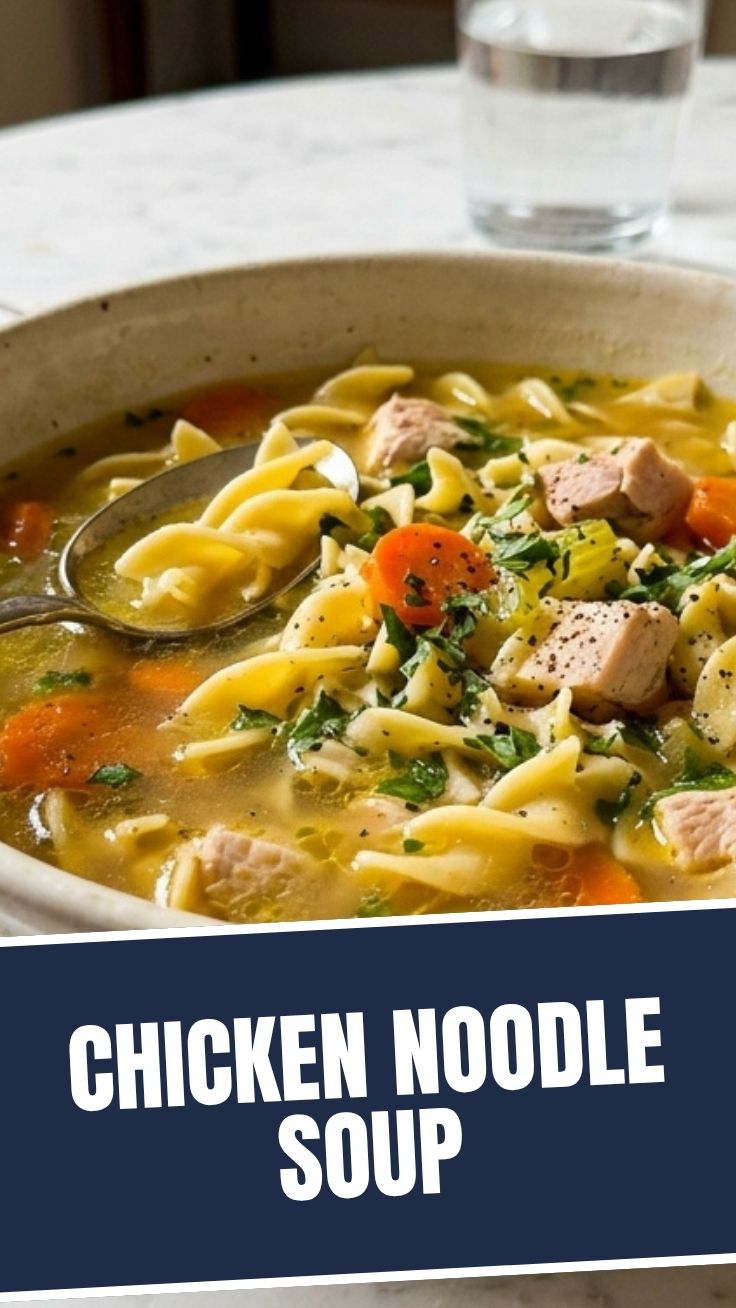
Understanding the timeline helps you plan your meal with confidence.
– Prep Time: 15 minutes – chopping vegetables and mincing garlic.
– Cook Time: 30–40 minutes – including simmering the broth, cooking the chicken, and adding the noodles.
– Resting Time: 5 minutes – allows the flavors to meld together before serving.
– Total Time: Approximately 50–60 minutes.
This schedule is ideal for a weeknight dinner. For deeper flavor in the broth, you can simmer the chicken and vegetables for an additional 20 minutes before adding noodles, but the core recipe keeps things manageable. The soup is best served fresh because noodles continue to absorb liquid as they sit.
Step-by-Step Instructions (H2)
Follow these directions closely for a foolproof result every time.
1. Sauté the aromatics. Place your pot over medium heat and add the olive oil or butter. Once shimmering, toss in the diced onion, carrots, and celery. Cook for 6–8 minutes, stirring occasionally, until the onions turn translucent and the carrots begin to soften. Add the minced garlic and cook for 30 seconds more, until fragrant.
2. Build the broth. Pour in the 8 cups of chicken broth. Add the bay leaves, dried thyme, and a generous pinch of black pepper. Gently place the chicken thighs or breasts into the liquid. Bring the liquid to a boil, then immediately reduce the heat to a gentle simmer. Cover the pot and cook for 20–25 minutes, or until the chicken is cooked through and reaches an internal temperature of 165°F. This is your foundation for a classic Chicken Noodle Soup.
3. Shred the chicken. Using tongs, carefully remove the cooked chicken to a clean cutting board. Let it rest for a few minutes, then shred into bite-sized pieces using two forks. Discard the bay leaves from the pot.
4. Cook the noodles. Return the pot to a boil. Add the egg noodles and cook according to package directions, usually 6–8 minutes, until al dente. This step is critical for achieving the perfect texture in your homemade chicken noodle soup. Be careful not to overcook them, as they will continue to soften even after you turn off the heat.
5. Combine and season. Return the shredded chicken to the pot. Stir well and taste the broth. Add salt gradually—start with ½ teaspoon and adjust. The noodles will absorb some salt, so seasoning the liquid just right is key. Remove from heat.
6. Garnish and serve. Ladle the steaming soup into bowls and sprinkle with fresh chopped parsley. Serve immediately with crusty bread or crackers.
Nutritional Benefits & Advantages (H2)
This isn’t just comfort food; it’s a nutrient-dense meal that supports overall wellness.
– High-quality protein: Chicken provides lean protein essential for muscle repair and immune function.
– Vitamin-rich vegetables: Carrots are loaded with beta-carotene (vitamin A) for eye health, while celery offers antioxidants and anti-inflammatory properties.
– Hydration and electrolytes: The broth helps replenish fluids and minerals, which is particularly beneficial during illness or after exercise.
– Digestive comfort: The warm, gelatin-rich broth (especially if using bone-in chicken) is gentle on the stomach and can soothe an upset digestive system.
– Low in calories but filling: A typical serving has around 250–300 calories, making it a satisfying yet light meal option.
The combination of protein, fiber from vegetables, and carbohydrates from noodles provides balanced energy without a heavy feeling.
Tips Variations & Cooking Advice (H2)
Adapt this recipe to suit your preferences or dietary needs.
Flavor Variations:
– Creamy version: Stir in ½ cup of heavy cream or full-fat coconut milk at the end for a richer, silkier texture.
– Spicy kick: Add ½ teaspoon red pepper flakes or a splash of sriracha with the garlic.
– Lemon-herb twist: Add a squeeze of fresh lemon juice and 1 tablespoon of chopped dill just before serving.
Cooking Advice:
– Use bone-in chicken for deeper flavor: Simmer the bones in the broth for 30 minutes before adding the noodles. This extracts collagen and creates a more luxurious mouthfeel.
– Cook noodles separately for meal prep: If you plan to store leftovers, cook the noodles separately and add them to individual bowls when serving. This prevents them from turning mushy.
– Make it in a slow cooker: Sear the chicken first, then place all ingredients (except noodles) in a slow cooker on low for 6–8 hours. Shred the chicken, cook noodles separately, and combine before serving.
Dietary Adaptations:
– Gluten-free: Use rice noodles, quinoa pasta, or zucchini noodles.
– Dairy-free: Omit any butter and use olive oil instead. The broth is naturally dairy-free.
– Low-carb/Keto: Replace noodles with cauliflower rice or omit them entirely and double the vegetables.
Common Mistakes to Avoid (H2)
Steer clear of these pitfalls to ensure your soup turns out perfect every time.
1. Overcooking the noodles: This is the most frequent error. Noodles that simmer too long become bloated and mushy. Always cook them until just al dente, and remember they will continue to soften in the hot broth.
2. Underseasoning the broth: Broth requires more salt than you think. Taste after adding noodles, then adjust. A pinch of salt can transform a flat soup into a vibrant one.
3. Boiling the chicken too aggressively: A rolling boil will toughen the meat. Keep the heat at a gentle simmer—small bubbles around the edges—to keep the chicken tender and moist.
4. Adding garlic too early: Garlic burns quickly and turns bitter. Always add it 30 seconds before the liquid, after the other vegetables have softened.
5. Skipping the resting time: Letting the soup sit for 5 minutes after cooking allows the flavors to marry and the noodles to absorb the broth properly.
Storage & Meal Prep Tips (H2)
Proper storage ensures you can enjoy this soup throughout the week without sacrificing quality.
Refrigeration:
– Transfer leftover soup to an airtight container and refrigerate within two hours of cooking.
– It will stay fresh for up to 4 days. The flavors often deepen by the second day.
– Important: Store noodles separately if possible. If already combined, the noodles will continue absorbing broth and become soft, but the soup is still safe to eat.
Freezing:
– For best results, freeze the broth and vegetables separately from the noodles. Place in freezer-safe containers or zip-top bags, leaving ½-inch headroom for expansion.
– Frozen soup (without noodles) lasts up to 3 months.
– To thaw, move to the refrigerator overnight or reheat gently on the stovetop.
Reheating:
– Reheat on the stovetop over medium-low heat, stirring occasionally. Add a splash of broth or water if the soup has thickened too much.
– For single servings, microwave in 30-second intervals, stirring between each, until piping hot.
– Avoid rapid boiling, which can break down the noodles and vegetables further.
Conclusion (H2)
Mastering this classic recipe is about more than just following instructions; it’s about building a foundation of technique that will serve you for countless meals to come. The beauty of this dish lies in its simplicity—quality ingredients, careful timing, and a touch of patience produce a bowl of warmth that feels both nourishing and indulgent. Whether you stick with a traditional Chicken Noodle Soup or experiment with bold variations, the process remains rewarding. Remember, the most satisfying homemade chicken noodle soup comes from your own kitchen, made with your own hands. I encourage you to try this recipe tonight, share your results on social media, and explore other comforting dishes on our site.
FAQs (H2)
1. Can I use leftover rotisserie chicken?
Yes, absolutely. Skip the step of cooking raw chicken. Instead, add the shredded rotisserie chicken after the noodles have cooked, and simmer just long enough to heat through (about 3–4 minutes).
2. Why is my soup too salty?
This usually happens if you used regular (not low-sodium) broth or over-seasoned early. To fix it, add a peeled whole potato to the pot and simmer for 10–15 minutes. The potato will absorb excess salt. Remove it before serving.
3. How can I thicken the broth?
If you prefer a heartier, thicker soup, mix 2 tablespoons of cornstarch with 3 tablespoons of cold water to create a slurry. Stir it into the simmering broth and cook for 2–3 minutes until thickened.
4. Can I substitute chicken thighs for breasts?
Chicken thighs are an excellent choice—they contain more fat and collagen, which adds richness and prevents dryness. Adjust cooking time slightly (25–30 minutes) as they may take longer to cook through.
5. What’s the best way to reheat frozen soup?
For the best texture, thaw the soup overnight in the refrigerator. Reheat on the stovetop over medium heat, adding a splash of broth or water to restore consistency. Avoid microwaving frozen soup directly, as it can heat unevenly and damage the noodles.