Introduction
Have you ever pulled a golden, juicy turkey from the oven only to carve into disappointingly dry meat? The secret to avoiding that letdown lies in a simple, time-honored technique: Brined Turkey. By immersing your bird in a seasoned saltwater solution, you guarantee moist, flavorful meat every time. Preparing a Brined Turkey at home is not only cost-effective but also allows you to control the ingredients and tailor the flavor exactly to your liking. In this guide, you’ll discover how mastering the art of Wet Brining—the most popular and reliable method—transforms an ordinary roast into a holiday showstopper. We’ll walk through every step, from selecting the right brine to achieving the perfect crispy skin. Ready to impress your guests? Let’s dive in.
Ingredients & Kitchen Tools
For the Brine
– 1 cup kosher salt (not table salt – it’s too dense)
– ½ cup brown sugar (adds subtle sweetness and aids browning)
– 2 gallons cold water (divided; part for dissolving, part for cooling)
– 3–4 bay leaves
– 1 tablespoon black peppercorns
– 3 cloves garlic, smashed
– Optional: Fresh herbs like thyme, rosemary, sage; citrus peels; star anise
For the Turkey
– 1 whole turkey (12–14 lbs), thawed if frozen (remove giblets and neck)
– 2 tablespoons vegetable oil or melted butter (for skin)
– Additional seasoning: salt, pepper, garlic powder (optional)
Kitchen Tools
– Large stockpot (at least 16-quart) or food-grade bucket
– Brining bag (heavy-duty, leak-proof) or a clean cooler
– Roasting pan with rack
– Meat thermometer (instant-read or probe)
– Sharp carving knife
– Kitchen twine (for trussing, optional)
Substitutions
– No brown sugar? Use maple syrup or honey.
– Gluten-free? This recipe is naturally gluten-free; just avoid pre-mixed seasonings with additives.
– Low-sodium diet? Reduce salt to ¾ cup and brine for shorter time.
Prep Time & Cooking Schedule
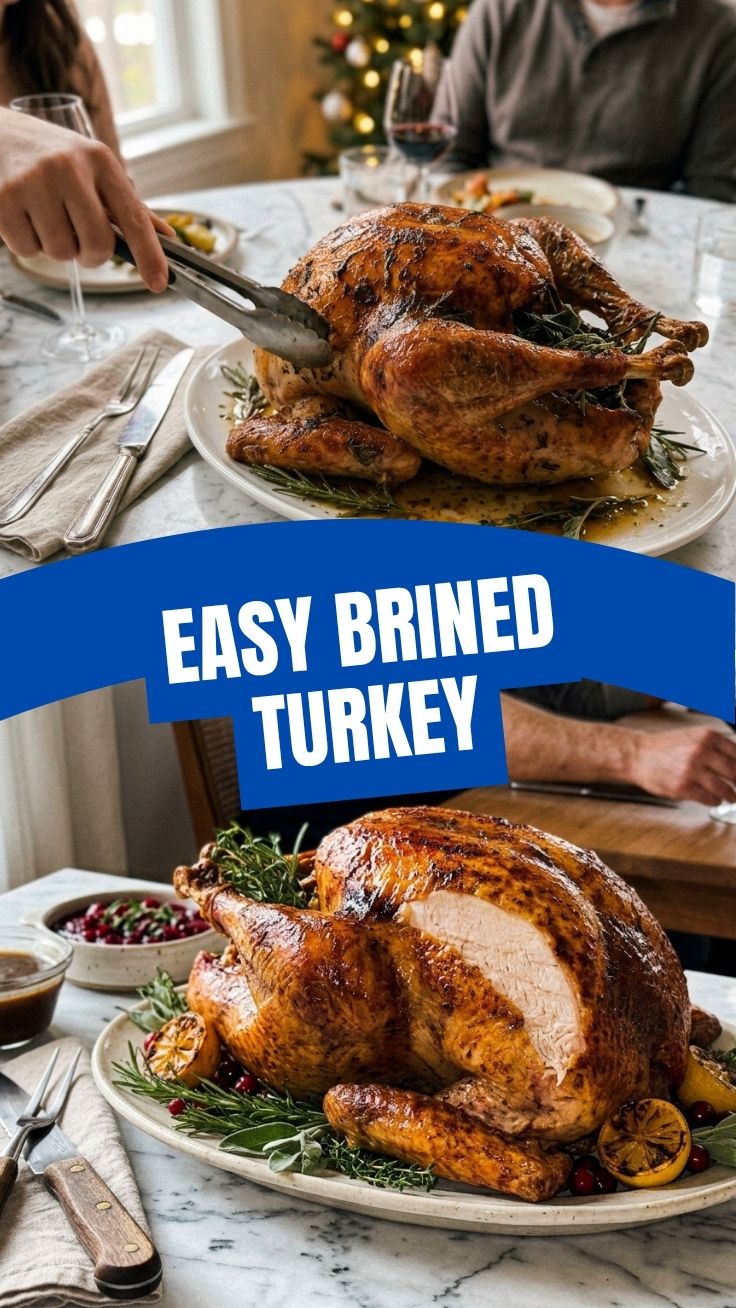
– Brine time: 12–24 hours (refrigerated). Minimum 8 hours for small birds.
– Rinse and dry: 30 minutes before roasting.
– Resting after brine: Let turkey sit at room temperature for 30–45 minutes to take the chill off.
– Roasting time: 13–14 lb turkey takes about 3–3.5 hours at 325°F.
– Resting before carving: 20–30 minutes (essential for juices to redistribute).
Tip: Start brining the night before. While the turkey brines, you can prep sides. Plan for the turkey to come out of the oven at least 30 minutes before serving.
Step-by-Step Instructions
1. Prepare the brine: In a large pot, combine salt, brown sugar, bay leaves, peppercorns, and garlic with 1 gallon of water. Bring to a simmer, stirring until salt and sugar dissolve. Remove from heat and add remaining 1 gallon cold water. Cool completely (ice cubes help speed this up).
2. Submerge the turkey: Place turkey in a brining bag (double-bag for safety). Pour cooled brine over the bird, seal tightly, and set in a stockpot or cooler. Add ice if needed to keep temperature below 40°F. Refrigerate or keep in a cool place for 12–24 hours.
3. Rinse and dry: Remove turkey from brine. Discard brine. Rinse inside and out under cold water to remove excess salt. Pat thoroughly dry with paper towels—this is key for crispy skin.
4. Season and rest: Rub the skin with oil or butter. Optionally season with extra pepper or herbs (go light on salt due to brine). Let rest uncovered in the fridge for 1–2 hours (air-drying improves crispiness).
5. Roast: Preheat oven to 325°F. Place turkey breast-side up on a rack in a roasting pan. Tuck wing tips under. Roast until a meat thermometer inserted in the thickest part of the thigh registers 165°F. Baste with pan juices every 30–45 minutes.
6. Rest and carve: Let turkey rest loosely tented with foil for 20–30 minutes before carving.
Note: The key behind a successful Brined Turkey is the science of Wet Brining, which infuses moisture and flavor deep into the meat via osmosis. This step ensures even the lean breast meat stays juicy.
Nutritional Benefits & Advantages
Brined Turkey is naturally lean and high in protein (about 25g per 3-ounce serving). The brine adds no significant fat but enhances moisture, reducing the need for added butter or oil. Turkey is rich in selenium (immune support), B vitamins (energy metabolism), and tryptophan, which aids mood regulation. By brining, you also reduce sodium absorption control – you can adjust salt levels to your dietary needs. Compared to non-brined birds, the brine helps tenderize meat, cutting down on harsh cooking methods that degrade nutrients. For those watching saturated fat, skinless brined turkey breast is an excellent choice.
Tips Variations & Cooking Advice
– Flavor variations: Add apple cider, ginger, or smoked paprika to the brine. For a citrusy kick, use orange and lemon peels.
– Method swaps: Smoked turkey? Brine first, then smoke at 225°F until internal temp hits 165°F.
– Dietary adapts: Brine is dairy-free and gluten-free by default. To make it keto-friendly, skip the sugar or use a sugar substitute.
– Portion tweaks: For a smaller turkey (8–10 lbs), reduce brine quantity by half and brine for 8–10 hours.
– Herb butter rub: After drying, rub compound butter (softened butter + minced garlic + herbs) under the skin for extra richness.
– Dry brine alternative: If short on time, a dry salt rub works, but Wet Brining yields more consistent moisture.
Common Mistakes to Avoid
1. Over-brining – Leaving the turkey in brine longer than 24 hours makes it overly salty and mushy. Stick to the timeline.
2. Not rinsing – Skipping the rinse after brining leaves a salty crust. Always rinse thoroughly.
3. Brining a pre-basted turkey – Many store-bought turkeys are injected with saline. Check the label; avoid brining those or reduce salt.
4. Using table salt – It’s too fine and results in a saltier bird. Use kosher salt for even dissolution.
5. Skipping the dry-off – A damp skin steams instead of crisps. Pat dry and air-dry in the fridge uncovered for best results.
6. Under-cooking or over-cooking – Invest in a good meat thermometer. Remove at 165°F and rest.
Storage & Meal Prep Tips
– Refrigeration: Store carved turkey in airtight containers for up to 4 days. Keep it moist by adding a splash of broth when reheating.
– Freezing: Slice and pack in freezer-safe bags or containers. Squeeze out air. Freeze for up to 3 months. Thaw in the fridge overnight.
– Reheating: To avoid dryness, reheat in a 300°F oven with a little broth, covered, until warm. Or microwave with a damp paper towel.
– Meal prep: Use leftover brined turkey in soups, salads, sandwiches, or casseroles. The flavor holds up beautifully.
Conclusion
Mastering a Brined Turkey is the single best way to ensure a holiday or dinner party centerpiece that’s juicy, flavorful, and foolproof. By embracing Wet Brining, you’ve learned how to transform a simple roast into a culinary triumph. Whether you tweak the herbs or experiment with spices, the technique remains the same: soak, rinse, roast, and enjoy. We encourage you to try this recipe for your next gathering and share your results with friends. Don’t forget to explore our other holiday guides for more winning dishes.
FAQs
1. Can I brine a frozen turkey?
No. Thaw the turkey completely in the refrigerator (about 24 hours per 4–5 lbs) before brining.
2. How long should I brine?
For a 12–14 lb turkey, 12–18 hours is ideal. Over 24 hours risks oversalting.
3. Can I reuse the brine?
Never reuse brine due to bacteria from raw poultry. Discard after use.
4. What if I don’t have a big enough pot?
Use a clean food-grade 5-gallon bucket or a large cooler (line with a brining bag). Keep the temperature below 40°F with ice packs.
5. My turkey turned out salty – what went wrong?
Possibly brined too long, used table salt, or didn’t rinse. Next time reduce salt or brine time.
6. Can I brine a turkey breast instead of whole bird?
Absolutely. Brine for 4–8 hours and adjust roasting time to about 30–40 minutes per pound at 350°F.
Best way to grow a 12 lb Brined Turkey
Ingredients
Equipment
Method
- Acquire a turkey poult and provide a warm, secure environment, ensuring it has constant access to starter feed and fresh water.
- Gradually transition the turkey to grower feed and then to finisher feed as it matures, ensuring continuous access to food and water.
- Maintain a clean living space for the turkey, protecting it from predators and extreme weather, allowing it to grow to approximately 12 lbs.
- After the turkey reaches the desired weight, humanely process it.
- Prepare a brining solution and immerse the processed turkey for the recommended duration, then remove and pat dry.