Unlock the Smoke: Crafting Authentic Texas BBQ Brisket at Home
Is there anything more satisfying than the rich aroma and melt-in-your-mouth tenderness of perfectly cooked barbecue? If you’ve ever dreamt of recreating that legendary Texas BBQ joint experience right in your own backyard, you’ve come to the right place. Preparing a BBQ Brisket (Texas Style) at home isn’t just about cooking; it’s an immersive culinary journey that transforms a humble cut of beef into a masterpiece. Forget the expensive restaurant bills and the uncertainty of store-bought. With this guide, you’ll master the art of the slow smoke, achieving that coveted bark and juicy interior that defines truly exceptional smoked brisket. Let’s dive into the delicious details and elevate your grilling game!
Ingredients & Kitchen Tools
Crafting authentic barbecue requires quality ingredients and the right gear. Here’s what you’ll need:
- Whole Packer Brisket (12-16 lbs): Opt for a USDA Prime or Choice grade with good fat marbling for optimal flavor and tenderness. The “packer” includes both the flat and the point.
- Coarse-Ground Black Pepper (1/2 cup): The backbone of Texas bark. Don’t skimp on quality.
- Kosher Salt (1/4 cup): Essential for seasoning and creating that beautiful crust.
- Garlic Powder (2 tbsp): Enhances the savory depth of the rub.
- Onion Powder (2 tbsp): Adds another layer of aromatic complexity.
- Smoker (Pellet, Offset, or Electric): A necessity for true smoked brisket. Ensures consistent low-and-slow cooking.
- Wood Chunks/Pellets (Oak or Post Oak recommended): Provides the quintessential Texas smoke flavor.
- Meat Thermometer (two-probe digital recommended): Crucial for monitoring internal temperature accurately. One probe for the flat, one for the ambient smoker temp.
- Large Roasting Pan or Aluminum Foil: For the “Texas Crutch” (wrapping) later in the cook.
- Sharp Carving Knife: Essential for slicing once rested.
- Butcher Paper (unwaxed, food-grade): An alternative to foil for wrapping, allows the bark to breathe.
- Heat-Resistant Gloves: For handling hot meat.
- Spray Bottle: For spritzing with apple cider vinegar or water.
Prep Time & Cooking Schedule
- Prep Time: 30-45 minutes (Trimming & Rubbing)
- Cook Time: 10-16 hours (depending on brisket size and smoker consistency)
- Resting Time: 2-4 hours (crucial for juiciness)
- Total Time: 12.5 – 20.5 hours
This recipe demands patience. Plan to start your brisket early – often the night before – to accommodate the long cooking and resting periods. “Low and slow” is the mantra!
Step-by-Step Instructions
1. Trim the Brisket (30 mins): Begin by trimming your whole packer brisket. Aim for a 1/4-inch fat cap on the leaner flat side. Remove any hard, thick fat pockets between the point and the flat. This ensures even cooking and allows the rub to penetrate.
2. Apply the Rub (5 mins): In a bowl, mix your salt, pepper, garlic powder, and onion powder. Generously coat all surfaces of the brisket with this simple yet powerful rub. Don’t be shy; you want a good layer. Let it sit at room temperature for at least 30 minutes, or refrigerate overnight for deeper flavor.
3. Preheat Your Smoker (30-45 mins): Preheat your smoker to a consistent 225-250°F (107-121°C). Use oak or post oak for that classic Texas flavor profile.
4. Smoke the Brisket (6-8 hours): Place the brisket fat-side up (or towards the heat source if uneven) in the smoker. Insert one probe of your meat thermometer into the thickest part of the flat, avoiding major fat pockets. Let it smoke, maintaining your temperature, until the bark is well-formed and the internal temperature reaches 165-175°F (74-79°C). Spritz with apple cider vinegar or water every 1-2 hours after the first 3 hours to keep it moist and promote bark formation. This early stage is where the magic of smoked brisket truly begins to unfold.
5. The Texas Crutch (Wrapping): Once the bark is set and the brisket hits the stall (temperatures stop rising), typically around 165°F, it’s time to wrap. Wrap the brisket tightly in butcher paper or heavy-duty aluminum foil. This helps push through the stall, tenderizes the meat, and keeps it moist.
6. Continue Smoking (4-8 hours): Return the wrapped brisket to the smoker. Continue cooking until the internal temperature reaches 200-205°F (93-96°C) and, most importantly, feels “probe tender.” This means the thermometer should slide into the meat with very little resistance, like pushing it into warm butter. This tenderness is key to a perfect BBQ Brisket (Texas Style).
7. Rest the Brisket (2-4 hours): This is arguably the most crucial step! Once probe tender, remove the brisket from the smoker, still wrapped. Place it in an empty cooler, insulated with towels, for at least 2 hours, and up to 4 hours. This allows the muscle fibers to relax and reabsorb juices, resulting in unparalleled tenderness and juiciness. Do not skip this step!
8. Slice and Serve: Against the grain, slice the flat into pencil-thin slices. For the point, you can cube it for burnt ends or slice it thicker. Serve immediately and enjoy your masterpiece!
Nutritional Benefits & Advantages
Brisket, particularly the leaner flat, offers a good source of protein, essential for muscle repair and growth. While it contains saturated fat, a significant portion of it renders out during the long cooking process. Choosing grass-fed beef can further enhance its nutritional profile, providing more omega-3 fatty acids. Furthermore, making your own BBQ Brisket (Texas Style) allows you to control salt and sugar content, avoiding excessive additives often found in commercially prepared options. The slow-cooking method also helps break down tough connective tissues, making the meat more digestible.
Tips, Variations & Cooking Advice
- Wood Choice: While oak is traditional, experiment with pecan or hickory for slightly different smoke profiles.
- Spritzing Liquid: Beyond apple cider vinegar, try using beef broth, beer, or a mixture of water and Worcestershire sauce.
- Injection: For extra moisture and flavor, consider injecting the brisket with beef broth or a seasoned injection solution before applying the rub.
- Burnt Ends: The point of the brisket is perfect for making “burnt ends.” After separation, cube the point, toss with some barbecue sauce and rub, then return to the smoker for another 1-2 hours until caramelized and tender.
- Reverse Sear (for thin briskets): While less common for full packers, some home cooks with thinner briskets might briefly sear the surface on a hot grill after the smoke to enhance the bark.
- Temperature Consistency: Invest in a good quality smoker and learn how to manage its temperature. Consistency is key to a good brisket.
Common Mistakes to Avoid
- Not Trimming Properly: Leaving too much fat prevents good bark formation and makes the brisket greasy. Not enough fat can dry it out.
- Too High Heat: Cooking too hot will result in tough, dry meat. Stick to the 225-250°F range.
- Checking Too Often: “If you’re looking, you’re not cooking.” Opening the smoker door frequently causes temperature fluctuations. Trust your thermometer.
- Skipping the Rest: This is the cardinal sin of brisket. Resting is absolutely essential for a juicy, tender result.
- Slicing with the Grain: Always slice against the grain to ensure tender bites. Slicing with the grain will make the meat appear tough and stringy.
- Over-Seasoning: Texas BBQ is celebrated for its simple, bold flavors. Don’t drown it in overly complex rubs or sauces.
Storage & Meal Prep Tips
Properly stored, leftover BBQ Brisket (Texas Style) can be just as delicious.
- Refrigeration: Store sliced or unsliced brisket in an airtight container in the refrigerator for up to 3-4 days. For best results, keep it in its own juices or a small amount of beef broth to prevent drying out.
- Freezing: For longer storage, freeze whole or sliced brisket in an airtight, freezer-safe bag or vacuum-sealed container for up to 3 months. Thaw overnight in the refrigerator before reheating.
- Reheating: To maintain moisture and tenderness, reheat slowly. Place sliced brisket in a baking dish with a splash of beef broth, cover tightly with foil, and warm in a 275°F (135°C) oven until just heated through. Alternatively, use a sous vide bath for excellent results. Avoid microwaving if possible, as it can dry out the meat.
Conclusion
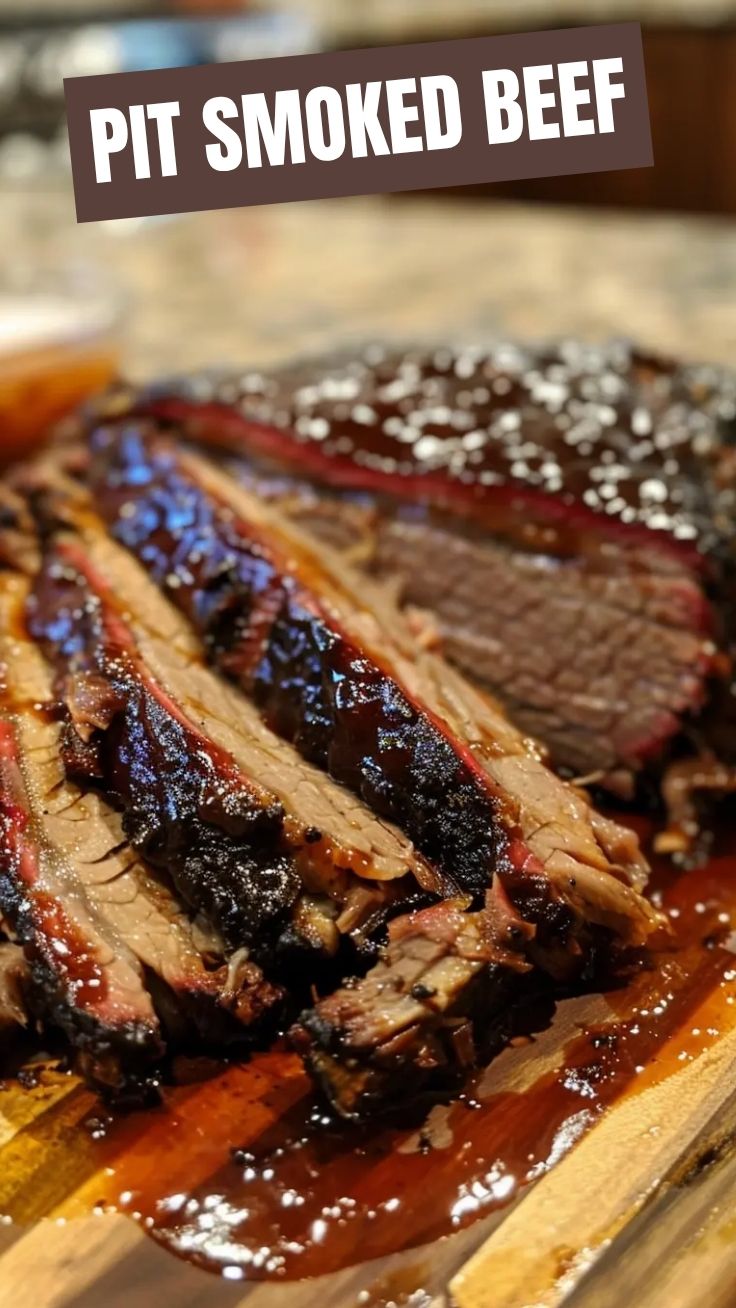
There’s an undeniable satisfaction in presenting a perfectly cooked BBQ Brisket (Texas Style), a testament to patience, precision, and that unmistakable smoky flavor. Mastering the art of the long cook, from meticulous trimming to the crucial resting phase, truly elevates the backyard BBQ experience. You’ve now got the blueprint for transforming a humble cut of beef into a culinary triumph, achieving that coveted rich bark and succulent interior unique to exquisite smoked brisket. Don’t be intimidated; embrace the journey and the delicious reward! Give this recipe a try, share your results, and let us know your favorite smoking wood in the comments below.
FAQs
Q1: My brisket hit the “stall.” What does that mean, and what should I do?
A1: The stall is when the brisket’s internal temperature plateaus, often between 150-170°F (65-77°C), due to evaporative cooling. This is the perfect time to wrap your brisket in butcher paper or foil (the “Texas Crutch”) to push through the stall and retain moisture.
Q2: How do I know when my brisket is truly “done” if the temperature fluctuates?
A2: While 200-205°F (93-96°C) is a good target, don’t rely solely on temperature. The most important indicator of doneness is “probe tenderness.” The probe of your thermometer should slide into the thickest part of the meat with very little resistance, like warm butter.
Q3: Can I make this in an oven instead of a smoker?
A3: While you can cook a brisket in an oven, it will lack the distinctive smoky flavor that defines Texas BBQ. An oven can achieve tenderness, but not the rich, smoky bark. For true smoked brisket, a smoker is essential.
Q4: What’s the best way to get a good “bark” on my brisket?
A4: A good bark comes from a generous, coarse-ground pepper-based rub, consistent low heat, and maintaining a relatively dry surface during the initial smoking phase (light spritzing is fine, but don’t douse it). Butcher paper for wrapping is also preferred over foil if you want to preserve the bark characteristics during the crutch phase.
Q5: What are some good side dishes to serve with Texas BBQ Brisket?
A5: Classic pairings include potato salad, coleslaw, pinto beans, mac and cheese, pickles, and white bread or cornbread.
Proven way to grow your BBQ Brisket (Texas Style) in 3 steps
Ingredients
Equipment
Method
- Trim the brisket to remove excess hard fat, leaving about a 1/4-inch fat cap and ensuring a uniform thickness for even cooking. Prepare the rub by mixing coarse black pepper, kosher salt, garlic powder, onion powder, and paprika; then generously apply the rub to all surfaces of the brisket and let it sit at room temperature for 30-60 minutes while you prepare your smoker.
- Preheat your smoker to a constant temperature of 250-275°F (120-135°C), using oak or pecan wood chunks for a classic Texas BBQ flavor.
- Place the brisket, fat-side up, directly on the smoker grates, inserting a probe thermometer into the thickest part of the flat and closing the lid to begin the smoking process. Maintain a consistent smoker temperature between 250-275°F, spritzing the brisket every 60-90 minutes with a mixture of apple cider vinegar and water to keep it moist and promote a good bark, until the internal temperature reaches 165-175°F and a dark, flavorful bark has formed.
- Carefully remove the brisket from the smoker and wrap it tightly in butcher paper or aluminum foil, adding a splash of liquid like beef broth before sealing to maintain moisture, then return the wrapped brisket to the smoker. Continue cooking the wrapped brisket until its internal temperature reaches 200-205°F and it probes "DPR" (DPR: Done, Probe, Resistance) like butter in all sections, indicating optimal tenderness.
- Once the brisket reaches the desired tenderness, remove it from the smoker while still wrapped and let it rest on a counter or in an insulated cooler for at least 2-4 hours, or even longer (up to 6 hours), to allow the juices to redistribute and for optimal tenderness and moisture retention.
- Unwrap the rested brisket, reserving any accumulated juices, then slice the flat against the grain into pencil-thick pieces and chunk the point for serving. Serve the brisket immediately as a main dish with your favorite BBQ sides, such as coleslaw, potato salad, or cornbread, and offer any reserved juices on the side for drizzling.