Why This Rustic Italian Classic Deserves a Spot in Your Weeknight Rotation
Have you ever craved a meal that feels like a warm hug from an Italian grandmother—yet comes together with minimal fuss? That’s exactly what Chicken Cacciatore delivers. This one-pot wonder transforms humble ingredients like chicken legs, bell peppers, and tomatoes into a deep, aromatic stew that tastes like it simmered all day. The beauty of making it at home? You control the quality of every ingredient, tailor the seasoning to your palate, and save money compared to restaurant versions. Whether you’re exploring Italian chicken recipes for the first time or adding to your repertoire, Chicken Cacciatore is a must-try. And if you love rustic Italian cooking, you’ll find that Italian chicken recipes like this one are the backbone of cozy, family-friendly dinners.
—
Ingredients & Kitchen Tools (H2)
For the Chicken Cacciatore (serves 4–6):
– Chicken pieces (3–4 lbs): Use bone-in, skin-on thighs and drumsticks for maximum flavor and juiciness. Boneless, skinless breasts work too, but dial back cooking time.
– Olive oil (3 tbsp): Extra-virgin for depth.
– Onion (1 large, diced): Yellow or sweet.
– Garlic (4 cloves, minced): Fresh is non‑negotiable.
– Bell peppers (2, any color): Sliced into strips. Red and yellow add sweetness.
– Cremini mushrooms (8 oz, sliced): Optional but traditional.
– Crushed tomatoes (28 oz can): San Marzano quality recommended.
– Dry red wine (½ cup): Chianti or Merlot. Substitute with chicken broth if needed.
– Chicken broth (½ cup): Low‑sodium preferred.
– Herbs (dried oregano, thyme, bay leaf): Each 1 tsp or 2–3 sprigs fresh.
– Capers (2 tbsp): Rinsed and drained for briny pop.
– Salt & black pepper: To taste.
– Fresh basil or parsley (¼ cup chopped): For garnish.
Kitchen Tools:
– Large Dutch oven or heavy-bottomed pot (5–6 qt) with lid
– Chef’s knife, cutting board
– Wooden spoon or spatula
– Measuring cups & spoons
– Tongs for flipping chicken
– Meat thermometer (optional but helpful)
Substitutions: No wine? Use extra broth plus 1 tbsp balsamic vinegar. No capers? Add pitted olives instead. For a tomato‑free twist, swap crushed tomatoes with roasted red pepper purée.
—
Prep Time & Cooking Schedule (H2)
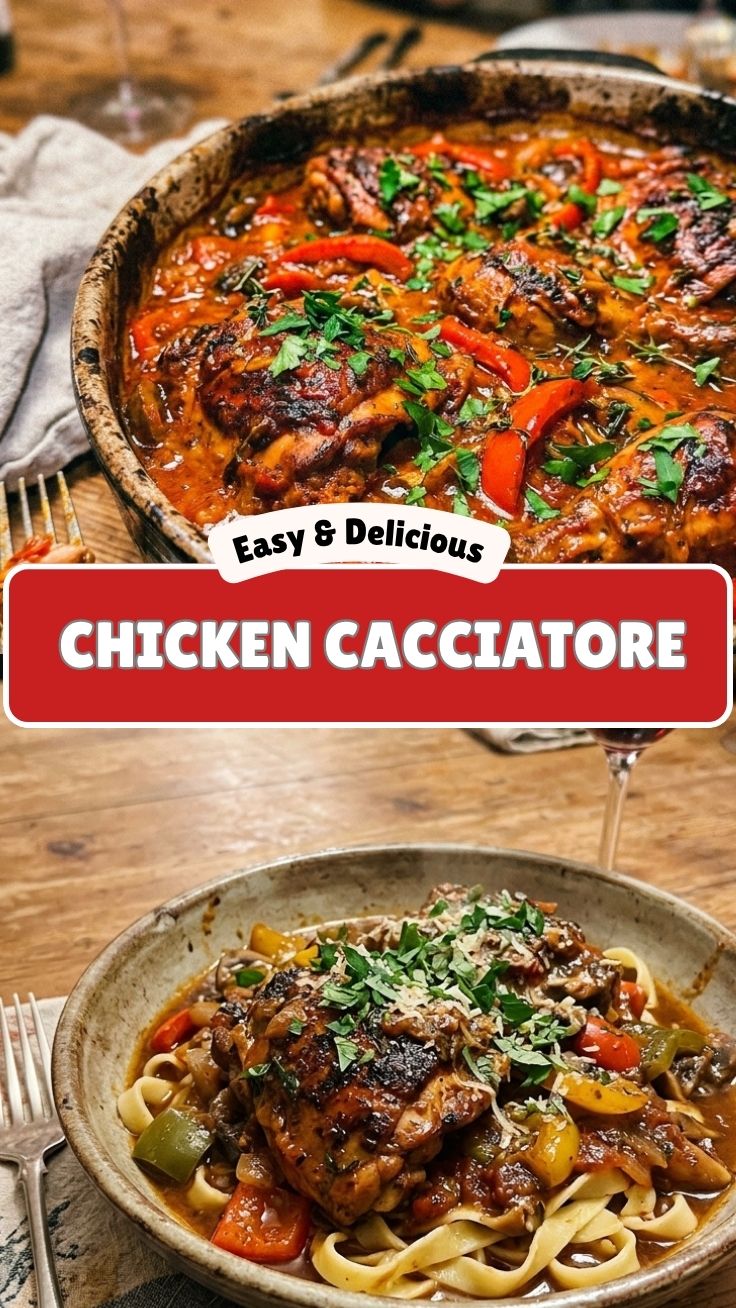
– Prep time: 20 minutes (chop veggies, pat chicken dry, measure ingredients)
– Cook time: 45–55 minutes (active simmering + resting)
– Resting time: 5–10 minutes (covered, off heat) before serving
When to start: If dinner is at 7:00 PM, begin prep by 5:55 PM. The dish holds beautifully, so you can make it ahead and reheat. For best flavor, cook 1 day in advance and refrigerate overnight—the flavors meld even more.
—
Step-by-Step Instructions (H2)
1. Brown the chicken – Pat chicken dry with paper towels; season generously with salt and pepper. Heat 2 tbsp olive oil in Dutch oven over medium‑high. Sear chicken in batches (don’t crowd) until golden on both sides, about 4–5 minutes per side. Transfer to a plate. Temperature tip: The oil should shimmer before adding chicken to ensure crust forms without sticking.
2. Sauté aromatics – Reduce heat to medium. Add remaining 1 tbsp olive oil, then onion and bell peppers. Cook 5 minutes, stirring occasionally, until softened. Add garlic and mushrooms; cook 2 minutes more. Texture cue: Mushrooms should release liquid and then start browning.
3. Deglaze with wine – Pour in red wine, scraping up browned bits from the bottom. Let wine reduce by half (about 2 minutes). This step deepens the umami.
4. Build the sauce – Add crushed tomatoes, chicken broth, oregano, thyme, bay leaf, and capers. Stir to combine. Nestle the chicken pieces back into the pot, skin side up (skin stays crispier). Bring to a gentle simmer, then cover and reduce heat to low. Cook 30 minutes, flipping chicken halfway.
5. Finish and rest – Uncover and cook 5–10 minutes more to thicken sauce slightly. Remove bay leaf. Taste and adjust salt/pepper. Sprinkle fresh basil on top. Let rest 5 minutes before serving.
Keyword mention: This Chicken Cacciatore recipe stays true to the heart of Italian chicken recipes by relying on simple, bold ingredients. No shortcuts—just honest cooking.
—
Nutritional Benefits & Advantages (H2)
Chicken Cacciatore is a balanced meal in one pot. Chicken thighs provide high‑quality protein (about 25g per serving) and essential B vitamins for energy metabolism. The generous mix of bell peppers and tomatoes delivers vitamin C (supports immunity) and lycopene (a powerful antioxidant). Mushrooms add selenium and potassium, while olive oil contributes heart‑healthy monounsaturated fats. Compared to fried or cream‑based dishes, this recipe is naturally low in saturated fat (about 4g per serving) and free of added sugars. It’s also inherently gluten‑free and dairy‑free, making it suitable for common dietary restrictions without any special swaps.
—
Tips Variations & Cooking Advice (H2)
– Flavor variation: Add 2 anchovy fillets when sautéing garlic for deeper savory notes. Or toss in ½ tsp red pepper flakes for heat.
– Ingredient swap: Use chicken breasts? Reduce simmer time to 20 minutes (check internal temp 165°F). For boneless thighs, cook 25 minutes.
– Cooking method: Slow cooker (low 6 hours) or Instant Pot (high pressure 12 minutes, then quick release) work well. Brown chicken first for best flavor.
– Portion change: Double the sauce but keep chicken amount same if you want extra for pasta or rice.
– Dietary adaptation: Vegan? Replace chicken with 2 cans of chickpeas (add halfway through simmer). Use vegetable broth instead of chicken.
– Serving ideas: Ladle over polenta, pasta, or crusty bread to catch every drop of sauce.
—
Common Mistakes to Avoid (H2)
1. Skipping the browning – Without searing, you lose deep caramelized flavor. Take the time to get a golden crust.
2. Overcrowding the pot – Too many pieces steam instead of brown. Sear in batches.
3. Boiling instead of simmering – A vigorous boil will dry out chicken and break down vegetables into mush. Keep liquid at a gentle bubble.
4. Underseasoning – Cacciatore relies on layers of salt and pepper. Season the chicken, the veggies, and taste the sauce before serving.
5. Adding all herbs at once – Fresh herbs like basil should go in at the end to preserve brightness. Dried herbs like oregano can go in earlier.
—
Storage & Meal Prep Tips (H2)
– Refrigeration: Cool completely and store in an airtight container for up to 4 days. The flavor improves after day one.
– Freezing: Portion into freezer‑safe bags (remove excess air) or containers. Freeze up to 3 months. Thaw overnight in fridge before reheating.
– Reheating: Warm gently on the stovetop over medium‑low heat, adding a splash of broth or water if sauce has thickened too much. Microwave works too but may dry out chicken—cover loosely and use 70% power.
– Meal prep: Cook a double batch on Sunday; use half for lunches and half for a dinner later in the week. Serve with a simple green salad and rice for variety.
—
Conclusion (H2)
Making Chicken Cacciatore at home is a rewarding journey into rustic Italian cooking. With one pot, a handful of pantry staples, and about an hour, you create a deeply satisfying meal that rivals any trattoria version. This dish proves why Italian chicken recipes remain timeless: they celebrate quality ingredients and simple techniques. Whether you’re cooking for family or just yourself, this recipe delivers comfort, nutrition, and a sense of accomplishment. Try it tonight, and don’t forget to share your results or tag a friend who loves hearty dinners. For more authentic Italian inspiration, browse our collection of slow‑simmered classics.
—
FAQs (H2)
1. Can I use boneless, skinless chicken breasts instead of thighs?
Yes, but reduce the simmer time to about 20 minutes. Check internal temperature reaches 165°F. The white meat is leaner, so add 1–2 tablespoons of olive oil to keep it moist.
2. Why does my sauce taste acidic?
Tomato acidity can be mellowed by simmering longer (add 10 minutes uncovered) or stirring in ½ teaspoon of sugar or a pinch of baking soda. A splash of heavy cream also balances acidity.
3. Can I make this without wine?
Absolutely. Substitute with an equal amount of chicken broth plus 1 tablespoon of balsamic vinegar or lemon juice for brightness.
4. How do I thicken the sauce if it’s too thin?
Uncover the pot during the last 10 minutes of cooking and let it reduce. Alternatively, mix 1 tablespoon cornstarch with 2 tablespoons cold water and stir into the simmering sauce.
5. Is Chicken Cacciatore freezer‑friendly?
Yes. Freeze in airtight containers for up to 3 months. Thaw overnight in the fridge. Reheat gently; the sauce may separate slightly but will re‑emulsify when stirred.
Quick way to grow: 6 Chicken Cacciatore SecretsChicken Cacciatore
Ingredients
Equipment
Method
- Season the chicken thighs with salt and pepper.
- Heat olive oil in a large skillet over medium-high heat, then brown the chicken thighs on both sides and set aside.
- Add onion and bell peppers to the skillet, cooking until softened, about 5-7 minutes.
- Stir in minced garlic and cook for another minute until fragrant.
- Pour in crushed tomatoes, chicken broth, and oregano, then bring the mixture to a simmer.
- Return the chicken thighs to the skillet, reduce heat to low, cover, and simmer for 20-25 minutes or until chicken is cooked through and tender.
- Serve hot, optionally garnished with fresh parsley.
- For a richer flavor, marinate the chicken in herbs and spices, or brown it in butter before adding it to the sauce.