Why Settle for Store-Bought? Your Ultimate Guide to the Perfect Hummus (Homemade)
Have you ever wondered why the hummus from your favorite Mediterranean restaurant tastes so much better than the tub from the grocery store? The secret isn’t a guarded family recipe—it’s freshness, quality ingredients, and the ability to control every element of the process. Making your own Hummus (Homemade) transforms this simple dip into a creamy, flavorful masterpiece that elevates everything from veggie sticks to grain bowls. Plus, when you master a solid Hummus Recipe, you unlock endless possibilities for customization that no store brand can match.
—
Ingredients & Kitchen Tools
Core Ingredients
– 1 can (15 oz) chickpeas (garbanzo beans) – Drained and rinsed. For extra creaminess, remove the skins (see tips below).
– ⅓ cup tahini (sesame paste) – Stir well before measuring; separation is natural.
– 2–3 tablespoons fresh lemon juice – About half a lemon. Bottled juice lacks brightness.
– 1 small garlic clove – Start with one; add more if you love garlic intensity.
– 3–4 tablespoons ice-cold water – Key for achieving that silky, airy texture.
– 3 tablespoons extra-virgin olive oil – Reserve a drizzle for garnish.
– ½ teaspoon ground cumin – Optional but adds warmth and depth.
– Salt to taste – Start with ½ teaspoon.
Kitchen Tools
– Food processor or high-speed blender – A standard blender may require more scraping.
– Fine-mesh strainer – For rinsing chickpeas and optional skin removal.
– Rubber spatula – For scraping down the bowl between processing.
– Measuring spoons – Precision matters with tahini and lemon juice.
– Serving bowl – A shallow bowl shows off the swirl of olive oil.
Optional Substitutions
– Tahini alternative: Sunflower seed butter or Greek yogurt (creates a different flavor profile).
– Garlic swap: Roasted garlic for a mellow, sweet taste.
– Oil-free version: Omit olive oil; use aquafaba (chickpea liquid) for moisture.
—
Prep Time & Cooking Schedule
– Prep time: 10 minutes (including peeling chickpeas—or skip for rustic texture).
– Active processing: 2–3 minutes in the food processor.
– Resting time: 10–15 minutes at room temperature (allows flavors to meld).
– Chill time (optional): 30 minutes in the fridge for a firmer, spreadable consistency.
Context to help you plan: This is one of the fastest recipes you’ll ever make. While the chickpeas are draining, you can juice the lemon and measure the tahini. If peeling chickpeas, budget an extra 5 minutes. The entire process fits comfortably into a lunch prep session or a spontaneous appetizer craving.
—
Step-by-Step Instructions
Step 1: Prepare the chickpeas. Drain and rinse the canned chickpeas thoroughly. For the smoothest hummus ever, pinch each chickpea between your fingers to slip off the skin. This step is tedious but transforms the texture from gritty to velvety. I recommend doing it while listening to a podcast.
Step 2: Blend the tahini and lemon juice. In your food processor, combine the tahini and lemon juice. Process for 30 seconds until the mixture becomes thick, pale, and creamy. This step emulsifies the tahini, preventing a bitter taste later.
Step 3: Add garlic and seasonings. Add the garlic clove, cumin, and salt. Process for another 20 seconds. Scrape down the sides.
Step 4: Incorporate the chickpeas. Add half the chickpeas and process for 30 seconds. Scrape sides, then add the remaining chickpeas and process for 1 minute. The mixture will look thick and clumpy at this stage.
Step 5: Achieve the perfect texture. With the processor running, drizzle in the ice-cold water through the feed tube. Let it run for 1–2 minutes until the hummus is smooth, creamy, and pale beige. If it’s too thick, add water one tablespoon at a time. This Hummus Recipe relies on patience: don’t rush the processing.
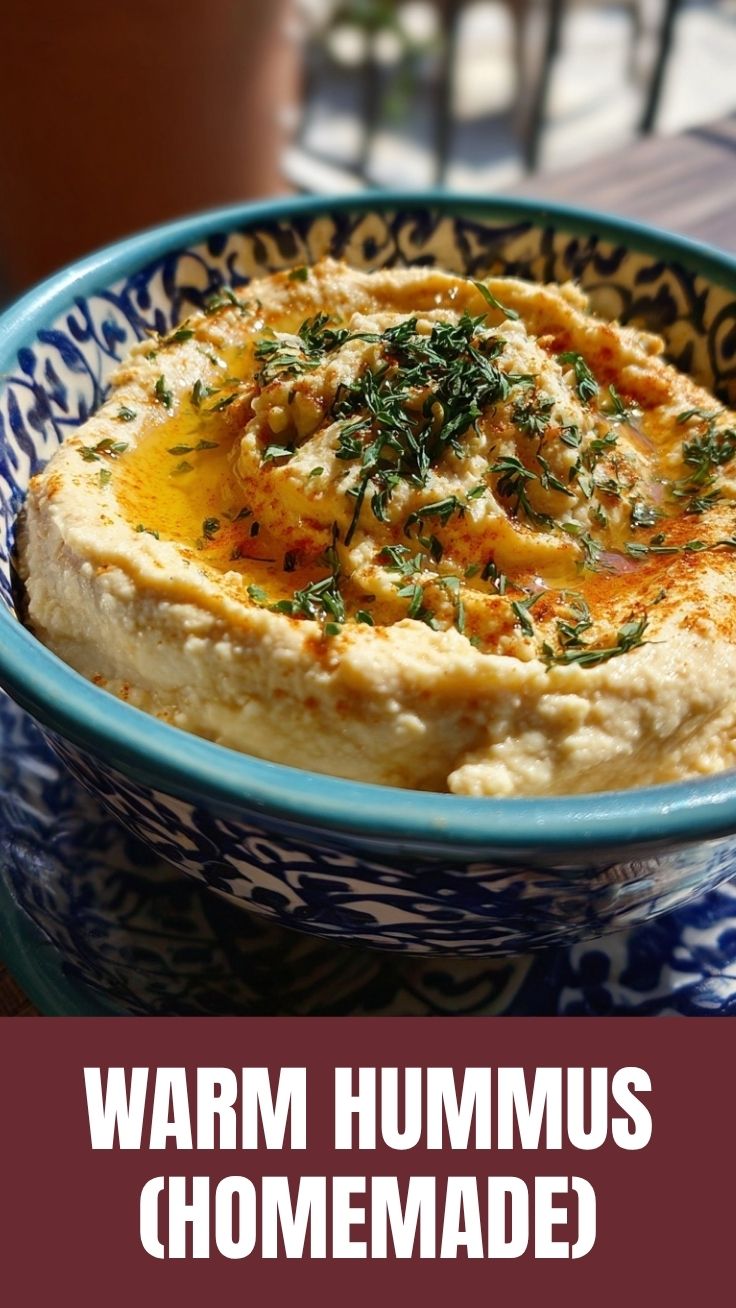
Step 6: Final adjustments. Taste and adjust salt or lemon juice. Add the olive oil and pulse briefly to incorporate. Spread onto a plate, create a well with the back of a spoon, and drizzle with extra olive oil, a sprinkle of paprika, and fresh parsley. Once you perfect this base Hummus (Homemade), you’ll never go back.
Pro tip on temperature: Using ice-cold water helps the hummus whip up airy and light. Room-temperature water produces a denser result.
—
Nutritional Benefits & Advantages
Homemade hummus is a nutritional powerhouse. Chickpeas provide plant-based protein and fiber, supporting digestive health and satiety. Tahini contributes healthy fats, calcium, and magnesium, while olive oil adds antioxidants and anti-inflammatory polyphenols. A typical 2-tablespoon serving contains roughly:
– Calories: 70–80
– Protein: 3g
– Fiber: 2g
– Healthy fats: 5g
By making it at home, you avoid preservatives, excess sodium, and unhealthy oils often found in commercial brands. This dip fits seamlessly into Mediterranean, vegetarian, vegan, and gluten-free diets.
—
Tips, Variations & Cooking Advice
Flavor Variations
– Roasted red pepper hummus: Blend in ½ cup roasted red peppers with the chickpeas.
– Spicy hummus: Add ½ teaspoon cayenne or a diced jalapeño.
– Herb hummus: Fold in fresh basil, cilantro, or dill after processing.
Ingredient Swaps
– Chickpea alternative: Use edamame or white beans for a different twist.
– Lemon substitute: White wine vinegar works in a pinch (use half the amount).
Dietary Adaptations
– Gluten-free: Naturally gluten-free—just double-check your tahini label.
– Dairy-free: Already dairy-free; skip yogurt-based variations.
– Low-fat: Reduce olive oil to 1 tablespoon and use aquafaba for creaminess.
Cooking Advice
– Texture trick: Warm the chickpeas in the microwave for 20 seconds before processing. Warm legumes blend more smoothly.
– Batch prep: Double the recipe and freeze half (see storage tips).
—
Common Mistakes to Avoid
1. Skipping the peel: Unpeeled chickpeas yield a grainy, thick hummus. Invest 5 minutes in peeling—it’s worth it.
2. Overloading garlic: Raw garlic intensifies over time. Start with one small clove; you can always add more.
3. Using cold tahini: Straight-from-the-fridge tahini seizes up. Let it sit at room temperature for 15 minutes before using.
4. Under-processing: A gritty hummus usually means you stopped the food processor too early. Let it run a full 2 minutes.
5. Over-salting: Salt early but taste late. The flavors concentrate as the hummus rests, so you might need less than you think.
—
Storage & Meal Prep Tips
Hummus stores beautifully, making it ideal for weekly meal prep.
– Refrigeration: Transfer to an airtight container. Press plastic wrap directly onto the surface to prevent a skin from forming. Stays fresh for 5–7 days.
– Freezing: Portion into freezer-safe containers or ice cube trays (for single servings). Freeze for up to 3 months. Thaw overnight in the refrigerator.
– Reheating: Bring to room temperature before serving. Never microwave plastic containers—transfer to a bowl and stir well. If the texture separates after thawing, whisk in a teaspoon of warm water or olive oil.
– Serving after storage: Drizzle with fresh olive oil and a squeeze of lemon to revive the flavors.
—
Conclusion
Homemade hummus is proof that the simplest recipes often yield the most satisfying results. By controlling your ingredients and techniques, you can create a dip that’s creamier, fresher, and more nutritious than anything in a plastic tub. Whether you’re spreading it on a sandwich, dipping raw vegetables, or using it as a base for a grain bowl, mastering this Hummus Recipe changes everything. And once you experience the difference of Hummus (Homemade), you’ll wonder why you ever bought the store-bought version. I’d love to hear about your variations and successes—share your results in the comments or tag me in your creations!
—
FAQs
Can I use dried chickpeas instead of canned?
Absolutely. Soak ½ cup dried chickpeas overnight, then cook until tender (about 1–1.5 hours). Reserve the cooking liquid and use it instead of water for added flavor. Dried chickpeas often produce an even creamier texture.
Why is my hummus bitter?
Bitterness usually comes from two sources: tahini (especially if it’s old or low-quality) or over-processing garlic. Use fresh tahini, taste before adding all the garlic, and add a pinch of sugar to balance if needed.
Can I make hummus without a food processor?
Yes, but it requires more elbow grease. Use a potato masher or fork to mash chickpeas until paste-like, then whisk in tahini, lemon, and seasonings. The texture will be chunkier but still delicious.
How do I fix hummus that’s too thick?
Add ice-cold water one tablespoon at a time while the processor runs. You can also add a splash of aquafaba or an extra teaspoon of lemon juice for a flavor boost.
What if I don’t have tahini?
Sunflower seed butter, almond butter, or even silken tofu can replace tahini. The flavor will change significantly, so taste and adjust seasonings accordingly.
Quick way to grow your Hummus (Homemade) garden
Ingredients
Equipment
Method
- Combine chickpeas, tahini, lemon juice, garlic, cumin, and salt in a food processor.
- Blend until well combined, then gradually add cold water spoonful by spoonful until smooth.
- Taste and adjust seasonings as needed, adding more salt or lemon juice if desired.
- Serve immediately with your favorite dippers or refrigerate for later.