Why This Soup Will Change Your Meal Prep Forever
Have you ever wondered why restaurant-quality Vegetable Soup tastes so much richer than what you make at home? The secret isn’t a fancy technique or rare ingredients—it’s understanding how to layer flavors and control texture. Making your own Homemade Vegetable Soup from scratch is not only healthier and more affordable, but it also lets you customize every spoonful to your taste. In this post, we’ll walk through a foolproof method for creating a deeply satisfying bowl of Vegetable Soup that rivals anything from a professional kitchen.
—
Ingredients & Kitchen Tools
Ingredients (serves 4–6)
– 2 tbsp olive oil (or avocado oil for higher smoke point)
– 1 medium onion, diced (yellow or sweet onion adds sweetness)
– 2 garlic cloves, minced (fresh is best; jarred works in a pinch)
– 2 celery stalks, diced (adds earthy depth)
– 2 carrots, peeled and diced (for natural sweetness and color)
– 1 medium zucchini, diced (optional; adds moisture)
– 1 can (14 oz) diced tomatoes (fire-roasted for smokiness)
– 4 cups low-sodium vegetable broth (or chicken broth if not vegetarian)
– 1 cup water (adjust for desired consistency)
– 1 tsp dried thyme (or 1 tbsp fresh thyme leaves)
– 1 bay leaf (removable before serving)
– 1 cup chopped green beans (fresh or frozen)
– 1 cup corn kernels (fresh, frozen, or canned—drained)
– Salt and black pepper to taste
– Fresh parsley or basil for garnish (optional)
Kitchen Tools
– Large stockpot or Dutch oven (5–6 quart capacity)
– Chef’s knife and cutting board
– Wooden spoon or heat-resistant spatula
– Measuring cups and spoons
– Ladle for serving
– Optional: immersion blender if you want a partially puréed texture
> Note: Feel free to swap any vegetable based on season or preference. The beauty of this recipe lies in its flexibility.
—
Prep Time & Cooking Schedule
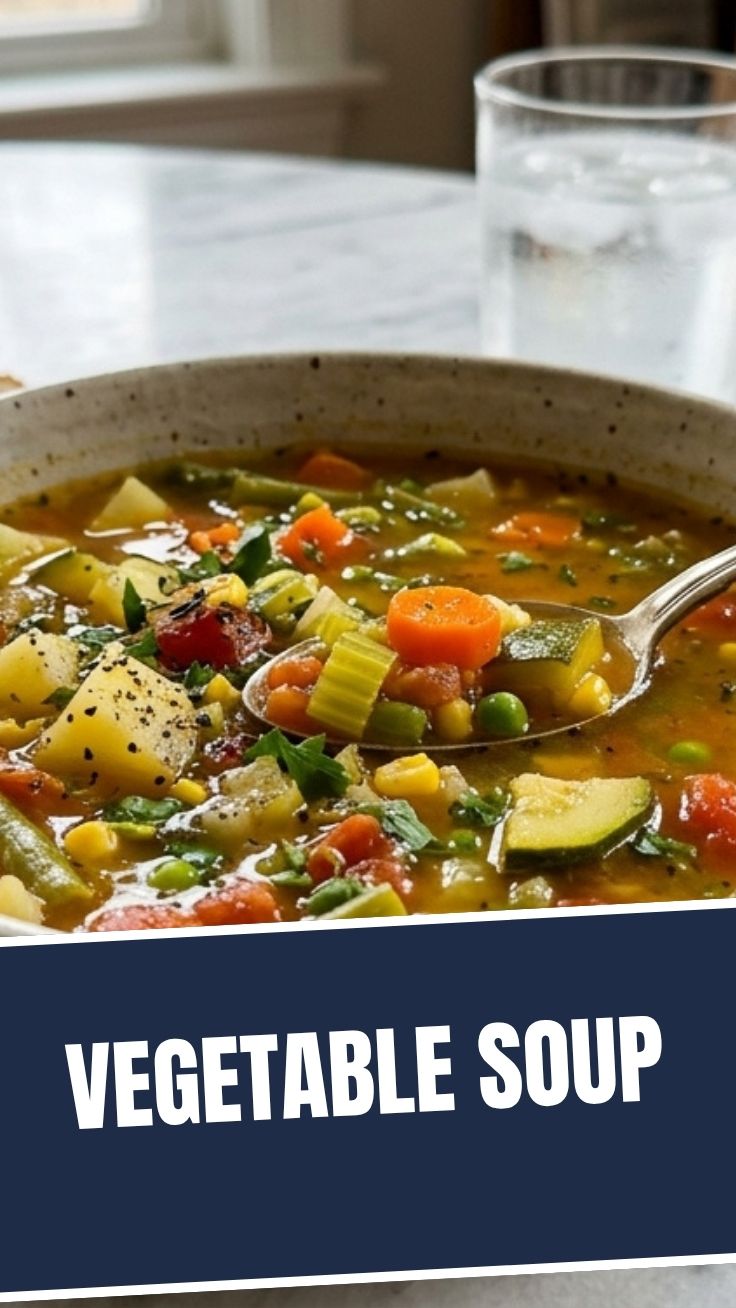
– Prep time: 15 minutes (chopping vegetables, mincing garlic)
– Cook time: 35–40 minutes (sautéing, simmering)
– Resting time: 5 minutes (allows flavors to meld)
– Total time: about 1 hour
Plan ahead: This soup tastes even better the next day. Make it in the evening for a no-fuss lunch or dinner the following day.
—
Step-by-Step Instructions
1. Sauté the aromatics: Heat olive oil in a large pot over medium heat. Add onion, celery, and carrots. Cook for 5–7 minutes until softened and lightly golden. Stir occasionally to prevent sticking.
Tip: If the vegetables start to brown too fast, lower the heat slightly—you want them tender, not burnt.
2. Add garlic and spices: Stir in minced garlic, dried thyme, and a pinch of salt. Cook for 1 minute until fragrant. This step builds the flavor base for your Vegetable Soup.
3. Pour in liquids: Add diced tomatoes (with juices), vegetable broth, and water. Drop in the bay leaf. Bring to a gentle boil, then reduce heat to a simmer.
4. Simmer the base: Cover and let cook for 15 minutes. This allows the carrots and celery to become tender while the broth absorbs the aromatic flavors. During this time, you can prep the zucchini, green beans, and corn.
5. Add remaining vegetables: Stir in zucchini, green beans, and corn. Continue simmering uncovered for another 10–15 minutes until all vegetables are fork-tender. Taste and adjust salt and pepper.
6. Finish and serve: Remove the bay leaf. For a thicker, creamier Homemade Vegetable Soup, use an immersion blender to partially purée about one-third of the soup (optional). Ladle into bowls, garnish with fresh herbs, and serve hot with crusty bread or a side salad.
—
Nutritional Benefits & Advantages
This soup is a powerhouse of nutrients. Carrots provide beta-carotene (vitamin A), while celery offers antioxidants and fiber. Zucchini and green beans contribute vitamins C and K. The vegetable broth base is low in calories but high in hydration. By making it at home, you control sodium levels—store-bought versions often contain excessive salt and preservatives. Plus, this dish is naturally vegan, gluten-free, and dairy-free, making it suitable for most dietary needs.
—
Tips Variations & Cooking Advice
– Flavor boost: Add a splash of lemon juice or apple cider vinegar just before serving to brighten the soup.
– Protein add-ins: Stir in cooked lentils, chickpeas, or shredded chicken for extra heartiness.
– Herb swap: Use rosemary, oregano, or Italian seasoning instead of thyme.
– Creamy version: Blend in ½ cup unsweetened coconut milk or cashew cream after cooking.
– Slow cooker method: Sauté aromatics first, then transfer everything to a slow cooker. Cook on low for 6–8 hours or high for 3–4 hours.
– Portion control: This recipe freezes well—make a double batch and portion for quick weekday meals.
—
Common Mistakes to Avoid
1. Overcooking vegetables: Simmering too long turns veggies mushy. Add delicate ones (zucchini, corn) later in the process.
2. Under-seasoning: Vegetable soup needs enough salt to bring out flavors. Taste and adjust gradually.
3. Skipping the sauté: Raw aromatics won’t develop the same depth of flavor. Always cook onion, celery, and garlic first.
4. Forgetting to remove the bay leaf: It’s inedible—make sure to fish it out before serving.
5. Using too much water: More liquid dilutes taste. Stick to the recommended broth-to-water ratio.
—
Storage & Meal Prep Tips
– Refrigeration: Let soup cool completely, then transfer to an airtight container. Store for up to 4 days.
– Freezing: Portion into freezer-safe bags or containers. Leave 1-inch headspace for expansion. Frozen soup stays fresh for 3 months.
– Reheating: Thaw overnight in the fridge or reheat directly from frozen in a saucepan over medium-low heat, stirring occasionally. Add a splash of broth or water if it thickens too much.
– Flavor after storage: The soup’s taste often improves after a day—the ingredients have time to meld.
—
Conclusion
Creating a satisfying Vegetable Soup from scratch is easier than you think, and the rewards are immense: better taste, nutrition, and the pride of a Homemade Vegetable Soup tailored to your family’s preferences. Whether you enjoy it as a light lunch, a comforting dinner, or a meal-prep staple, this recipe delivers consistent, delicious results. Give it a try and share your favorite variations in the comments below—we’d love to hear how it turned out!
—
FAQs
Q1: Can I use frozen vegetables instead of fresh?
Yes! Frozen vegetables work great—add them directly to the pot without thawing. Adjust cook time slightly to account for the extra moisture they release.
Q2: My soup tastes too acidic. How can I fix it?
Add a pinch of baking soda to neutralize acidity, or stir in a teaspoon of sugar or honey. A splash of coconut milk also mellows the flavor.
Q3: How do I make this soup more filling?
Add a can of drained and rinsed chickpeas, cooked quinoa, or small pasta shapes (like ditalini). You can also serve it over brown rice.
Q4: Can I make this in an Instant Pot?
Absolutely. Use the Sauté function for aromatics, then pressure cook on High for 5 minutes with a quick release. Add delicate vegetables after pressure cooking.
Q5: Why is my soup bland even after adding salt?
Try adding an acid (lemon juice, vinegar) or a splash of tamari/soy sauce. Umami-rich ingredients like tomato paste or nutritional yeast can also deepen flavor.
Proven way to grow delicious Vegetable Soup recipes
Ingredients
Equipment
Method
- Chop all vegetables into bite-sized pieces; mince the garlic.
- Heat olive oil in a large pot or Dutch oven over medium heat.
- Add onion, carrots, and celery to the pot and sauté until softened, about 5-7 minutes.
- Stir in minced garlic, oregano, and basil; cook for another minute until fragrant.
- Add diced tomatoes, potatoes, zucchini, vegetable broth, and water to the pot.
- Bring the soup to a boil, then reduce heat, cover, and simmer for 25-30 minutes, or until vegetables are tender.
- Season with salt and pepper to taste before serving.