Authentic Greek Salad Recipe: A Fresh and Flavorful Mediterranean Classic
Have you ever bitten into a perfectly crisp cucumber, tasted the briny pop of a Kalamata olive, and felt transported to a sun-drenched seaside taverna? That’s the magic of a well-made Greek Salad. This isn’t just a pile of lettuce; it’s a vibrant celebration of fresh, simple ingredients that come together in under 15 minutes. Learning to prepare this iconic dish at home isn’t only about saving money—it’s about controlling the quality of your olive oil, choosing the ripest tomatoes, and crafting a salad that’s perfectly tailored to your taste. Whether you’re following a Mediterranean diet for heart health or simply craving a refreshing meal, homemade Greek salad delivers unmatched flavor and nutritional value.
Ingredients & Kitchen Tools
For the Salad
– 4 large ripe tomatoes (use Roma or beefsteak; avoid mealy varieties)
– 1 English cucumber (or 2 Persian cucumbers; no need to peel if thin-skinned)
– 1 medium red onion (sliced thinly; soak in cold water 5 minutes to mellow bite)
– 1 green bell pepper (seeded and sliced into rings)
– 1 cup Kalamata olives (pitted; Castelvetrano are a milder option)
– 6 ounces block feta cheese (never pre-crumbled; it’s drier and less creamy)
– 2 tablespoons fresh oregano leaves (or 1 teaspoon dried)
For the Dressing
– 1/4 cup extra virgin olive oil (high-quality; taste it first)
– 2 tablespoons red wine vinegar (or fresh lemon juice)
– 1/2 teaspoon sea salt (adjust to taste)
– 1/4 teaspoon black pepper (freshly ground)
Essential Tools
– Large mixing bowl
– Sharp chef’s knife
– Cutting board
– Small jar or bowl for dressing
– Vegetable peeler (optional for cucumber)
– Salad servers or tongs
Optional Substitutions
– Swap feta for vegan feta or marinated tofu for dairy-free version
– Substitute olives with capers if you’re not a fan
– Use white balsamic vinegar instead of red wine vinegar for a milder tang
Prep Time & Cooking Schedule
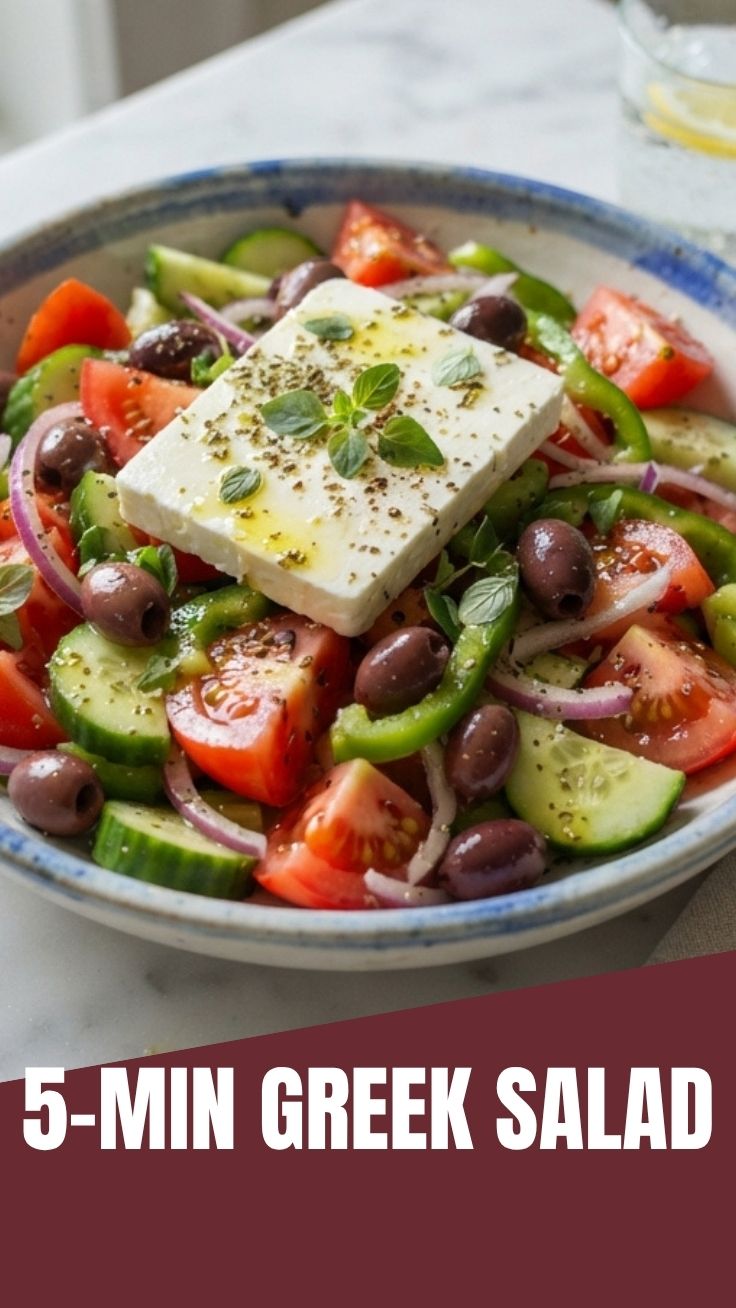
– Prep Time: 15 minutes
– Cook Time: 0 minutes (no cooking required)
– Resting Time: 10 minutes (critical for flavor melding)
– Total Time: 25 minutes
This salad is perfect for busy weeknights, last-minute potlucks, or meal prep. Because there’s no cooking involved, you can whip it up while your grill heats or as a quick lunch. The resting time is non-negotiable—it allows the salt to draw out tomato juices, creating a natural, flavorful dressing that soaks into the vegetables.
Step-by-Step Instructions
1. Prepare the vegetables: Cut tomatoes into 1-inch chunks (remove seeds if you prefer less liquid). Slice cucumber into half-moons about 1/2-inch thick. Thinly slice red onion into rings, then separate the rings. Cut bell pepper into bite-sized strips.
2. Combine in a bowl: Add all chopped vegetables to a large mixing bowl. Scatter Kalamata olives over the top. Do not add the feta yet.
3. Make the dressing: In a small jar, combine olive oil, red wine vinegar, salt, and pepper. Shake vigorously until emulsified. Taste and adjust seasoning—the dressing should be bold since vegetables will absorb it.
4. Dress and rest: Pour dressing over the vegetables and toss gently. Let the salad rest at room temperature for 10 minutes. This marination step is what transforms a simple Greek Salad into a deeply flavorful dish. The salt draws moisture from the tomatoes, creating a natural vinaigrette that coats every ingredient. This technique is a hallmark of Mediterranean cooking, where simplicity and patience yield maximum flavor.
5. Add feta and oregano: Just before serving, place the block of feta directly on top of the salad (do not crumble). Sprinkle fresh oregano leaves over everything. Drizzle with a final touch of extra virgin olive oil for shine.
6. Serve: Bring the bowl to the table whole and break the feta into chunks as you serve. This preserves the creamy texture and prevents the cheese from dissolving into the dressing.
Pro Tip: For the best texture, ensure all vegetables are at room temperature. Cold ingredients mute the flavors of olive oil and vinegar.
Nutritional Benefits & Advantages
This salad is a powerhouse of nutrients, perfectly aligned with the heart-healthy Mediterranean diet principles. Each serving (approximately 1.5 cups) provides:
– Healthy Fats: Extra virgin olive oil is rich in monounsaturated fats and polyphenols, which reduce inflammation and support cardiovascular health.
– Protein & Calcium: Feta cheese offers about 6 grams of protein and 20% of your daily calcium needs per ounce.
– Vitamins & Antioxidants: Tomatoes are loaded with lycopene (better absorbed when paired with olive oil), while cucumbers provide hydration and vitamin K.
– Low Calories: Approximately 250-300 calories per serving, making it an excellent weight-management option.
– Gluten-Free & Low-Carb: Naturally suitable for gluten-sensitive diets and keto-friendly when eaten in moderation.
Tips, Variations & Cooking Advice
Flavor Twists
– Add protein: Grilled chicken, shrimp, or chickpeas transform this into a main dish.
– Herb swap: Use fresh mint or basil instead of oregano for a different aromatic profile.
– Spice it up: Add a pinch of red pepper flakes or a drizzle of harissa paste.
Dietary Adaptations
– Vegan: Replace feta with marinated tofu or cashew cheese. Omit honey in dressing.
– Dairy-Free: Use a high-quality vegan feta or skip cheese entirely and add extra olives.
– Low-Sodium: Rinse olives and use less salt in the dressing; opt for low-sodium feta.
Alternative Methods
– Grilled version: Grill the vegetables (especially bell peppers and onions) for 3-4 minutes before assembling for a smoky flavor.
– Deconstructed salad: Serve components separately on a platter for a stunning presentation.
Common Mistakes to Avoid
| Mistake | Solution |
|———|———-|
| Using pre-crumbled feta | Always buy block feta; it stays creamier and doesn’t dissolve into the dressing |
| Over-dressing | Start with half the dressing; you can always add more, but you can’t remove it |
| Cutting vegetables too small | Large chunks maintain texture and prevent sogginess |
| Skipping the resting time | The 10-minute rest is essential for flavor development |
| Serving straight from the fridge | Cold ingredients mute flavors; let salad sit at room temperature for 10 minutes before serving |
Storage & Meal Prep Tips
– Refrigeration: Store in an airtight container for up to 2 days. Keep feta separate and add just before serving to prevent sogginess.
– Freezing: Not recommended. The texture of tomatoes and cucumbers becomes mushy upon thawing.
– Meal Prep: Chop vegetables and make dressing up to 24 hours in advance. Store vegetables dry (lined with paper towels) and dressing separately. Assemble and dress just before serving.
– Reviving Leftovers: If salad has been dressed, add a splash of fresh lemon juice and a drizzle of olive oil to brighten flavors before serving again.
Conclusion
This Greek Salad recipe proves that you don’t need complicated techniques or exotic ingredients to create a restaurant-quality dish. By focusing on the quality of your produce, letting the ingredients rest, and using a bold, simple dressing, you’ll unlock the true essence of Mediterranean cuisine. The beauty of this salad lies in its adaptability—make it a quick lunch, a side for grilled fish, or a hearty main with added protein. I encourage you to try it this week, experiment with the variations, and share your results in the comments. Once you taste the difference homemade makes, you’ll never go back to pre-made versions.
FAQs
Can I use dried oregano instead of fresh?
Yes, but use 1 teaspoon dried for every 2 tablespoons fresh. Dried oregano is more potent, so adjust accordingly.
What if I don’t have red wine vinegar?
Fresh lemon juice is the classic substitute. Use 2 tablespoons and add a pinch of sugar to balance acidity.
How do I make this salad less salty?
Rinse Kalamata olives under cold water before adding, and use a low-sodium feta or reduce the salt in the dressing.
Can I add lettuce to a Greek salad?
Traditional Greek salad (horiatiki) does not include lettuce. However, you can add romaine for extra crunch if you prefer a more modern version.
How long does dressed Greek salad last?
It’s best eaten within 2 hours of dressing. After that, vegetables release water and become soggy. For meal prep, keep dressing separate.
Proven way to grow the perfect Greek Salad
Ingredients
Equipment
Method
- Chop the cucumber and tomatoes into bite-sized pieces; thinly slice the red onion.
- Combine the chopped vegetables, Kalamata olives, and crumbled feta cheese in a large bowl.
- Whisk together the olive oil and red wine vinegar to create the dressing.
- Pour the dressing over the salad and toss gently to combine; serve immediately.