The Ultimate Guide to Perfect French Toast: A Breakfast Game-Changer
Have you ever wondered why some French Toast turns out golden, custardy, and irresistibly delicious while others end up soggy or burnt? The secret isn’t just in the bread—it’s in mastering the technique. Preparing this classic dish at home isn’t just about saving money; it’s about creating a personalized masterpiece that rivals any brunch spot. Whether you’re a novice or a seasoned cook, this data-driven guide will transform your breakfast recipes routine into something extraordinary. Let’s dive into the science and art of making the perfect French Toast that’s crispy on the outside, soft on the inside, and bursting with flavor.
Ingredients & Kitchen Tools
Essential Ingredients
– Brioche or Challah bread (6 slices, 1-inch thick): Stale or day-old bread absorbs custard better without turning mushy.
– Large eggs (3): Provides structure and richness; use farm-fresh for deeper color.
– Whole milk (¾ cup): Full-fat ensures creaminess; substitutes like almond or oat milk work but reduce richness.
– Vanilla extract (1 tsp): Pure extract over imitation for authentic aroma.
– Ground cinnamon (½ tsp): Balances sweetness; add nutmeg or cardamom for depth.
– Granulated sugar (2 tbsp): Dissolves easily; brown sugar adds molasses notes.
– Unsalted butter (2 tbsp): For cooking; salted butter requires adjusting salt elsewhere.
– Maple syrup & fresh berries (for serving): Grade A amber syrup complements the custard.
Kitchen Tools
– Shallow dish (9×13-inch): Wide enough to dip bread without overlapping.
– Whisk or fork: For beating eggs until homogeneous.
– Non-stick skillet or griddle: Ensures even browning; cast iron works with extra butter.
– Spatula: Thin, slotted spatula for flipping without tearing.
– Measuring cups & spoons: Precision matters for custard ratio.
– Cooling rack: Keeps cooked toast crispy while finishing batches.
Optional Substitutions
– Dairy-free: Use full-fat coconut milk for creaminess, or oat milk for neutral flavor.
– Gluten-free: Use sturdy gluten-free brioche; avoid soft sandwich bread.
– Egg-free: Replace eggs with 2 tbsp cornstarch + ¼ cup plant milk per egg.
Prep Time & Cooking Schedule
– Prep Time: 10 minutes (whisk custard, slice bread if needed).
– Resting Time: 5 minutes (let custard soak into bread—don’t skip this!).
– Cook Time: 8-12 minutes (2-3 minutes per side, depending on thickness).
– Total Time: 23-27 minutes.
– Pro Tip: Prep custard the night before; refrigerate in a sealed container. Cook morning-of for freshest results. For busy mornings, consider overnight breakfast recipes like casseroles, but this method yields superior texture.
Step-by-Step Instructions
Step 1: Whisk the Custard
In a shallow dish, combine 3 large eggs, ¾ cup milk, 1 tsp vanilla extract, ½ tsp cinnamon, and 2 tbsp sugar. Whisk vigorously until no streaks of egg white remain and the mixture is pale yellow. Temperature tip: Room-temperature eggs create a smoother custard—remove from fridge 15 minutes prior.
Step 2: Prep the Bread
Lay 6 slices of brioche on a baking sheet. Slightly stale bread (1-2 days old) absorbs custard evenly without disintegrating. Texture cue: Bread should feel slightly firm, not hard—fresh bread leads to sogginess.
Step 3: Soak and Rest
Dip each slice into the custard for 15 seconds per side—don’t oversoak! Transfer to a wire rack and let rest for 5 minutes. This allows the custard to penetrate the bread’s interior without turning to mush. For ultra-thick French Toast, press gently with a spatula after dipping to remove excess.
Step 4: Cook to Golden Perfection
Heat a non-stick skillet over medium heat (350°F/175°C). Add 1 tbsp butter and swirl. Place soaked bread in skillet—listen for a gentle sizzle. Cook 2-3 minutes until deep golden brown. Flip and cook another 2 minutes. Adjustment: If browning too fast, lower heat; if too pale, increase temp slightly. Butter the pan between batches for consistent browning.
Step 5: Keep Warm and Serve
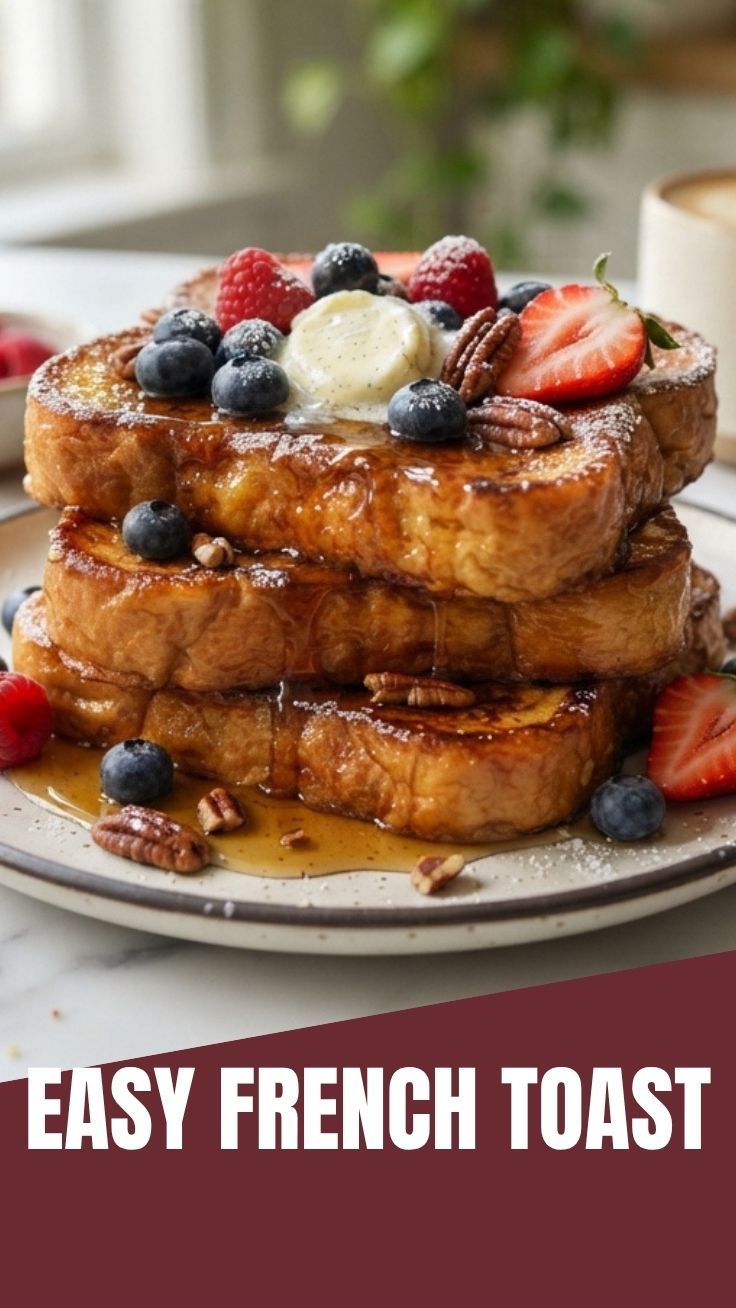
Transfer cooked slices to a cooling rack in a 200°F oven. This maintains crispiness without steaming. Serve immediately with warm maple syrup, fresh berries, and a dusting of powder sugar. For an elevated touch, add a pinch of flaky sea salt.
This is where the magic of great breakfast recipes shines—simple techniques yield restaurant-quality results.
Nutritional Benefits & Advantages
– Protein-packed: 3 eggs per serving provide ~18g protein, supporting muscle repair and satiety.
– Energy-rich: Brioche offers complex carbs from unbleached flour, sustained energy release.
– Vitamin boost: Cinnamon contains manganese and antioxidants, aiding blood sugar regulation.
– Calcium source: Whole milk contributes ~200mg calcium per serving for bone health.
– Customizable macros: Swap whole milk for low-fat options or use whole-grain bread for added fiber.
Compared to sugary cereal or processed pastries, homemade French Toast offers balanced macros and real-food nutrients.
Tips, Variations & Cooking Advice
Flavor Variations
– Cinnamon swirl: Add ½ tsp nutmeg and 1 tbsp brown sugar to custard.
– Sweet tooth: Replace vanilla with almond extract; top with chocolate shavings.
– Savory twist: Reduce sugar to 1 tsp, omit cinnamon, add black pepper and Parmesan to custard.
Alternative Cooking Methods
– Oven-baked: Pour custard over bread in a 9×13 dish; bake at 375°F for 20 minutes for a casserole-style dish.
– Air fryer: Cook at 375°F for 5-6 minutes, flipping halfway—crispy without oil.
– Griddle: For large batches, use an electric griddle set to 350°F.
Dietary Adaptations
– Gluten-free: Use GF brioche or thick sourdough; add 1 tbsp cornstarch to custard for binding.
– Dairy-free: Use full-fat coconut milk (shake before measuring) and vegan butter.
– Low-carb: Use keto-friendly bread (almond flour-based) and erythritol instead of sugar.
Portion Changes
– Single serve: Halve all ingredients for 2 slices.
– Feast for 6: Double recipe; cook in batches and keep warm in the oven.
Common Mistakes to Avoid
– Soggy texture: Oversoaking bread is the #1 error. Stick to 15 seconds per side; use stale bread to absorb custard without becoming waterlogged.
– Uneven browning: Heat too high causes burnt exterior with raw interior. Keep medium heat (350°F) and preheat properly.
– Eggy taste: Overmixing custard incorporates too much air, creating a soufflé effect. Whisk gently until combined.
– Sticking: Skillet not hot enough or insufficient butter. Use non-stick and test with a drop of water—it should sizzle.
– Dry crust: Skipping the resting period. Allow 5 minutes post-soak for custard to absorb.
Storage & Meal Prep Tips
– Refrigeration: Store cooked French Toast in an airtight container for up to 3 days. Layer with parchment to prevent sticking.
– Freezing: Place single slices on a baking sheet, freeze 2 hours, then transfer to freezer bags. Keeps 3 months.
– Reheating: For crispiness, toast in a 350°F oven for 8 minutes (not microwave!). For speed, air fry at 375°F for 4 minutes.
– Prep ahead: Make custard base (without bread) up to 2 days in advance; whisk before using. Soak bread just before cooking.
Conclusion
Mastering French Toast at home transforms a simple breakfast into a mindful, delicious ritual. By focusing on custard ratios, soaking times, and heat control, you’ll achieve consistent, crave-worthy results every time. This recipe complements a rotation of breakfast recipes that prioritize flavor without complexity. Whether you’re serving family or planning a brunch party, these techniques ensure golden, custardy perfection. Try it this weekend—your taste buds (and Instagram feed) will thank you. Share your creations or ask questions below; we’d love to see your golden masterpiece!
FAQs
1. Can I use regular sandwich bread for French Toast?
Yes, but it requires less soaking time (10 seconds per side) to avoid sogginess. Use slightly stale bread and custard with 1 less egg for better texture.
2. Why is my French Toast soggy in the middle?
You’re likely oversoaking the bread or using too much custard. Stick to 15 seconds per side and use day-old bread. Also, ensure your heat is medium so the inside cooks before the outside burns.
3. What’s the best milk substitute for a creamy texture?
Full-fat coconut milk mimics whole milk’s richness best. If using almond milk, add 1 tbsp melted coconut oil to the custard for fat.
4. How do I make French Toast for a crowd?
Prepare the custard in a large bowl, dip bread in batches, and cook on a griddle. Keep finished slices on a wire rack in a 200°F oven for up to 30 minutes.
5. Can I add vanilla bean paste instead of extract?
Absolutely! Use ½ tsp vanilla bean paste (contains seeds) in place of 1 tsp extract. Adjust sweetness as paste is slightly sweeter.
Best way to grow 4-star French Toast.French Toast
Ingredients
Equipment
Method
- In a shallow dish, whisk together eggs, milk, heavy cream, sugar, vanilla extract, cinnamon, and a pinch of salt until well combined.
- Heat a griddle or large non-stick skillet over medium heat, then melt a pat of butter.
- Dip each slice of bread into the egg mixture, ensuring both sides are fully coated but not overly saturated.
- Place the soaked bread slices on the hot griddle and cook for 2-3 minutes per side, until golden brown and cooked through.
- Repeat with remaining bread, adding more butter to the griddle as needed.
- Serve the French toast immediately, optionally garnished with powdered sugar, fresh berries, and maple syrup.