The Ultimate Guide to Perfectly Baked Salmon: A Foolproof Recipe for Home Cooks
Have you ever wondered why restaurant-quality salmon seems so elusive when you cook it at home? The secret lies in mastering a few key techniques that transform simple ingredients into a restaurant-worthy meal. Whether you’re a seasoned home chef or a kitchen novice, learning to prepare a perfectly flaky, moist, and flavorful Baked Salmon is a skill that will elevate your weeknight dinners and impress guests. In this comprehensive guide, we’ll explore the science behind tender fish, share practical tips for temperature control, and even introduce you to the smoky elegance of Cedar Plank Salmon as a flavorful variation. Preparing this dish at home not only saves money but also allows you to control the quality of ingredients, ensuring a healthier and more satisfying meal. Let’s dive into the art of baking salmon to perfection.
Ingredients & Kitchen Tools
Ingredients
– 2 salmon fillets (6 oz each): Preferably skin-on for moisture retention; wild-caught offers richer flavor.
– 2 tablespoons olive oil: Helps crisp the skin and distribute seasonings.
– 3 cloves garlic, minced: Adds aromatic depth; use fresh for best results.
– 1 lemon, sliced: Brightens the dish and balances richness.
– 1 teaspoon salt: Enhances natural flavors; use sea salt for texture.
– ½ teaspoon black pepper: Adds a subtle heat; freshly ground is ideal.
– 1 teaspoon dried dill (or 1 tablespoon fresh): Complements salmon’s delicate taste.
– Optional: 1 tablespoon honey or maple syrup: For a sweet glaze variation.
Kitchen Tools
– Baking sheet or dish: Light-colored metal prevents over-browning; glass works too.
– Parchment paper or aluminum foil: Simplifies cleanup and prevents sticking.
– Instant-read thermometer: Ensures precise doneness (145°F internal temp).
– Fish spatula: Thin, flexible metal for easy flipping without breaking the fillet.
– Mixing bowl: For preparing marinades or rubs.
Prep Time & Cooking Schedule
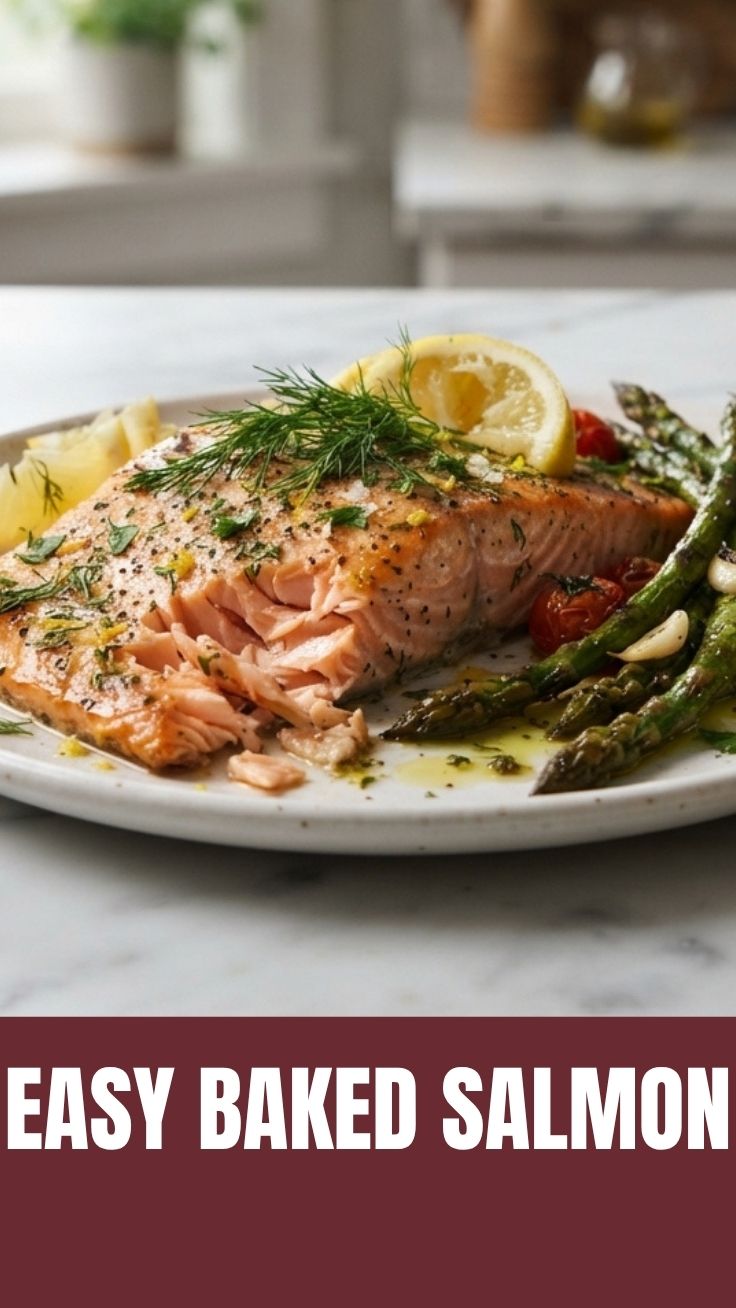
– Prep Time: 10 minutes (includes patting fish dry, mincing garlic, and slicing lemon).
– Cooking Time: 12–15 minutes at 400°F (200°C) for 1-inch thick fillets.
– Resting Time: 3–5 minutes after baking to allow juices to redistribute.
– Marinating Time: If using a marinade, 15–30 minutes at room temperature; avoid longer to prevent texture breakdown.
Plan ahead: Remove salmon from fridge 10 minutes before cooking to ensure even heating. This timeline fits busy weeknights, requiring only 25 minutes total from start to table.
Step-by-Step Instructions
1. Preheat the oven to 400°F (200°C). Line a baking sheet with parchment paper for easy cleanup.
2. Prepare the salmon: Pat fillets dry with paper towels to remove excess moisture—this ensures a crispy exterior. Place skin-side down on the sheet.
3. Season generously: Drizzle olive oil over the fillets, then rub with minced garlic, salt, pepper, and dill. Arrange lemon slices on top for a citrusy aroma.
4. Bake to perfection: Place the sheet in the oven and cook for 12–15 minutes, depending on thickness. For a reliable Baked Salmon , use a thermometer to check the thickest part—145°F is ideal. The fish should flake easily with a fork but remain moist.
5. Optional broil: For a caramelized top, broil for 1–2 minutes after baking, watching closely to avoid burning.
6. Rest and serve: Let the salmon rest for 3 minutes, then garnish with fresh dill or lemon wedges. For a smoky twist, try the Cedar Plank Salmon method by soaking a cedar plank for 1 hour, preheating it on the grill, and baking with a maple-Dijon glaze for 15 minutes.
Tip: If your fillets are uneven in thickness, fold thinner tails under to ensure uniform cooking. Adjust seasoning based on the glaze—honey or maple syrup can balance saltiness.
Nutritional Benefits & Advantages
Salmon is a powerhouse of nutrition, packed with omega-3 fatty acids (EPA and DHA) that support heart health, reduce inflammation, and boost brain function. A 6-ounce serving provides about 40 grams of protein, essential for muscle repair, along with vitamin D, B vitamins, and selenium. Baking preserves these nutrients better than frying, and using olive oil adds healthy monounsaturated fats. This dish is naturally gluten-free and low in carbohydrates, making it suitable for keto, paleo, and Mediterranean diets. The lemon and garlic not only enhance flavor but also provide antioxidants and antimicrobial properties.
Tips Variations & Cooking Advice
– Flavor variations: Swap dill for basil or thyme; add a tablespoon of capers for brininess. Try a miso glaze (2 tbsp miso paste, 1 tbsp mirin, 1 tsp sesame oil) for umami richness.
– Cooking methods: If grilling, use a cedar plank like the Cedar Plank Salmon for smoky flavor. For air-frying, cook at 375°F for 8–10 minutes.
– Dietary adaptations: For dairy-free, skip butter-based sauces; use coconut aminos instead of soy sauce. To reduce sodium, use herb rubs without salt.
– Portion changes: Scale up for meal prep; use 4 fillets at once, but increase baking time by 1–2 minutes per additional fillet.
Common Mistakes to Avoid
– Overcooking: Salmon becomes dry and chalky. Use a thermometer to hit 145°F exactly, then remove from the oven.
– Skipping the pat-dry step: Wet skin leads to steaming instead of searing, resulting in flabby fish.
– Using too much oil: A tablespoon per fillet is enough; excess can make the exterior soggy.
– Baking from cold: Cold fish cooks unevenly; let it sit at room temperature for 10 minutes prior.
– Forgetting the resting time: Cutting immediately releases juices, leaving a dry texture.
Storage & Meal Prep Tips
– Refrigeration: Store leftover Baked Salmon in an airtight container for up to 3 days. Place a paper towel inside to absorb excess moisture.
– Freezing: Wrap cooked salmon tightly in foil or plastic wrap, then place in a freezer bag for up to 2 months. Thaw overnight in the fridge.
– Reheating: To maintain moisture, reheat in a 300°F oven for 5–7 minutes, covered with foil. Avoid microwaving, which can toughen the fish.
– Meal prep: Flake leftover salmon over salads, mix into pasta, or use in wraps for quick lunches. The Cedar Plank Salmon also stores well, but its smoky flavor intensifies over time.
Conclusion
Mastering Baked Salmon is a gateway to countless healthy, delicious meals that fit any schedule. From the crisp edges of a classic preparation to the aromatic smokiness of Cedar Plank Salmon, this recipe offers versatility and reliability. We’ve covered the essential steps: preheating, patting dry, seasoning, and nailing the internal temperature. By avoiding common pitfalls like overcooking or skipping rest time, you’ll consistently achieve flaky, moist results. Whether you’re serving it with roasted vegetables, rice, or a fresh salad, this dish is a crowd-pleaser. Try it tonight, share your photos in the comments, and explore more salmon recipes for endless inspiration!
FAQs
Q: Can I use frozen salmon fillets?
A: Yes, but thaw them in the refrigerator overnight first. Pat dry thoroughly to remove excess ice crystals, then follow the recipe as directed. Frozen salmon may require 2–3 extra minutes of baking time.
Q: How do I know when my salmon is done without a thermometer?
A: Look for translucent flesh turning opaque, and check if it flakes easily with a fork. The center should be slightly warm but not raw. For thicker fillets, cut into the thickest part to verify.
Q: What if I don’t have fresh garlic?
A: Substitute ½ teaspoon garlic powder per clove. However, fresh garlic’s moisture and flavor are superior for this dish; avoid garlic salt, which adds extra sodium.
Q: Can I make this recipe dairy-free?
A: Absolutely. This recipe is naturally dairy-free as written. Skip any butter-based drizzles or sauces, and use olive oil instead of butter for a rich finish.
Q: Why did my salmon turn out dry?
A: The most common cause is overcooking. Use an instant-read thermometer and remove the fish at 145°F. Also, ensure you didn’t skip the resting time, which allows juices to redistribute.
Baked Salmon
Ingredients
Equipment
Method
- Preheat your oven to 400°F (200°C) and lightly grease a baking dish.
- Place the salmon fillets in the prepared dish, drizzle with olive oil, and season with dill, salt, and pepper; top each fillet with lemon slices.
- Bake for 12-15 minutes, or until the salmon is cooked through and flakes easily with a fork.