Sweet & Sticky: The Ultimate Guide to Homemade Candy Apples and Caramel Apples
Have you ever bitten into a glossy, perfect candy apple at a fair and wondered why yours always turns out grainy or dull at home? The secret isn’t magic—it’s science, temperature control, and a few insider tricks. Preparing this iconic treat at home not only saves you a trip to the carnival but also lets you customize flavors, control sugar levels, and create memories with family. In this guide, we’ll master the art of Candy Apples from scratch, ensuring a crackly, brilliant shell every single time. We’ll also explore the creamy, indulgent world of caramel apples for those who prefer a softer, buttery coating. Whether you’re hosting a fall party or craving a nostalgic snack, this comprehensive walkthrough covers everything you need for success.
Ingredients & Kitchen Tools
For the Candy Apple Coating
– 2 cups granulated sugar – Provides the foundation for the hard, glossy shell.
– 1/2 cup light corn syrup – Prevents sugar crystallization for a smooth finish.
– 3/4 cup water – Dissolves sugar evenly; do not substitute with milk.
– 1/2 teaspoon red food coloring (gel preferred) – Gel gives vibrant color without thinning the syrup.
– 1/2 teaspoon cinnamon extract (optional) – Adds warmth and depth.
– 6–8 medium Granny Smith apples – Their tartness balances the sweetness; stems removed, washed and dried thoroughly.
For the Caramel Apple Coating
– 1 cup unsalted butter
– 2 cups light brown sugar, packed
– 1 can (14 oz) sweetened condensed milk
– 1 cup light corn syrup
– 2 teaspoons vanilla extract
– Pinch of sea salt
Kitchen Tools
– Candy thermometer – Absolutely essential for hitting the hard crack stage (300°F–310°F).
– Heavy-bottomed saucepan – Distributes heat evenly to prevent scorching.
– Wooden skewers or lollipop sticks – Insert into apple stems for dipping.
– Parchment paper or silicone baking mat – Non-stick surface for cooling.
– Pastry brush – Dipped in water to wash down sugar crystals from pan sides.
– Large pot with lid (for caramel method) – For even melting.
Optional Substitutions
– Swap Granny Smith for Honeycrisp or Fuji if you prefer sweeter apples.
– Use natural food coloring (beet powder) for a cleaner candy.
– For dairy-free caramel, substitute butter with coconut oil and use full-fat coconut milk.
Prep Time & Cooking Schedule
– Prep Time: 15 minutes (wash, dry, insert sticks, measure ingredients)
– Cook Time: 20–25 minutes (candy coating) / 15–20 minutes (caramel coating)
– Resting Time: 30–45 minutes (coating sets completely)
– Total Time: Approximately 1 hour 15 minutes
Planning tip: Make the day before if serving at a party—candy apples stay fresh for up to 3 days at room temperature. Caramel apples are best within 24 hours due to softness.
Step-by-Step Instructions
1. Prepare the Apples
Wash apples thoroughly with warm water to remove wax residue—this step is non-negotiable for adhesion. Dry completely with a clean towel. Insert wooden skewers into the stem end, pushing about halfway through. Set on parchment-lined baking sheets.
2. Make the Candy Coating
In a heavy saucepan, combine sugar, corn syrup, and water. Stir gently over medium heat until sugar dissolves. Increase heat to high and bring to a boil without stirring. Clip a candy thermometer to the pan—do not let it touch the bottom. Cook until the mixture reaches 300°F–310°F (hard crack stage). Immediately remove from heat. Stir in food coloring and cinnamon extract if using. Work quickly as the syrup hardens fast.
3. Dip the Apples
Tilt the pan slightly to pool the syrup. Holding each apple by the stick, submerge and twist to coat evenly. Lift and let excess drip off for 2–3 seconds. Place on parchment. The coating will harden in under a minute. For Candy Apples, you want that perfect glass-like shell—if the syrup is too thick, reheat gently for 5 seconds.
4. For Caramel Apples
In a separate heavy pot, melt butter over medium heat. Add brown sugar, condensed milk, corn syrup, and salt. Stir constantly until sugar dissolves. Bring to a gentle boil, stirring, and cook until mixture reaches 240°F (soft ball stage) —about 12-15 minutes. Remove from heat, stir in vanilla. Allow to cool slightly for 2 minutes (otherwise caramel slides off the apple). Dip apples and let set at room temperature. These caramel apples will have a soft, chewy coating that stays creamy.
Word of advice: If your caramel is too runny, it didn’t cook long enough. If too thick, you’ve overshot the temperature.
Nutritional Benefits & Advantages
Apples themselves are fiber-rich and packed with vitamin C and antioxidants. Candy Apples and caramel apples are indulgent treats, but homemade versions let you reduce artificial ingredients and control portion sizes (use mini apples for smaller bites). Compared to store-bought, you avoid preservatives and hydrogenated oils. The caramel version provides calcium from condensed milk and butter, while the hard candy coating contains only sugar—so moderation is key. Both options deliver a satisfying crunch or chew that makes you savor each bite slowly.
Tips Variations & Cooking Advice
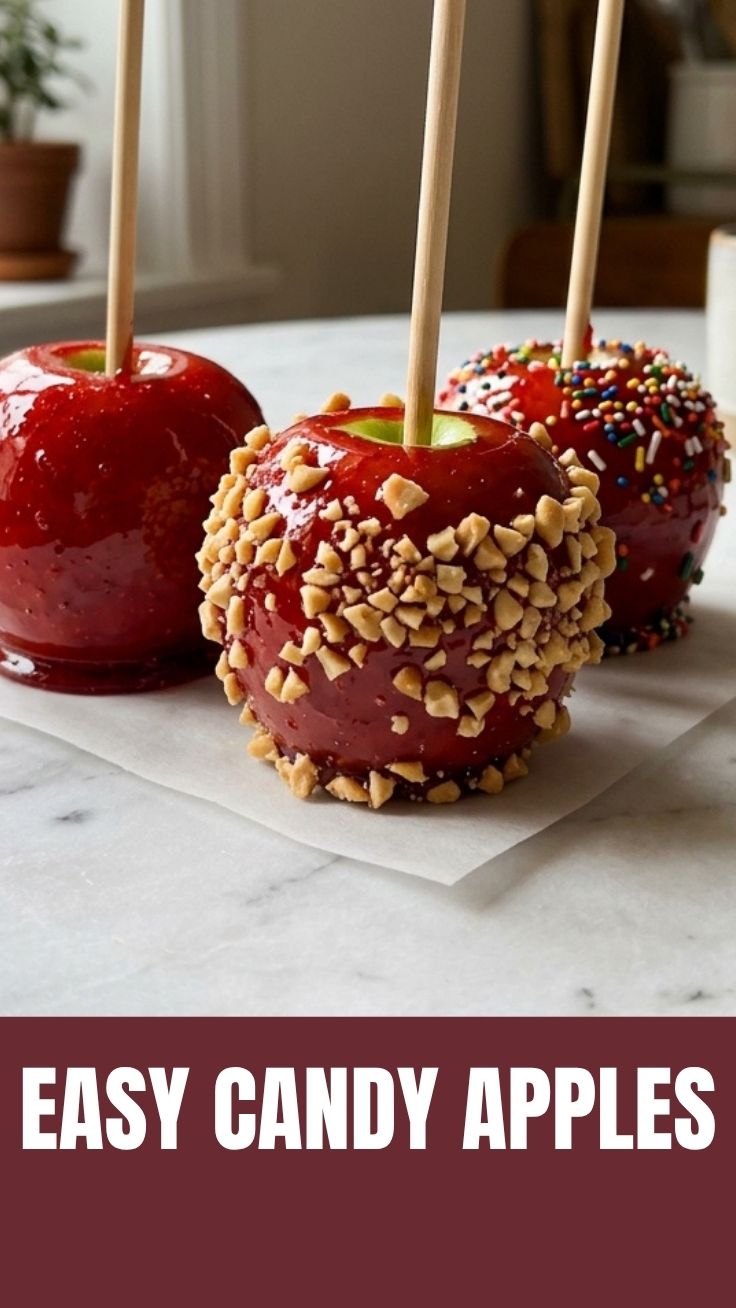
– Flavor Twists: Add 1/2 teaspoon of almond extract to candy coating, or roll freshly dipped caramel apples in crushed peanuts, mini chocolate chips, or sea salt.
– Dietary Adaptations: For gluten-free, ensure your vanilla extract is certified gluten-free (most are). Both recipes are naturally gluten-free. For dairy-free caramel, use coconut oil and full-fat coconut milk.
– Color Play: Divide candy coating and color each batch differently for a rainbow display.
– Method Swap: Use a slow cooker to keep caramel warm for slower dipping sessions.
– Portion Change: Use apple slices on sticks instead of whole apples—perfect for kids and parties.
Common Mistakes to Avoid
| Mistake | Solution |
|———|———-|
| Grainy candy coating | Sugar crystallized—always wash down pan sides with a wet pastry brush during boiling. Never stir after boiling starts. |
| Caramel sliding off apples | Apples were too cold or caramel not cooled enough before dipping. Bring apples to room temp and rest caramel for 2 minutes. |
| Bitter burnt taste | Temperature exceeded hard crack stage (over 310°F). Use a reliable thermometer and monitor closely. |
| Coating too thick/thin | Syrup temperature wrong. Hard crack at 300°F–310°F gives thin, crackly shell. Below 290°F yields sticky, thick coating. |
| Apples browning under coating | Always dip immediately after washing—exposed cut stems can oxidize. |
Storage & Meal Prep Tips
– Refrigeration: Candy apples store well at room temperature for up to 3 days in a single layer covered with plastic wrap. Do not refrigerate—moisture ruins the crackly shell.
– Caramel apples: Refrigerate in an airtight container for up to 5 days. Let sit at room temperature 10 minutes before serving to soften slightly.
– Freezing: Not recommended for candy apples—caramel apples freeze okay if wrapped tightly (thaw in fridge overnight).
– Reheating: For caramel apples that have hardened, microwave on 50% power for 10 seconds or set in a warm oven (250°F) for 5 minutes.
Conclusion
Mastering Candy Apples at home is about understanding sugar stages, preparation, and patience. With a reliable thermometer and the step-by-step guidance above, you’ll achieve that glass-like, jaw-cracking shell that rivals any fair treat. Similarly, learning to craft perfect caramel apples opens up endless topping possibilities. Both recipes reward attention to detail with spectacular results. Now it’s your turn—gather your apples, heat up that sugar, and share your gorgeous creations with family. Did you try a unique flavor combination? Drop a comment below or tag us in your photos. For more sweet inspirations, explore our fall baking collection.
FAQs
Q: Can I use honey instead of corn syrup in the candy coating?
A: Yes, but expect a softer, less crisp shell. Honey has invert sugars that prevent complete hardening. For true crackly candy, corn syrup is best.
Q: Why did my candy apple coating turn white and cloudy?
A: This is called “graining”—moisture got into the sugar. Ensure apples are bone-dry, and avoid refrigerating finished candy apples. Humid days also cause this.
Q: How do I fix caramel that is too thick?
A: Gently reheat with 1 tablespoon of heavy cream or milk, stirring until smooth. Do not microwave alone.
Q: Can I make these sugar-free?
A: Not with traditional recipes—sugar is essential for the hard crack structure. Try using allulose or erythritol for a low-sugar version but expect different texture and browning.
Q: How long do caramel apples stay fresh at room temperature?
A: Only about 24 hours—caramel will soften and weep. Refrigerate for longer shelf life, but always bring to room temp before serving.
Quick way to grow 5 Candy Apples
Ingredients
Equipment
Method
- Wash and dry the apples thoroughly, then remove the stems and insert a wooden stick into the core of each apple.
- In a saucepan, combine sugar, corn syrup, and water over medium heat, stirring until the sugar dissolves.
- Bring the mixture to a boil without stirring, and continue cooking until it reaches 300-310°F (149-154°C) on a candy thermometer, which is the hard crack stage.
- Carefully stir in a few drops of red food coloring until you achieve your desired shade.
- Remove the candy mixture from heat, and quickly dip each apple into the hot candy, rotating to ensure an even coating.
- Allow any excess candy to drip off, then place the dipped apples onto a parchment-lined baking sheet to cool and harden.
- If desired, roll the candy apples in chopped nuts or sprinkles immediately after dipping, before the candy hardens completely.