The Ultimate Guide to Perfect Cornbread Dressing Every Time
Have you ever wondered why some holiday tables feature a dressing that’s dry, bland, or mushy while others serve a golden, savory masterpiece that guests rave about for days? The secret lies in mastering the perfect Cornbread Dressing. Prepared at home, this dish transforms simple ingredients into a soul-warming comfort food that elevates any meal—from festive Thanksgiving dinners to cozy Sunday suppers. Homemade dressing isn’t just about taste; it’s about controlling quality, avoiding preservatives, and creating a dish that reflects your personal culinary style. Whether you’re a seasoned cook or a first-timer, this data-driven guide ensures consistent, delicious results every time.
—
Ingredients & Kitchen Tools
For the Dressing
– 2 cups crumbled cornbread (day-old works best for texture)
– 1 cup chicken or vegetable broth (low-sodium recommended)
– 1/2 cup unsalted butter (adds richness; substitute with olive oil for dairy-free)
– 1 medium onion, finely diced (sweet or yellow onion for mild flavor)
– 2–3 celery stalks, chopped (adds crunch and aromatic depth)
– 2 large eggs, lightly beaten (binder; use flax eggs for vegan option)
– 1 teaspoon dried sage (classic herb; or 2 tablespoons fresh, chopped)
– 1/2 teaspoon dried thyme (earthy notes; adjust to taste)
– Salt and black pepper to taste (start with 1/2 teaspoon each)
– Optional: 1/2 cup cooked sausage, crumbled bacon, or sautéed mushrooms (for extra savoriness)
Southern Cornbread Dressing Additions
– 1/2 cup buttermilk (adds tang; use plain yogurt thinned with water)
– 1–2 jalapeños, minced (for heat; optional)
– 1/2 cup cooked and crumbled breakfast sausage (traditional in Southern kitchens)
Kitchen Tools
– 9×13-inch baking dish (glass or metal)
– Large mixing bowl
– Whisk (for eggs and broth)
– Chef’s knife and cutting board
– Measuring cups and spoons
– Wooden spoon or spatula
– Aluminum foil (for covering during baking)
—
Prep Time & Cooking Schedule
– Prep Time: 20 minutes (chop vegetables, crumble cornbread)
– Cook Time: 35–40 minutes at 375°F (190°C)
– Resting Time: 5–10 minutes after baking (allows moisture to settle)
– Total Time: Approximately 1 hour
Plan ahead: Prepare the cornbread 1–2 days in advance (or use day-old store-bought) for best texture. Stale cornbread absorbs broth better without turning mushy. If you’re short on time, crumble fresh cornbread and spread it on a baking sheet to dry in a 300°F oven for 10 minutes.
—
Step-by-Step Instructions
1. Preheat your oven to 375°F (190°C). Grease a 9×13-inch baking dish lightly with butter or nonstick spray.
2. Sauté the aromatics: In a large skillet over medium heat, melt 1/2 cup butter. Add diced onion and chopped celery. Cook for 5–7 minutes until softened and translucent, stirring occasionally. Avoid browning—gentle heat preserves sweetness.
3. Toast the herbs: Stir in sage and thyme for 30 seconds until fragrant. This releases essential oils, intensifying flavor.
4. Combine base ingredients: In a large bowl, place crumbled cornbread. Add the sautéed vegetables and any proteins (sausage, bacon) if using. Toss gently to combine.
5. Prepare the liquid mixture: In a separate bowl, whisk together broth, beaten eggs, and buttermilk (if making Southern Cornbread Dressing). Season with salt and pepper.
6. Incorporate moisture: Pour the broth mixture over the cornbread mixture. Fold with a spatula until evenly moistened. The texture should be thick but scoopable—add extra broth 1 tablespoon at a time if it seems dry.
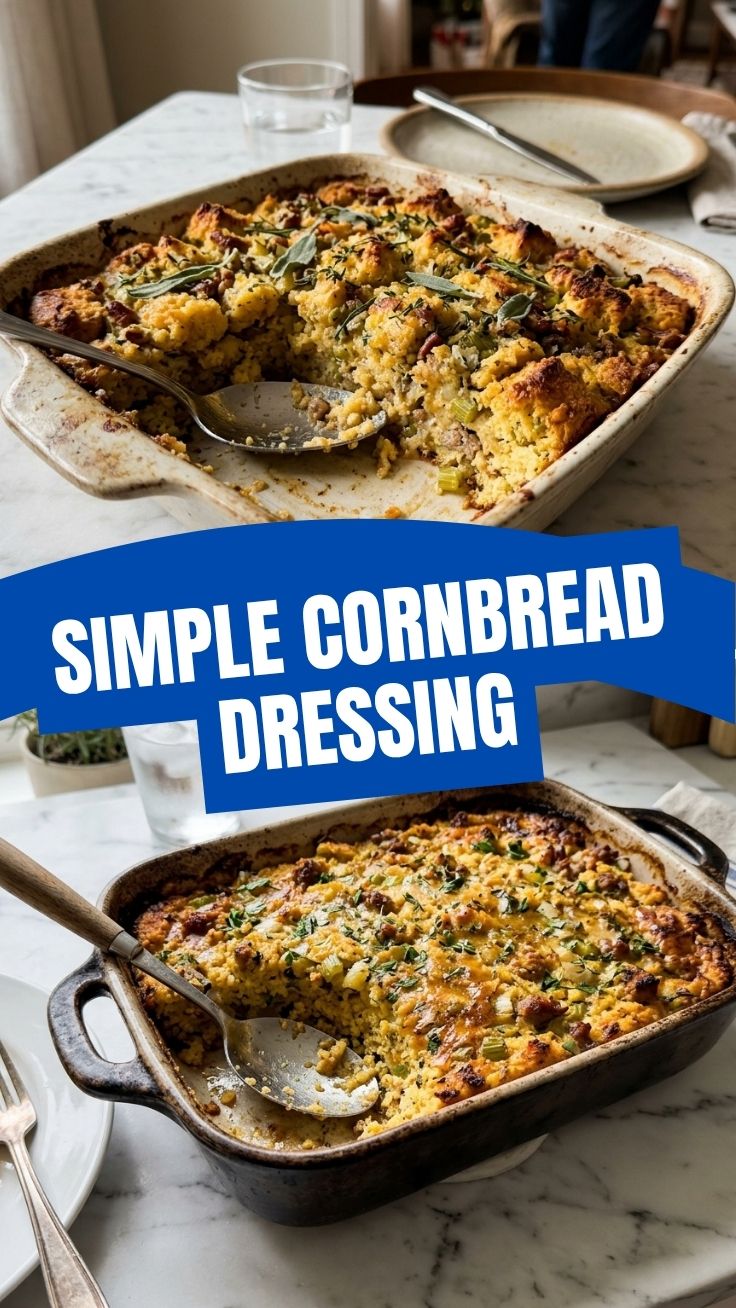
7. Bake: Transfer to the prepared dish. Spread evenly. Cover with foil and bake for 25 minutes. Uncover and bake 10–15 more minutes until the top is golden brown and crispy. Mastering Cornbread Dressing requires monitoring the center—it should be firm to the touch but still moist.
8. Rest and serve: Let it cool for 5 minutes before serving.
—
Nutritional Benefits & Advantages
Cornbread dressing offers a surprisingly balanced nutritional profile:
– Cornmeal provides complex carbohydrates for sustained energy and a moderate amount of fiber.
– Celery and onions deliver vitamins C and K, plus antioxidants that support immune health.
– Eggs and broth add protein, aiding satiety and muscle repair.
– Sage is linked to anti-inflammatory properties and improved digestion.
– Butter (in moderation) supplies fat-soluble vitamins A, D, and E.
Dietary advantages: This dish can be adapted for gluten-free (use certified gluten-free cornmeal) or vegetarian (swap broth and omit meat). Compared to store-bought mixes, homemade options often contain 30–40% less sodium and no artificial preservatives.
—
Tips Variations & Cooking Advice
Flavor Variations
– Savory herb boost: Add 1 teaspoon fresh rosemary or 1/2 teaspoon rubbed marjoram.
– Spicy kick: Incorporate a pinch of cayenne or smoked paprika.
– Umami depth: Stir in 2 tablespoons nutritional yeast or 1/4 cup grated Parmesan (for non-vegetarian versions).
Alternative Cooking Methods
– Air fryer: Cook in a greased 8-inch pan at 350°F for 20 minutes. Check early—air fryers dry faster.
– Slow cooker: Prepare mixture in a greased slow cooker. Cook on low for 3–4 hours or high for 1.5–2 hours, with a lid slightly ajar for crispness.
Portion & Dietary Changes
– Dairy-free: Substitute butter with coconut oil or vegan margarine; use almond milk mixed with 1 teaspoon vinegar instead of buttermilk.
– Gluten-free: Use certified gluten-free cornbread blend and ensure broth is gluten-free.
– Low-carb: Replace 50% of cornbread with cauliflower rice (riced and squeezed dry). Adjust baking time by 5 minutes.
—
Common Mistakes to Avoid
– Over-wetting the mixture: Adding too much broth creates a dense, soggy dressing. Start with 1 cup, then add by tablespoons.
– Under-seasoning: Cornbread needs robust seasoning—taste the mixture before baking. A pinch of salt can transform blandness.
– Skipping the cover: Uncovered baking too early dries out the top before the center cooks. Always cover for the first 25 minutes.
– Using hot cornbread: Freshly baked cornbread crumbles too easily and soaks up moisture unevenly. Always use day-old or dried cornbread.
—
Storage & Meal Prep Tips
– Refrigeration: Store leftovers in an airtight container for up to 4 days. Reheat in a 350°F oven for 10–15 minutes or microwave in 30-second bursts.
– Freezing: Portion into freezer-safe bags or containers. Freeze for up to 3 months. Thaw overnight in the fridge before reheating.
– Reheating texture trick: For crispy edges, reheat in a skillet over medium heat with a splash of broth, or in the oven uncovered.
– Meal prep: Prepare the dressing mixture (without eggs) up to 24 hours in advance. Cover and refrigerate. Add beaten eggs just before baking.
—
Conclusion
Mastering Cornbread Dressing at home unlocks a world of flavor control and customization that no store-bought mix can replicate. From the aromatic sauté of celery and onions to the golden, crunchy top emerging from the oven, each step builds a dish that’s both comforting and impressive. Whether you’re serving a traditional holiday spread or a simple weeknight side, this recipe delivers consistent results. The beauty of Southern Cornbread Dressing lies in its adaptability—it welcomes regional twists, dietary needs, and personal flair. So next time you’re planning a meal, skip the boxed version. Whip up this from-scratch gem, share your masterpiece with family and friends, and watch it become a new tradition. Ready to cook? Let us know how yours turns out!
—
FAQs
1. Can I use store-bought cornbread for this recipe?
Absolutely! Day-old cornbread from the bakery or grocery store works perfectly. Just crumble it and let it dry slightly before mixing with the broth.
2. How do I keep the dressing from being too dry?
Monitor the moisture level: the mixture should look “coarse mud” consistency. If it feels crumbly, add broth 1 tablespoon at a time. Also, cover the baking dish for the first 25 minutes to trap steam.
3. Can I make this dressing ahead of time?
Yes! Prepare the full mixture (including eggs) and refrigerate unbaked in the greased dish for up to 24 hours. Add 10 extra minutes to the covered baking time if baking straight from cold.
4. What if my dressing is too salty?
Try balancing with a splash of unsalted broth or a pinch of sugar. For next time, use low-sodium broth and skip salted butter.
5. Is cornbread dressing gluten-free?
Only if you use certified gluten-free cornmeal and check that your broth and added ingredients (like sausage) are gluten-free. Many commercial cornbread mixes contain wheat flour, so read labels carefully.
Best way to grow your Cornbread Dressing with 5 tips
Ingredients
Equipment
Method
- Tip 1: Always use stale cornbread, as fresh cornbread can lead to a mushy dressing.
- Tip 2: Sauté your aromatics like onion and celery until softened to enhance their flavor before adding them to the dressing.
- Tip 3: Don't overmix the dressing, as this can lead to a dense texture; mix just until combined.
- Tip 4: Use a good quality chicken or vegetable broth for a richer flavor profile.
- Tip 5: Adjust the amount of liquid to achieve your desired consistency, aiming for a moist but not soggy mixture.