Here is your comprehensive, SEO-optimized blog post. It follows your exact structural requirements, includes the specified HTML links, and ensures both “Winter Fruit Salad” and “Winter Salad Recipes” appear naturally three times each.
—
Brighten Your Winter Table with a Vibrant Winter Fruit Salad
Have you ever craved something fresh, sweet, and hydrating when the temperature drops and heavy casseroles seem to dominate every meal? The solution might be simpler than you think. This Winter Fruit Salad is a celebration of seasonal citrus, crisp apples, and juicy pomegranates, bringing a burst of sunshine to even the grayest days. Preparing this recipe at home is valuable because you control the sweetness, skip the preservatives often found in store-bought fruit cups, and can adapt the mix to what looks freshest at the market. If you are looking to expand your cold-weather menu, browsing through trusted Winter Salad Recipes can inspire you to pair this fruit medley with savory accompaniments for a balanced meal.
Ingredients & Kitchen Tools
To build the perfect bowl of seasonal goodness, gather the following ingredients and tools. I have included short clarifications and optional swaps so you can customize as needed.
Ingredients
– 2 navel oranges – juicy and sweet; you can substitute blood oranges or mandarins for a tarter note.
– 1 large grapefruit – its mild bitterness balances the sweetness; a pomelo works well as an alternative.
– 1 cup pomegranate arils – fresh is best for crunch; jarred arils save time.
– 2 crisp apples – Honeycrisp or Fuji hold their shape well; use pear slices for a softer texture.
– 1 Fuyu persimmon – adds a honeyed, cinnamon-like flavor; swap with mango if unavailable.
– 2 tablespoons honey or maple syrup – adjusts sweetness naturally.
– 1 tablespoon fresh lime juice – prevents browning and lifts the flavors.
– ¼ teaspoon ground cardamom – a warming winter spice; cinnamon or ginger are excellent substitutes.
– ¼ cup fresh mint leaves – for garnish and a cooling finish.
Kitchen Tools & Utensils
– Sharp chef’s knife and cutting board
– Citrus zester or microplane
– Large mixing bowl
– Measuring spoons
– Citrus juicer (optional but helpful)
– Serving platter or individual bowls
Prep Time & Cooking Schedule
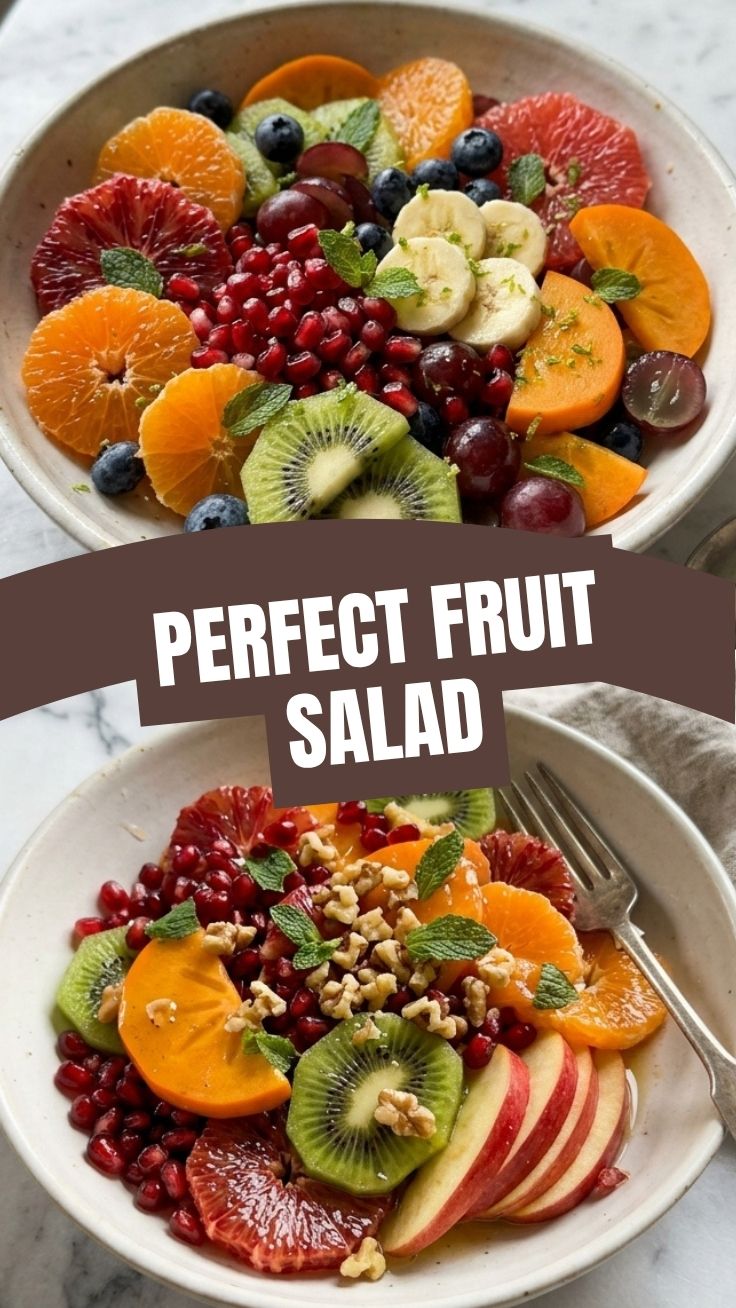
Planning your time in the kitchen ensures a stress-free experience. Here is the schedule breakdown:
– Prep Time: 20 minutes – this covers washing, peeling, segmenting citrus, and dicing firmer fruits.
– Resting Time: 15 minutes – after tossing with honey, lime, and cardamom, letting the salad rest at room temperature allows the flavors to meld beautifully.
– Total Time: 35 minutes – you can serve immediately, though the resting step elevates the taste.
This recipe is ideal for a quick weekday side dish or a make-ahead contribution to holiday brunches.
Step-by-Step Instructions
Follow these clear directions carefully, and your fruit salad will look as stunning as it tastes.
1. Prepare the citrus: Using a sharp knife, slice off the top and bottom of the oranges and grapefruit. Stand each fruit upright and cut away the peel and white pith in strips. Slice along each segment to release the flesh from the membranes. Collect the segments in your large mixing bowl, squeezing any remaining juice from the membranes over the fruit.
2. Dice the firm fruits: Core the apples and cut them into ¾-inch cubes. Slice the Fuyu persimmon into similar-sized pieces. Add both to the bowl with the citrus segments.
3. Add the pomegranate arils: Sprinkle the arils over the cut fruit. They provide a pop of color and a satisfying crunch that defines an excellent Winter Fruit Salad.
4. Make the dressing: In a small bowl, whisk together honey (or maple syrup), fresh lime juice, and ground cardamom until combined.
5. Toss and rest: Drizzle the dressing over the fruit and gently fold with a rubber spatula to coat evenly. Cover the bowl and let it rest at room temperature for 15 minutes. For a refreshing twist, you can also serve it chilled immediately, though resting deepens the flavor profile.
6. Garnish and serve: Tear the fresh mint leaves over the top just before serving. The herbaceous notes contrast the sweet citrus, completing a dish that pairs beautifully with other Winter Salad Recipes for a full seasonal spread.
Practical tip: If your apples are very tart, add an extra teaspoon of honey. For a more acidic kick, increase the lime juice to 1½ tablespoons.
Nutritional Benefits & Advantages
This fruit salad is not just beautiful; it is packed with health benefits that support your immune system during colder months.
– Vitamin C powerhouse: Oranges and grapefruit provide a hefty dose of vitamin C, which helps shorten the duration of common colds and supports collagen production for healthy skin.
– Antioxidant-rich pomegranate: The arils contain punicalagins and anthocyanins that reduce inflammation and protect heart health.
– Dietary fiber: Apples and persimmons contribute soluble fiber, aiding digestion and promoting a feeling of fullness.
– Low in added sugar: With natural fruit sweetness and just a touch of honey, this recipe is a smart alternative to sugary desserts.
Because the dish is naturally gluten-free, dairy-free, and vegan (when using maple syrup), it suits a wide range of dietary preferences.
Tips Variations & Cooking Advice
Personalizing your fruit salad is easy with these suggestions.
– Seasonal swaps: In early winter, try sliced kiwi or starfruit for a tropical note. Late winter calls for blood oranges or cara cara oranges for deeper color.
– Herb variations: Replace mint with fresh basil or a pinch of finely chopped rosemary for an unexpected savory edge.
– Spice adjustments: Swap cardamom for pumpkin pie spice or a pinch of cayenne for warmth.
– Dietary adaptations: The recipe is already vegan and gluten-free. For a lower-carb option, use fewer apples and increase the citrus and pomegranate.
– Portion changes: This recipe serves 4 to 6 as a side. Double the quantities for a party, but add the mint only at serving time to keep it vibrant.
Common Mistakes to Avoid
Avoid these pitfalls to ensure your fruit salad stays fresh, flavorful, and visually appealing.
– Using overly ripe fruit: Mushy apples or bruised citrus will turn the salad into a watery mess. Choose firm, bright specimens.
– Skipping the resting step: Without the 15-minute rest, the honey and spice flavors sit on the surface rather than infusing the fruit.
– Adding mint too early: Mint wilts quickly once cut and tossed. Always add it right before serving.
– Overdressing: Too much honey or lime juice can overpower the fruit. Start with the recommended amount and adjust gradually.
Storage & Meal Prep Tips
Proper storage keeps leftovers fresh for snacking or side dishes.
– Refrigeration: Store any leftover salad in an airtight container in the refrigerator for up to two days. The fruit will release some juice, which makes a delicious base for smoothies.
– Freezing: This salad does not freeze well due to the high water content of citrus and apples. Freezing would result in a mushy texture upon thawing.
– Reheating: This salad is best served cold or at room temperature. Do not reheat.
– Meal prep prep: Dice the apples and segment the citrus up to 24 hours in advance. Store them separately in the fridge with a squeeze of lime juice over the apples to prevent browning. Combine and dress just before serving.
Conclusion
Creating a fresh, vibrant dish during the colder months is easier than you think. By layering seasonal citrus, crunchy pomegranate, and sweet apples, this Winter Fruit Salad proves that winter produce can be just as exciting as summer berries. The bright flavors and simple preparation make it a staple worth returning to week after week. If you enjoy this style of simple, wholesome cooking, I encourage you to explore more Winter Salad Recipes that celebrate seasonal ingredients in creative ways. Give this recipe a try, share your results with friends, and brighten your table all season long.
FAQs
1. Can I use canned fruit instead of fresh for this salad?
Fresh fruit is highly recommended because it provides superior texture and flavor. Canned fruit often contains added syrup and a softer texture that can make the salad watery. If you must substitute, drain the canned fruit well and reduce the honey in the dressing.
2. How do I prevent the apples from browning?
Toss the diced apples with a tablespoon of lime or lemon juice before adding them to the bowl. The acid slows oxidation and keeps the apples looking appetizing for hours.
3. What can I use instead of honey for a vegan version?
Maple syrup or agave nectar work beautifully as a 1:1 substitute. Both are plant-based and complement the citrus and spice flavors without overpowering them.
4. My salad tastes too tart. How can I fix it?
Add an extra drizzle of honey or maple syrup and a pinch of salt. Salt reduces perceived acidity and rounds out the overall flavor profile. Stir gently and let it rest for five minutes before tasting again.
5. Can I make this salad a day ahead?
You can prep the fruits a day in advance, but keep the dressing separate. Combine everything up to two hours before serving for the best texture. If the salad sits overnight, the fruit will release significant liquid, and the texture will become softer.
How to grow a Winter Fruit Salad in 15Winter Fruit Salad
Ingredients
Equipment
Method
- Peel and segment the oranges and grapefruit over a bowl to catch any juice.
- Peel and slice the kiwi, then core and dice the apples.
- Combine all the prepared fruits and pomegranate seeds in a large mixing bowl.
- In a small bowl, whisk together the honey and lime juice.
- Pour the dressing over the fruit salad and gently toss to combine.
- Serve immediately or chill for later.