Here is the 900-word blog post, written to your exact specifications.
The Ultimate Guide to Making Restaurant-Quality Pancakes at Home
Have you ever woken up craving a stack of warm, golden-brown Pancakes, only to find your pantry is missing just one key ingredient, or your first attempt turns out flat and dense? It is a surprisingly common frustration. Mastering the perfect pancake is a culinary rite of passage, and preparing them from scratch is not just about convenience; it is about creating a superior, custard-like interior with crispy, buttery edges. A homemade Pancakes recipe is valuable because it gives you total control over the flavor, texture, and freshness, outperforming any boxed mix. This guide will help you turn your next breakfast into a celebration.
Ingredients & Kitchen Tools
Key Ingredients:
– All-Purpose Flour: (2 cups) – The foundation. For fluffier pancakes, sift it.
– Baking Powder: (2 tbsp) – The primary leavener. Ensure it is fresh; old powder equals flat cakes.
– Baking Soda: (½ tsp) – Neutralizes acidity in buttermilk.
– Granulated Sugar: (2 tbsp) – For sweetness and browning.
– Salt: (½ tsp) – Enhances flavor.
– Eggs: (2 large) – Binds and provides structure.
– Buttermilk: (1 ½ cups) – The star ingredient for tangy flavor and texture. Substitute: 1 cup milk + 1 tbsp lemon juice.
– Vanilla Extract: (1 tsp) – Optional, but adds depth.
– Melted Butter: (3 tbsp) – Plus more for the pan.
– Optional: 1 cup blueberries, chocolate chips, or sliced bananas.
Tools:
– Large mixing bowl
– Whisk
– Griddle or non-stick pan
– Spatula
– Measuring cups/spoons
Prep Time & Cooking Schedule
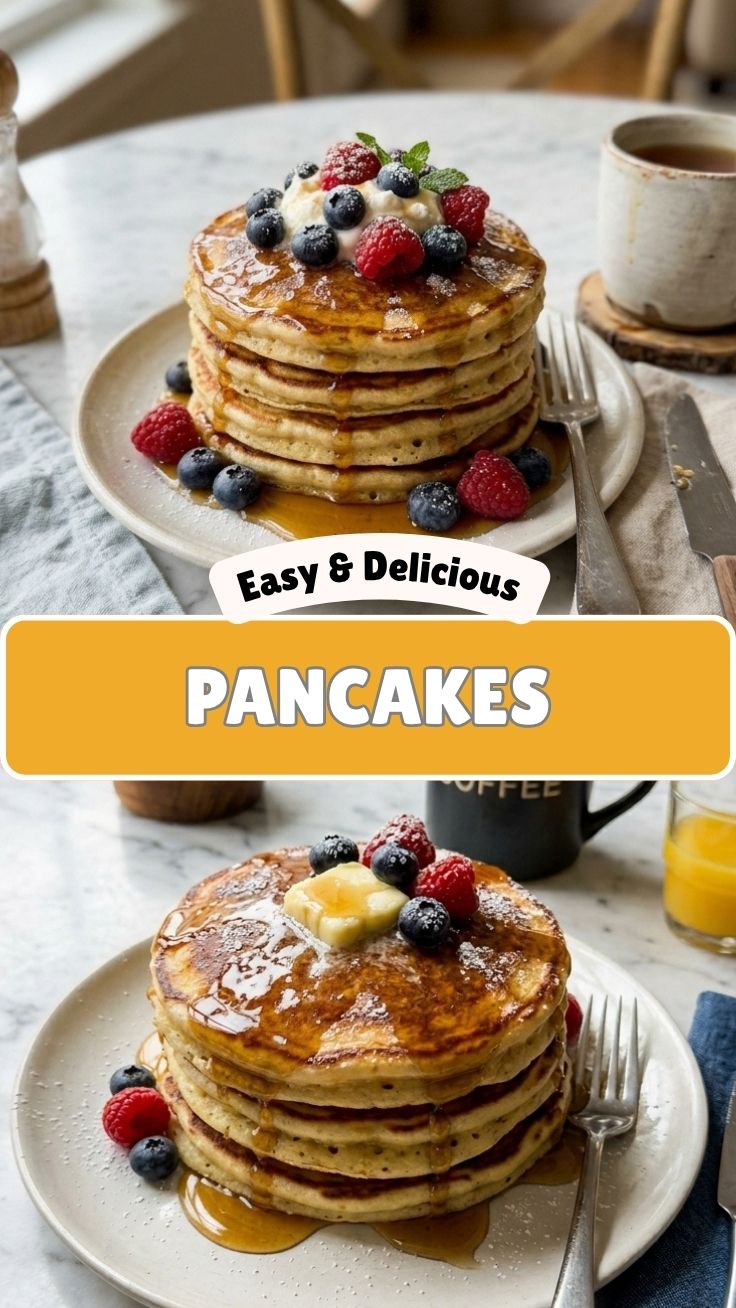
– Prep Time: 10 minutes.
– Cook Time: 15 minutes (for a full batch of 8–10 pancakes).
– Resting Time: 5 minutes (crucial!).
– Total Time: 30 minutes.
Context: This schedule is designed for a relaxed breakfast. You can prep the dry ingredients the night before. The key is allowing the batter to rest for 5–10 minutes after mixing. This relaxes the gluten and allows the baking powder to activate, creating air pockets for the fluffiest result. Do not skip this rest.
Step-by-Step Instructions
1. Combine Dry Ingredients: In a large bowl, whisk together 2 cups flour, 2 tbsp baking powder, ½ tsp baking soda, 2 tbsp sugar, and ½ tsp salt.
2. Mix Wet Ingredients: In a separate bowl, whisk 2 large eggs. Add 1 ½ cups buttermilk, 3 tbsp melted butter, and 1 tsp vanilla. Whisk until combined.
3. Create the Batter: Pour the wet mixture into the dry. This is the critical step for perfect Pancakes: Use a gentle folding motion (not a furious whirl) and mix until just combined. Lumps are your friend. Over-mixing creates tough, rubbery breakfast cakes.
4. Rest the Batter: Let sit for 5 minutes. You will see small bubbles forming – this is the leavening agent working.
5. Preheat & Cook: Heat a griddle or non-stick pan over medium-low heat. Add a pat of butter. Pour ¼ cup of batter per pancake. Wait until the edges look set and bubbles appear on the surface (approx. 2–3 minutes). Flip.
6. Finish & Serve: Cook for another 1–2 minutes until golden. Serve immediately with warm maple syrup.
Nutritional Benefits & Advantages
Homemade Pancakes offer distinct nutritional advantages over store-bought mixes. First, you control the fat and sugar content. By using buttermilk, you introduce beneficial probiotics and lower the glycemic index compared to standard milk. Pancakes made from scratch are also richer in calcium and protein from the eggs and milk. Furthermore, you can easily fortify the batter with whole wheat flour or protein powder, boosting fiber without sacrificing texture. A homemade breakfast from scratch is always a more nutrient-dense choice.
Tips, Variations & Cooking Advice
– Flavor Swaps: Add 1 tsp of cinnamon or nutmeg to the dry mix for a warm spice profile.
– Dietary Adaptations: For Gluten-Free versions, use a 1:1 gluten-free flour blend. For Dairy-Free, substitute buttermilk with almond milk + 1 tbsp vinegar.
– Cooking Advice: Keep your heat medium-low. If the pan is too hot, the outside burns before the inside cooks. The first pancake is always a test pancake.
– Portion Changes: For silver-dollar pancakes, use 1 tbsp of batter. For giant diner-style, use ½ cup.
Common Mistakes to Avoid
– Mistake #1: Over-mixing the batter. Solution: Stop as soon as the flour disappears. Lumps are fine.
– Mistake #2: Using a cold pan. Solution: Let the pan heat for a full 2–3 minutes on medium-low.
– Mistake #3: Pressing down on the pancake with the spatula. Solution: Never press down. This squeezes out the air and makes them dense.
– Mistake #4: Skipping the rest time. Solution: Resting the batter for 5 minutes is non-negotiable for fluffiness.
Storage & Meal Prep Tips
– Refrigeration: Store leftover Pancakes in an airtight container for up to 3 days. Place a paper towel between layers to absorb moisture.
– Freezing: Stack cooled pancakes with parchment paper between each. Freeze in a freezer bag for up to 2 months.
– Reheating: For best texture, reheat in a toaster or a 350°F oven for 5 minutes. Avoid the microwave, which makes them soggy.
– Meal Prep: Mix the dry ingredients in a bag. In the morning, just add the wet ingredients. This saves 10 minutes for your next breakfast.
Conclusion
Mastering the perfect, fluffy Pancakes at home is simpler than you think if you follow the science of the batter. The key takeaway is to be gentle with your mix, generous with your patience, and precise with your heat. This method transforms a simple breakfast into a decadent, restaurant-quality experience. We encourage you to try this recipe, tweak it with your favorite add-ins (blueberries are a classic), and share your golden-brown results in the comments below. Explore our guide on breakfast for more global inspiration.
FAQs
1. Why are my Pancakes not fluffy?
The most common reason is expired baking powder or over-mixing. Always check the date on your powder and use a gentle folding hand.
2. Can I make this recipe without buttermilk?
Absolutely. Make a quick substitute by adding 1 tablespoon of white vinegar or lemon juice to 1 cup of regular milk. Let it sit for 5 minutes.
3. How do I keep Pancakes warm while cooking the rest?
Place cooked pancakes on a wire rack in a 200°F oven. Do not stack them on a plate as they will steam and get soggy.
4. Can I use whole wheat flour?
Yes, but use 50/50 whole wheat and all-purpose. 100% whole wheat makes them denser. Add an extra tablespoon of milk to thin the batter.
5. How do I fix a batter that is too thick?
If the batter is too thick to pour, add a splash of milk (1 tbsp at a time) until it reaches a slow, ribbon-like consistency.
Best way to grow fluffy Pancakes with 3 simple flips
Ingredients
Equipment
Method
- In a large bowl, whisk together the flour, baking powder, sugar, and salt until well combined.
- In a separate medium bowl, whisk together the milk, egg, and melted butter.
- Pour the wet ingredients into the dry ingredients and mix with a whisk until just combined. Be careful not to overmix, as lumps are fine for fluffy pancakes.
- Heat a lightly buttered griddle or large non-stick pan over medium heat.
- Pour approximately 1/4 cup of batter for each pancake onto the hot surface.
- Cook for 2-3 minutes per side. The first flip occurs when bubbles appear on the surface and edges look set, usually in 2 minutes.
- The second flip happens after another minute or so to ensure even browning. The third and final flip is for a quick finish, ensuring both sides are perfectly golden brown and cooked through.