The Ultimate Fresh Caprese Salad Recipe – A Taste of Italy at Home
Have you ever taken a bite of a perfectly ripe tomato layered with creamy mozzarella and fragrant basil, only to wonder why it never tastes as good when you try to replicate it at home? The secret lies not just in the ingredients, but in the harmony of textures and temperatures. Preparing a classic Caprese Salad at home is one of the most rewarding culinary experiences—it transforms humble ingredients into a masterpiece that sings with simplicity. This dish, often served as an antipasto or light lunch, celebrates the beauty of fresh produce. The star of the show? Undoubtedly the creamy, mild Italian Mozzarella, which brings a luscious contrast to the tangy tomatoes and peppery basil. Learning to assemble this iconic Caprese Salad at home not only saves you money but also allows you to control quality—ensuring every bite is bursting with sun-ripened flavor.
Ingredients & Kitchen Tools
For a perfect Caprese Salad, you need only a handful of premium ingredients:
– Ripe tomatoes (3–4 medium): Use heirloom, Roma, or vine‑ripened. They should be firm but yield slightly to pressure.
– Fresh buffalo mozzarella (8 ounces): Opt for Italian Mozzarella if possible—its milky, tender texture elevates the dish.
– Fresh basil leaves (about 15–20): Large, vibrant green leaves.
– Extra‑virgin olive oil (3 tablespoons): A fruity, high‑quality oil makes a difference.
– Balsamic vinegar (optional, 1–2 tablespoons): Aged balsamic glaze adds sweetness and tang.
– Sea salt and freshly ground black pepper to taste.
Kitchen tools: A sharp chef’s knife, a large serving platter, a small bowl for whisking dressing, and a wooden board for slicing.
Substitutions: For a dairy‑free version, use a high‑quality vegan mozzarella; for gluten‑free, the salad is naturally safe—just check the balsamic glaze for additives.
Prep Time & Cooking Schedule
– Prep time: 10 minutes
– Assembly time: 5 minutes
– Resting time: 15–30 minutes (optional, for flavors to meld)
– Total time: about 15–40 minutes
Because Caprese Salad requires no cooking, the bulk of your effort goes into slicing and arranging. The resting step is key—allowing the tomatoes to release their juices and mingle with the olive oil and salt transforms a simple salad into a deeply flavorful dish. Plan to let it sit at room temperature for at least 15 minutes before serving for the best texture and taste.
Step-by-Step Instructions
1. Slice the tomatoes into ¼‑inch thick rounds. Remove the stem ends and discard any tough cores. Pat dry with paper towels to prevent the salad from becoming watery.
2. Slice the mozzarella into similar‑sized rounds. If using fresh Italian Mozzarella, drain it well and blot with a clean cloth before slicing—this keeps the cheese firm and prevents excess moisture.
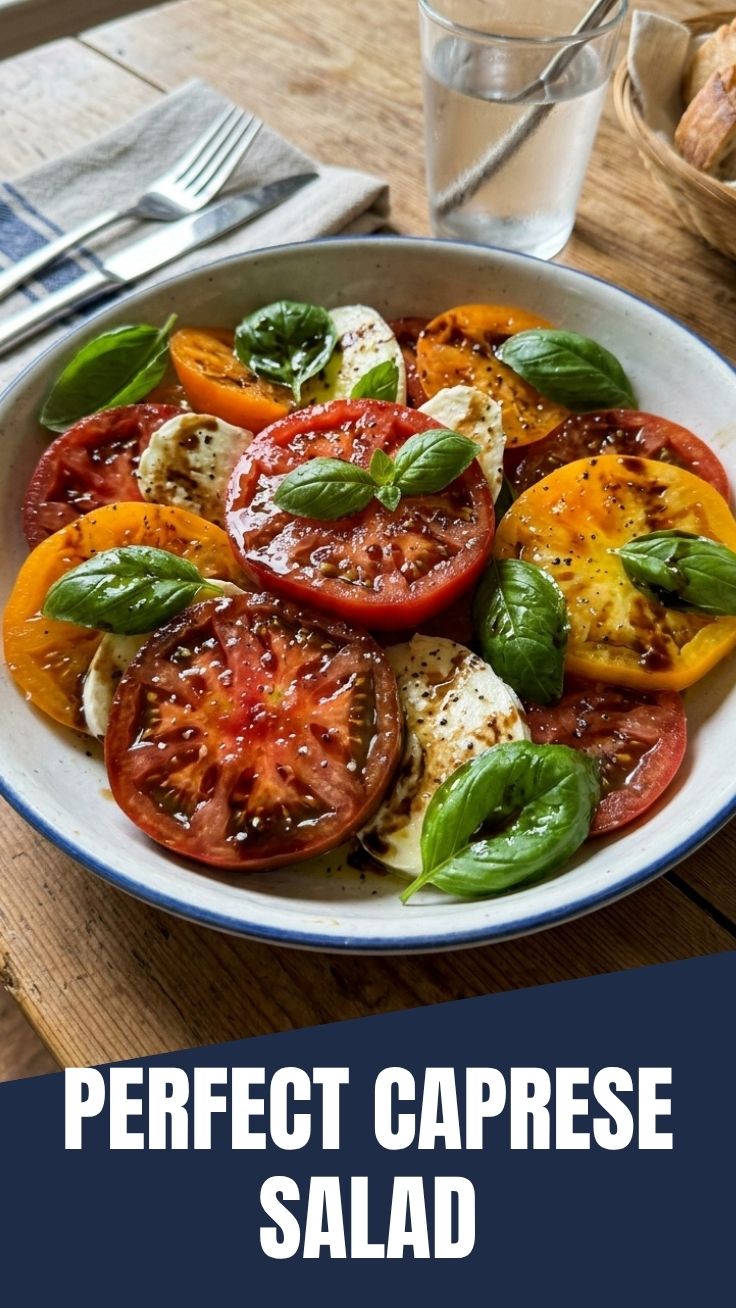
3. Layer the ingredients on a large platter: alternate a tomato slice, a basil leaf, and a mozzarella slice. Continue until all ingredients are used. For an elegant presentation, fan them out in a circular pattern.
4. Season generously with sea salt and freshly ground black pepper. Drizzle with extra‑virgin olive oil and (if desired) a balsamic glaze.
5. Let it rest for 15–30 minutes at room temperature. This allows the flavors of the Caprese Salad to deepen as the tomatoes release their juices into the cheese and basil.
6. Garnish with additional fresh basil and serve immediately.
Pro tip: For the best texture, never refrigerate the assembled salad—cold dulls the flavors of the tomatoes and hardens the mozzarella. Serve at room temperature.
Nutritional Benefits & Advantages
This salad is a powerhouse of nutrition. Tomatoes are rich in lycopene, a potent antioxidant linked to heart health and reduced inflammation. Fresh mozzarella provides high‑quality protein and calcium, while basil adds vitamin K and essential oils with antibacterial properties. The olive oil contributes healthy monounsaturated fats that aid in the absorption of fat‑soluble vitamins. Low in carbohydrates and naturally gluten‑free, Caprese Salad fits well into Mediterranean, keto, and low‑carb diets. Additionally, the dish is naturally vegetarian and can be easily adapted for vegan or dairy‑free lifestyles—making it a versatile choice for any table.
Tips Variations & Cooking Advice
– Flavor variations: Add a drizzle of pesto or a sprinkle of crushed red pepper for heat. For a tangy twist, replace balsamic glaze with a lemon‑olive oil vinaigrette.
– Ingredient swaps: Use burrata instead of mozzarella for an ultra‑creamy center. Substitute cherry tomatoes for a bite‑sized version—halve them and toss with the cheese in a bowl.
– Portion changes: For a side dish, serve on a small plate with just a few slices. For a main course, add a handful of arugula and some crusty bread.
– Dietary adaptations: Vegan mozzarella works well (just choose a brand that melts slightly when warm). Ensure your balsamic glaze is certified gluten‑free if needed.
Common Mistakes to Avoid
– Using unripe tomatoes: Hard, pale tomatoes lack sweetness—always choose deep‑red, fragrant specimens.
– Over‑slicing the mozzarella: Very thin slices will break apart. Keep them about ¼‑inch thick for structural integrity.
– Skipping the rest time: Serving immediately can result in a dry, flavorless salad. The resting phase allows the ingredients to marry.
– Over‑dressing: Too much oil or balsamic glaze can drown the delicate flavors. Start with a light drizzle and add more if needed.
– Refrigerating before serving: Cold numbs the palate—always serve at room temperature for the brightest taste.
Storage & Meal Prep Tips
Store leftover Caprese Salad in an airtight container in the refrigerator for up to 24 hours. However, note that the tomatoes will release water and soften the mozzarella, so texture will degrade. If you plan ahead, keep the sliced tomatoes, cheese, and basil separate, then assemble just before serving. Do not freeze—the texture of fresh mozzarella and tomatoes becomes unpleasantly watery when thawed.
To refresh leftovers, drain any accumulated liquid, add a fresh drizzle of olive oil, and let the salad come to room temperature for 10 minutes before eating. For meal prep, you can slice the tomatoes and cheese up to 4 hours in advance and store them separately in the fridge—just assemble and season when ready.
Conclusion
Making a beautiful Caprese Salad at home is a celebration of simplicity—it proves that when you start with top‑quality ingredients, you truly need nothing else. The creamy texture of Italian Mozzarella paired with juicy tomatoes and aromatic basil creates a dish that is greater than the sum of its parts. Whether you serve it as a starter, a light lunch, or a side at a summer barbecue, this recipe is sure to impress. I encourage you to try it this week—play with the variations, find your perfect balance of salt and oil, and share your results with friends. And if you loved this recipe, explore our other quick Italian classics for more inspiration.
FAQs
1. Can I use regular mozzarella instead of Italian Mozzarella?
Yes, but fresh Italian Mozzarella (or buffalo mozzarella) has a softer, creamier texture and higher moisture content than the standard low‑moisture block mozzarella. If using block mozzarella, slice it thinly and consider adding a splash of milk to soften it slightly.
2. How do I know if a tomato is ripe for Caprese Salad?
The tomato should be deep red (or orange/yellow for heirlooms), yield slightly when pressed gently near the stem, and have a sweet, earthy fragrance. Avoid tomatoes that are rock‑hard or have any green shoulders.
3. Why does my Caprese Salad turn watery?
Excess moisture comes from both the tomatoes and the cheese. Pat the tomato slices dry with paper towels and drain the mozzarella thoroughly before slicing. Also, avoid salting the tomatoes too far in advance—salt draws out liquid.
4. Can I make a dairy‑free version of Caprese Salad?
Absolutely. Use a high‑quality vegan mozzarella (look for brands that are coconut‑oil‑based and melt slightly) or substitute with marinated tofu slices. The flavor profile will change, but the dish remains delicious.
5. How long can I store leftovers?
Up to 24 hours in the refrigerator, but best consumed within 12 hours for optimal texture. Always bring leftovers to room temperature before eating, and drizzle fresh olive oil to revive the flavors.
Proven way to grow 3 Caprese Salad
Ingredients
Equipment
Method
- Arrange alternating slices of tomatoes and mozzarella on a platter, placing the basil leaves among them.
- Whisk together olive oil, balsamic glaze, salt, and pepper in a small bowl to create the dressing.
- Drizzle the dressing generously over the tomato, mozzarella, and basil arrangement just before serving.