The Ultimate Guide to Making a Perfect Teriyaki Beef Bowl at Home
Have you ever craved that deeply savory, slightly sweet, and utterly satisfying Japanese-inspired beef bowl but found yourself settling for takeout that never quite hits the spot? You’re not alone. The magic of a well-made Teriyaki Beef Bowl lies in the perfect balance of tender, caramelized beef, glossy teriyaki sauce, and steamed rice that soaks up every last drop of flavor. Preparing this dish at home not only saves you money but also gives you complete control over ingredient quality and sodium levels. Whether you call it a Teriyaki Beef Bowl or the traditional Teriyaki Beef Donburi, mastering this recipe transforms your weeknight dinner game and impresses guests with minimal effort.
Ingredients & Kitchen Tools
For the Beef and Marinade
– 1 lb ribeye or sirloin steak – Thinly sliced against the grain; ribeye offers more marbling and tenderness
– 1/3 cup soy sauce – Use low-sodium if you prefer less salt; tamari works for gluten-free
– 3 tbsp mirin – Japanese sweet rice wine that adds shine and subtle sweetness
– 2 tbsp sake or dry sherry – Adds depth; can substitute with additional mirin
– 2 tbsp brown sugar or honey – Brown sugar creates thicker glaze; honey adds floral notes
– 1 tbsp grated fresh ginger – Use microplane for best texture; avoid powdered ginger
– 3 cloves garlic, minced – Fresh is non-negotiable for authentic flavor
– 1 tsp sesame oil – Toasted version provides nutty aroma
For the Bowl Assembly
– 2 cups steamed Japanese short-grain rice – Sushi rice works best; rinse before cooking
– 1 cup steamed broccoli florets – Cut into bite-sized pieces for even cooking
– 1 large carrot, julienned – Adds crunch and color
– 2 green onions, sliced – For garnish and freshness
– 1 tbsp sesame seeds – Toasted white or black for visual contrast
Kitchen Tools
– Sharp chef’s knife and cutting board
– Large skillet or wok (cast iron retains heat best)
– Mixing bowl for marinade
– Fine-mesh strainer (optional, for sauce)
– Rice cooker or heavy-bottomed pot with lid
– Tongs for flipping beef without piercing
Prep Time & Cooking Schedule
Total time: 45 minutes (15 minutes active prep, 30 minutes total cooking including resting)
| Stage | Time | Notes |
|——-|——|——-|
| Rice cooking | 20 minutes | Start first; keep warm |
| Beef marinating | 15 minutes minimum | Can go up to 2 hours for deeper flavor |
| Vegetable prep | 10 minutes | Slice while rice cooks |
| Pan cooking | 8-10 minutes | Work in batches for proper sear |
| Resting | 3 minutes | Rest meat before slicing if using whole steak |
Plan your workflow: begin rice, slice beef and marinate, prep vegetables, then cook in that order. The rice will stay warm while you focus on achieving the perfect caramelization on the beef.
Step-by-Step Instructions
Step 1: Prepare the Marinade and Beef
In a medium bowl, whisk together soy sauce, mirin, sake, brown sugar, grated ginger, minced garlic, and sesame oil until sugar dissolves. If using whole steak, place in a freezer for 15 minutes before slicing – this firms the meat for paper-thin cuts. Slice against the grain at a 45-degree angle into 1/4-inch strips. Add beef to marinade, toss to coat, and let sit for 15 minutes at room temperature or up to 2 hours refrigerated.
Step 2: Cook the Rice and Vegetables
While beef marinates, rinse rice under cold water until water runs clear. Cook according to package directions (typically 1:1.1 rice-to-water ratio for short-grain). Steam broccoli for 3 minutes until bright green and tender-crisp. Blanch julienned carrots for 60 seconds, then plunge into ice water to stop cooking.
Step 3: Sear the Beef
Heat a large skillet or wok over high heat until smoking hot. Add 1 tablespoon neutral oil (avocado or grapeseed). Working in batches to avoid overcrowding, add beef strips in a single layer. Sear undisturbed for 60-90 seconds until deeply browned on one side. Flip and cook 30 seconds more. The surface should develop a sticky, caramelized glaze – this is the hallmark of an exceptional Teriyaki Beef Bowl. Pour in remaining marinade and let it bubble and reduce for 30 seconds, coating each piece. Remove beef immediately to prevent overcooking.
Step 4: Assemble the Bowl
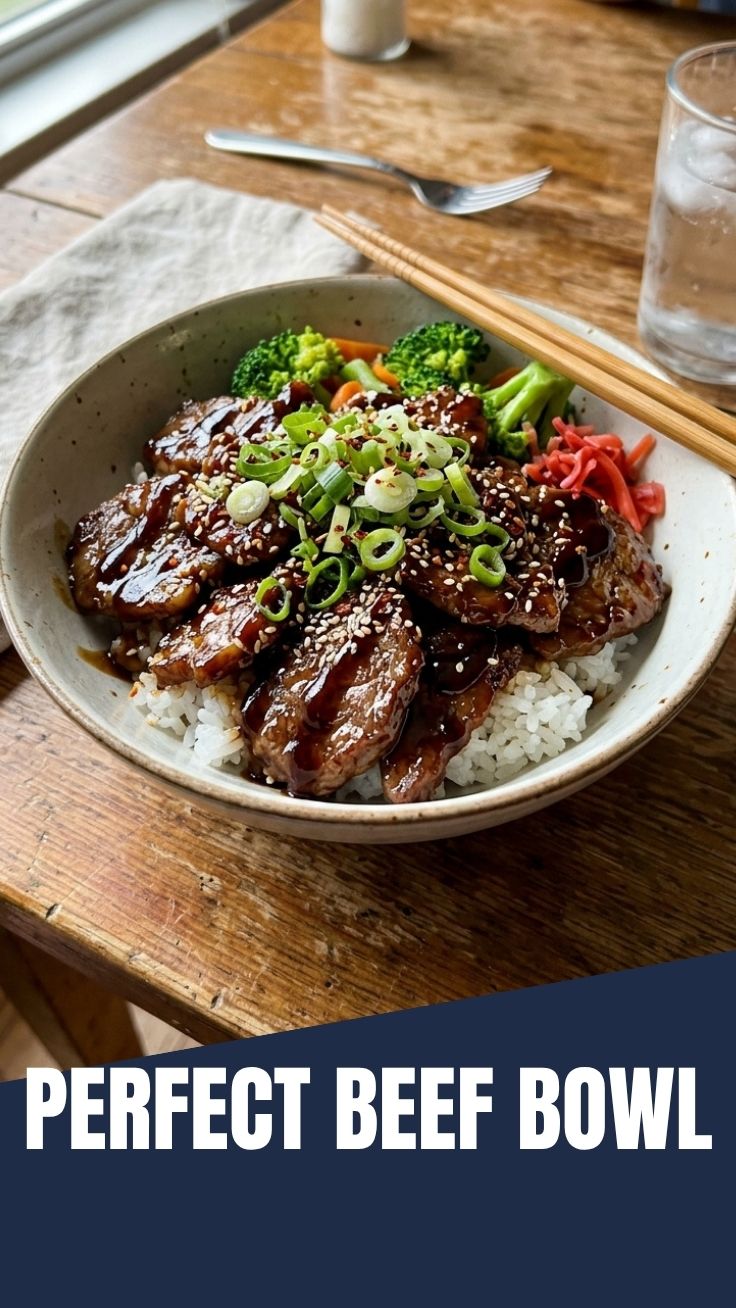
Divide warm rice between bowls. Arrange seared beef, broccoli, and carrots in neat sections. Drizzle any remaining pan sauce over everything. Garnish with sliced green onions and toasted sesame seeds. For an authentic Teriyaki Beef Donburi, serve with pickled ginger and a small side of Japanese mayonnaise or spicy sriracha mayo for dipping.
Pro Tip: Watch the sauce carefully – it should coat the back of a spoon but not become syrupy. If it thickens too much, deglaze the pan with 2 tablespoons water.
Nutritional Benefits & Advantages
This homemade Teriyaki Beef Bowl offers significant nutritional advantages over restaurant versions. A single serving provides approximately 32g of protein from the beef, supporting muscle repair and satiety. The ribeye contains conjugated linoleic acid (CLA) and B vitamins, particularly B12 for energy metabolism. When you prepare the Teriyaki Beef Donburi at home, you control sodium levels – restaurant versions often contain 1200-1800mg sodium per serving, while homemade can be kept under 800mg by using low-sodium soy sauce.
The combination of broccoli and carrots adds vitamin C, beta-carotene, and fiber, which helps slow carbohydrate absorption from the rice. Ginger and garlic provide anti-inflammatory compounds like gingerol and allicin. Using brown rice instead of white increases fiber content by 300% while maintaining a similar glycemic response when paired with protein and fat.
Tips Variations & Cooking Advice
Flavor Variations:
– Spicy version: Add 1-2 tablespoons gochujang or sriracha to the marinade
– Citrus twist: Replace sake with orange juice and add 1 tablespoon yuzu kosho
– Ginger-forward: Double fresh ginger and add 1 teaspoon pickled ginger brine
Ingredient Swaps:
– Protein: Thinly sliced chicken thighs, pork loin, or extra-firm tofu (press for 20 minutes first)
– Vegetables: Snow peas, bell peppers, shiitake mushrooms, or bok choy
– Rice: Cauliflower rice for low-carb or quinoa for added protein
Cooking Methods:
– Grill: Cook marinated steak over high heat for 2-3 minutes per side, slice, then toss with reserved sauce
– Air fryer: Cook beef strips at 400°F for 6-8 minutes, shaking halfway
– Sheet pan: Broil everything on one pan for easy cleanup – arrange beef and vegetables separately
Dietary Adaptations:
– Gluten-free: Use tamari or coconut aminos; verify mirin is GF (some contain wheat)
– Dairy-free: Naturally dairy-free; skip any butter in vegetable prep
– Low-carb: Serve over cauliflower rice and double the vegetables
Common Mistakes to Avoid
Mistake 1: Overcrowding the Pan
When beef strips steam instead of sear, they release moisture and never develop that signature caramelized crust. Solution: Cook in batches with at least 1 inch of space between pieces. A smoking hot pan is your friend.
Mistake 2: Skipping the Marinade Rest
Fifteen minutes might feel unnecessary, but it allows salt to penetrate the meat and sugar to begin the Maillard reaction during cooking. Less than 10 minutes yields bland beef.
Mistake 3: Overcooking the Beef
Thin slices cook in under 2 minutes total. Remove them when still slightly pink in the center – residual heat will finish cooking. Overcooked beef becomes tough and chewy.
Mistake 4: Using Cold Rice
Warm, freshly steamed rice is essential. Cold or leftover rice becomes clumpy and doesn’t absorb the sauce properly. If using day-old rice, steam it for 5 minutes with a damp paper towel.
Storage & Meal Prep Tips
Refrigeration: Store components separately in airtight containers for up to 3 days. Keep sauce in a small jar and add when reheating to prevent the beef from becoming soggy.
Freezing: The cooked beef with sauce freezes well for up to 2 months. Thaw overnight in the refrigerator. Rice does not freeze well – make fresh when ready to serve.
Reheating Instructions:
– Stovetop: Reheat beef in a skillet over medium heat with 1 tablespoon water, stirring until sauce bubbles (about 2 minutes)
– Microwave: Heat rice covered with a damp paper towel for 60-90 seconds; reheat beef separately at 50% power for 90 seconds
– Avoid reheating vegetables – blanch fresh ones or add them cold for crunch
Meal Prep Tip: Double the marinade and beef portion. Cook all beef at once, then portion into individual containers with sauce. On serving days, simply steam rice, blanch vegetables, and reheat beef.
Conclusion
Mastering this recipe means you can create a restaurant-quality Teriyaki Beef Bowl in under an hour with ingredients you control. The key takeaways are simple: slice beef thin against the grain, use screaming-hot heat for proper caramelization, and never skip the marinade time. This Teriyaki Beef Donburi approach – where the sauce, meat, and rice work in harmony – transforms humble ingredients into something truly special. Whether you’re meal-prepping for the week or impressing dinner guests, this dish delivers consistent, delicious results. Try it tonight, adjust the spice level to your liking, and share your creation with us in the comments below. Your perfect bowl is just one sear away.
FAQs
Q: Can I use ground beef instead of sliced steak?
A: Absolutely. Use 1 pound ground beef (80/20 works well). Brown it in the skillet, breaking into small pieces, then drain excess fat. Add 1/3 cup teriyaki sauce and simmer for 3 minutes. The texture differs but the flavor remains excellent.
Q: Why is my teriyaki sauce too thin or too thick?
A: Thin sauce usually means you didn’t reduce it long enough – simmer for 2-3 additional minutes. Thick or sticky sauce means the sugar caramelized too much; deglaze with 2 tablespoons water or sake and stir vigorously.
Q: Can I make this dairy-free or gluten-free?
A: The recipe is naturally dairy-free. For gluten-free, use tamari instead of soy sauce and verify your mirin brand (Eden Foods and Kikkoman produce GF versions). Avoid sake that contains wheat.
Q: How do I get that shiny, restaurant-quality glaze on the beef?
A: The shine comes from two things: mirin in the marinade and reducing the sauce at high heat. After searing the beef, pour in the remaining marinade and let it bubble vigorously for 20-30 seconds while tossing the meat. The sugar in the sauce caramelizes and creates that glossy finish.
Q: What if I don’t have mirin or sake?
A: Substitute mirin with 1 tablespoon rice vinegar + 1 teaspoon sugar per tablespoon needed. Replace sake with dry sherry, white wine, or additional chicken broth. While not identical, these substitutions maintain the spirit of the dish.
Teriyaki Beef Bowl
Ingredients
Equipment
Method
- Whisk together soy sauce, mirin, sake, brown sugar, grated ginger, and minced garlic in a bowl. In a separate small bowl, combine cornstarch with water to create a slurry and set aside.
- Heat a large skillet or wok over medium-high heat. Add the thinly sliced beef sirloin and cook until browned, about 3-5 minutes. Add the broccoli florets to the skillet and cook for another 3-4 minutes until tender-crisp.
- Pour the prepared teriyaki sauce into the skillet with the beef and broccoli. Bring to a simmer, then stir in the cornstarch slurry and cook until the sauce thickens. Serve immediately over cooked white rice, garnished with sesame seeds and sliced green onions.