The Ultimate Guide to Making Fresh Homemade Salsa That Will Transform Your Cooking
Have you ever wondered why the Salsa at your favorite Mexican restaurant tastes so vibrant and addictive, while store-bought versions fall flat? The secret lies in freshness, balance, and a few simple techniques you can master at home. Preparing your own salsa isn’t just about saving money—it’s about unlocking a world of flavor customization, controlling ingredients for dietary needs, and impressing guests with a condiment that rivals any professional kitchen. This comprehensive guide will walk you through every step, from selecting the perfect tomatoes to storing your creation for maximum freshness. Get ready to elevate your taco nights, chip dips, and grilled meats with a sensational homemade salsa that beats anything from a jar.
—
Ingredients & Kitchen Tools
Fresh Ingredients
– Roma tomatoes (6–8 medium): Firm, ripe tomatoes provide the best texture and sweetness. Avoid overly soft or mealy ones.
– White onion (½ medium): Adds sharpness; red onion can substitute for a milder, sweeter flavor.
– Fresh cilantro (1 cup packed): Bright, herbaceous notes. Use stems too—they’re flavorful.
– Jalapeño peppers (1–2): Adjust based on heat preference. Remove seeds and membranes for less spice.
– Lime juice (2–3 tablespoons): Fresh is non-negotiable for brightness. Bottled juice lacks acidity and nuance.
– Garlic cloves (2): Use fresh for pungency; roasted garlic adds sweetness.
– Salt (½ teaspoon, or to taste): Enhances all flavors. Start small and adjust.
Pantry & Optional Additions
– Cumin (½ teaspoon): Earthy warmth—a classic Mexican spice.
– Sugar (pinch): Balances acidity if tomatoes are tart.
– Optional heat boosters: Serrano peppers for more kick, or chipotle in adobo for smokiness.
Kitchen Tools
– Cutting board and chef’s knife: For precise dicing.
– Food processor or blender: Pulse for chunky salsa; blend fully for smoother texture.
– Mixing bowl: To combine ingredients.
– Colander: Rinse cilantro and tomatoes.
– Measuring spoons: For accurate seasoning.
Substitutions: No fresh tomatoes? Use canned fire-roasted diced tomatoes (drained) for deeper flavor. No cilantro? Flat-leaf parsley works but changes the profile.
—
Prep Time & Cooking Schedule
– Prep time: 15 minutes
– Resting time: 20–30 minutes (essential for flavors to meld)
– Total time: 35–45 minutes
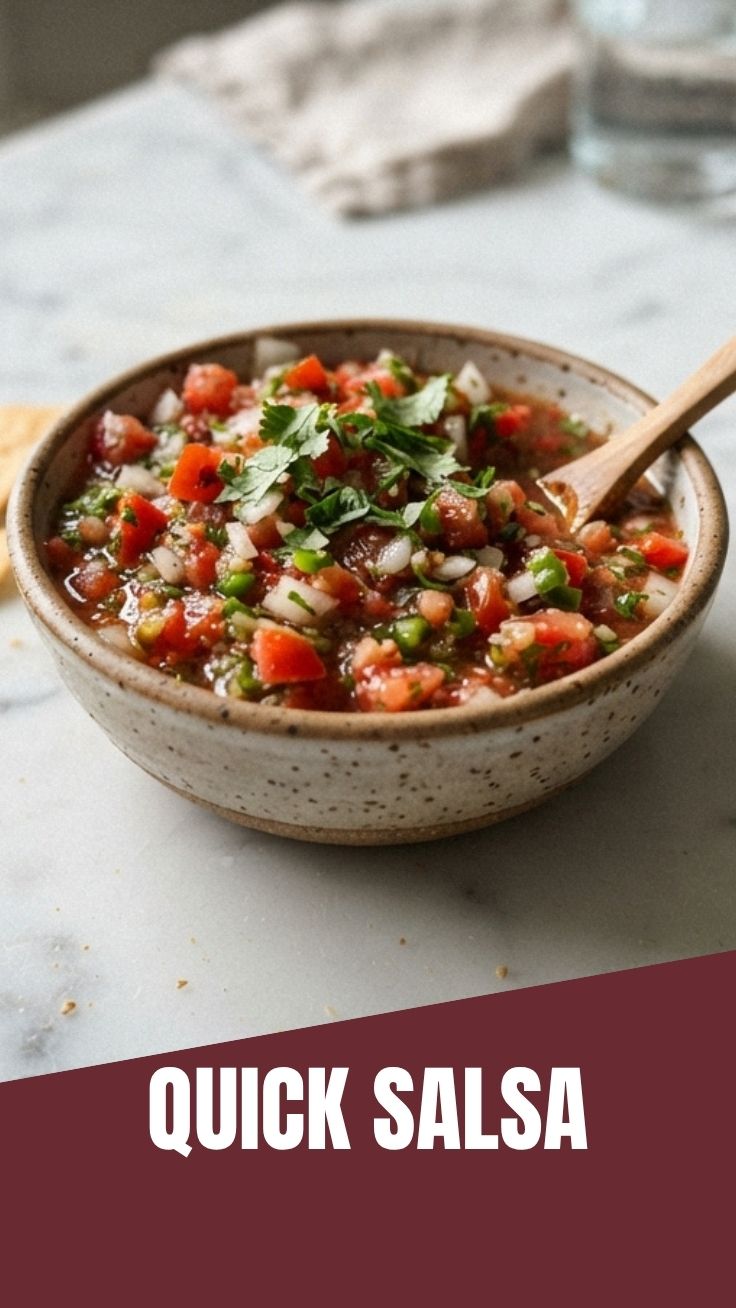
Why resting matters: Fresh salsa benefits from a short “marination” period. The salt draws out tomato juices, allowing flavors to marry. This isn’t a cooked salsa, so time is your best friend. Plan to make it at least 30 minutes before serving—or even a few hours ahead. Store in the refrigerator if waiting longer.
—
Step-by-Step Instructions
1. Prepare the Tomatoes
Bring a pot of water to a boil. Score an “X” on the bottom of each tomato. Blanch for 30–60 seconds, then transfer to an ice bath. The skin will peel off easily. Remove cores and roughly chop. Alternatively, skip blanching for a rustic texture—just dice with skin on.
2. Chop Aromatics
Dice ½ medium white onion finely. Seed and mince 1–2 jalapeños (wear gloves!). Chop cilantro leaves and stems. Mince 2 garlic cloves. Tip: For milder salsa, remove jalapeño membranes fully. For heat lovers, keep seeds.
3. Combine Base Ingredients
In a food processor, add chopped tomatoes, onion, jalapeño, cilantro, garlic, 2 tablespoons lime juice, ½ teaspoon salt, and ½ teaspoon cumin (optional). Pulse 5–7 times—you want chunks, not puree. Scrape down sides and pulse again if needed. Texture cue: Salsa should be spoonable, not watery. If too liquidy, add another diced tomato to thicken.
4. Season and Adjust
Taste your Salsa. If it’s flat, add more salt in increments. If acidic, add a pinch of sugar. If lacking brightness, squeeze more lime. Temperature control: Keep salsa cool—if it sits out too long, flavors dull. Transfer to a bowl and refrigerate for 20–30 minutes.
5. Final Check
Stir again before serving. Garnish with extra cilantro or lime wedge. For an interesting twist, consider how this ties to the energetic movements of a Salsa dance—both require balance, rhythm, and a burst of freshness that keeps you coming back for more.
—
Nutritional Benefits & Advantages
Homemade salsa is a nutritional powerhouse. Per ½-cup serving (approx.), you’ll get:
– Calories: 25–35
– Vitamin C: 20% DV (from tomatoes and lime)
– Vitamin A: 15% DV (from tomatoes and peppers)
– Antioxidants: Lycopene in tomatoes reduces inflammation and heart disease risk.
– Fiber: 1–2 grams per serving (from vegetables).
– Low sodium: Control salt yourself—store-bought varieties often hide double the sodium.
Dietary advantages: Naturally vegan, gluten-free, dairy-free, and low-carb. Perfect for keto, paleo, or whole30 diets. The capsaicin in jalapeños may boost metabolism.
—
Tips, Variations & Cooking Advice
Flavor Variations
– Roasted Salsa: Broil tomatoes, onion, and jalapeños at 400°F for 10 minutes until charred. Blend for smoky depth.
– Fruity Salsa: Add ½ cup diced mango or pineapple for sweetness.
– Herb-forward: Swap half the cilantro for basil or mint for Mediterranean twist.
Ingredient Swaps
– Tomatoes: Use tomatillos (husked) for tangy green salsa.
– Onion: Shallots or green onions for milder bite.
– Acid: Apple cider vinegar if limes are unavailable (use less).
Alternative Cooking Methods
– No-cook: Food processor is fastest. For chunkier texture, hand-dice everything finely.
– Grilled: Grill vegetables over charcoal before blending for campfire flavor.
Dietary Adaptations
– Low-FODMAP: Use scallions (green parts only) instead of onion, and omit garlic.
– Oil-free: Skip oil entirely—this recipe naturally doesn’t need it.
—
Common Mistakes to Avoid
1. Overprocessing: Pulse, don’t blend continuously. Running the processor too long creates a watery, baby-food texture. Stop when you see ¼-inch chunks.
2. Skipping the salt: Salt isn’t just for flavor—it draws moisture from tomatoes, creating a cohesive salsa. Undersalted salsa tastes flat.
3. Using unripe tomatoes: Hard, pale tomatoes lack sweetness and acidity. Choose deep red, heavy-for-size specimens.
4. Not resting: Serving immediately results in disjointed flavors. Patience is key—even 10 minutes helps.
5. Ignoring acidity balance: Too much lime can overpower; too little makes salsa dull. Taste and adjust in small increments.
—
Storage & Meal Prep Tips
– Refrigeration: Store in an airtight container for up to 5 days. Flavor improves after 24 hours.
– Freezing: Not recommended—texture becomes grainy after thawing due to high water content. Instead, freeze tomato base (without cilantro or lime) for up to 3 months, then add fresh herbs later.
– Reheating: Serve cold or at room temperature. If refrigerated, let sit 10 minutes before serving to revive flavors.
– Meal prep hack: Double the recipe and portion into small jars for quick weekday snacks. Use within 3–4 days for peak freshness.
To prevent browning: Press plastic wrap directly onto salsa surface before sealing. Stir before serving.
—
Conclusion
Making fresh Salsa at home is a rewarding skill that pays dividends in taste, health, and versatility. You’ve learned how to select ripe tomatoes, balance acidity and heat, and avoid common pitfalls like overprocessing or under-seasoning. Whether you’re pairing it with tacos, eggs, or simply chips, this recipe delivers consistent, vibrant results. Think of the process as a culinary Salsa dance—each step builds on the last, creating harmony in every spoonful. Now it’s your turn: try this recipe tonight, share your twist in the comments, or explore other fresh condiments like pico de gallo or guacamole. Your taste buds will thank you.
—
FAQs
1. Can I use canned tomatoes instead of fresh?
Yes. Drain fire-roasted diced tomatoes (avoid crushed or pureed) for best results. Reduce salt slightly as canned versions often contain added sodium.
2. How do I make my salsa less watery?
Blanch and peel tomatoes to remove excess water, then pat dry. Avoid over-blending. If already watery, add a diced fresh tomato to absorb moisture.
3. Can I make this salsa ahead of time?
Absolutely. In fact, flavor improves after 2–4 hours of refrigeration. Store in an airtight container for up to 5 days.
4. What if my salsa is too spicy?
Stir in 1–2 tablespoons plain yogurt (if not vegan) or more diced tomato. Add a pinch of sugar to counter heat. Serve with cucumber slices to cool palate.
5. Is it necessary to blanch tomatoes?
No—blanching is optional. It yields a smoother texture and eliminates skin bits. For a rustic, chunky salsa, dice tomatoes with skins on.
Best way to grow Salsa with 8 secret tipsSalsa
Ingredients
Equipment
Method
- Tip 1: Choose suitable varieties of tomatoes, chili peppers, onions, and cilantro that thrive in your climate.
- Tip 2: Ensure your garden plot receives at least 6-8 hours of direct sunlight daily for optimal growth.
- Tip 3: Prepare well-draining soil rich in organic matter to provide essential nutrients for your plants.
- Tip 4: Water regularly and deeply, especially during dry spells, to keep the soil consistently moist but not waterlogged.
- Tip 5: Fertilize your plants with a balanced organic fertilizer every few weeks to promote vigorous growth and fruit production.
- Tip 6: Support taller plants like tomatoes with stakes or cages to prevent them from falling over as they grow and bear fruit.
- Tip 7: Protect your plants from pests and diseases by regularly inspecting them and using organic pest control methods if necessary.
- Tip 8: Harvest your salsa ingredients as they ripen to encourage continuous production and enjoy fresh, homegrown salsa.