Why You Should Make a Homemade Chicken Caesar Salad Instead of Buying One
Have you ever opened a store-bought Caesar salad kit, only to find wilted lettuce, bland croutons, and a dressing that tastes more like mayonnaise than authentic tangy goodness? You’re not alone. Preparing a Chicken Caesar Salad at home isn’t just about saving money—it’s about controlling every element from crisp romaine to the perfect Caesar salad dressing. In this guide, you’ll discover how to craft a restaurant-quality version that rivals any takeout, with fresh ingredients and zero preservatives. Whether you’re a novice cook or a seasoned home chef, this recipe delivers consistent flavor and nutrition.
Ingredients & Kitchen Tools
For the Salad:
– Romaine lettuce (2 heads): Crisp, sturdy leaves hold dressing best. Avoid pre-cut bags for maximum crunch.
– Grilled chicken breast (1 lb): Boneless, skinless; marinate for 15 minutes for extra moisture and flavor.
– Parmesan cheese (1 cup, shaved): Real Parmigiano-Reggiano adds nutty depth; pre-shredded varieties won’t melt as well.
– Homemade croutons (2 cups): Use day-old sourdough or ciabatta. Avoid store-bought croutons loaded with artificial flavors.
– Anchovy fillets (4–5): The secret to authentic umami. If unavailable, substitute 1 teaspoon of Worcestershire sauce or miso paste.
– Garlic (2 cloves): Freshly minced; jarred garlic can taste metallic.
– Fresh lemon juice (2 tbsp): Bottled juice lacks the bright acidity needed.
– Dijon mustard (1 tsp): Adds tang and emulsifies the dressing.
– Olive oil (1/3 cup): Extra-virgin preferred for robust flavor.
– Egg yolk (1): For creamy texture; use pasteurized eggs if avoiding raw.
– Salt & black pepper: Flake salt for finishing, fine salt for cooking.
Essential Kitchen Tools:
– Large salad spinner: Dries lettuce thoroughly, preventing soggy salad.
– Chef’s knife (8-inch): Precise chopping for garlic and lettuce.
– Cutting board (wood or plastic): Separate raw chicken and produce to avoid cross-contamination.
– Large mixing bowl: Wooden or glass works best for tossing without bruising greens.
– Grill pan or cast-iron skillet: Achieves char marks and smoky flavor without an outdoor grill.
– Mini food processor or immersion blender: Emulsifies dressing seamlessly; whisking by hand requires patience but works.
– Meat thermometer (optional but recommended): Ensures chicken reaches 165°F internally.
Optional Substitutions:
– Dairy-free: Use nutritional yeast in place of Parmesan and a cashew-based vegan mayo for dressing base.
– Gluten-free: Swap croutons for roasted chickpeas or gluten-free bread cubes.
– Low-carb: Skip croutons entirely or use crushed pork rinds (though this changes texture).
Prep Time & Cooking Schedule
– Total time: 35 minutes
– Prep time: 20 minutes (washing lettuce, grating cheese, mincing garlic, mixing dressing)
– Cook time: 10 minutes (grilling chicken)
– Resting time: 5 minutes (chicken rests before slicing to retain juices)
Plan your timing wisely: While the chicken rests, assemble the salad components. This prevents the lettuce from wilting under warm ingredients. If you’re hosting guests, prepare the dressing and croutons a day ahead to reduce last-minute stress.
Step-by-Step Instructions
1. Prepare the Dressing First (Crucial Step): In your food processor, combine one egg yolk, 4 anchovy fillets, 2 minced garlic cloves, 1 teaspoon Dijon mustard, and 2 tablespoons fresh lemon juice. Pulse until smooth. With the motor running, slowly drizzle in 1/3 cup olive oil until thick and creamy. This Caesar salad dressing should coat the back of a spoon. Season with 1/4 teaspoon black pepper and a pinch of salt—remember, anchovies and Parmesan add salt later. Set aside at room temperature; cold dressing can cause lettuce to clump.
2. Grill the Chicken: Pat chicken breasts dry with paper towels (excess moisture inhibits browning). Season both sides with salt, pepper, and a light drizzle of olive oil. Heat your grill pan over medium-high heat until smoking. Cook chicken for 4–5 minutes per side until golden-brown char marks appear. Temperature tip: Insert a meat thermometer into the thickest part—aim for 160°F (it will rise to 165°F while resting). Transfer to a cutting board and let rest uncovered for 5 minutes.
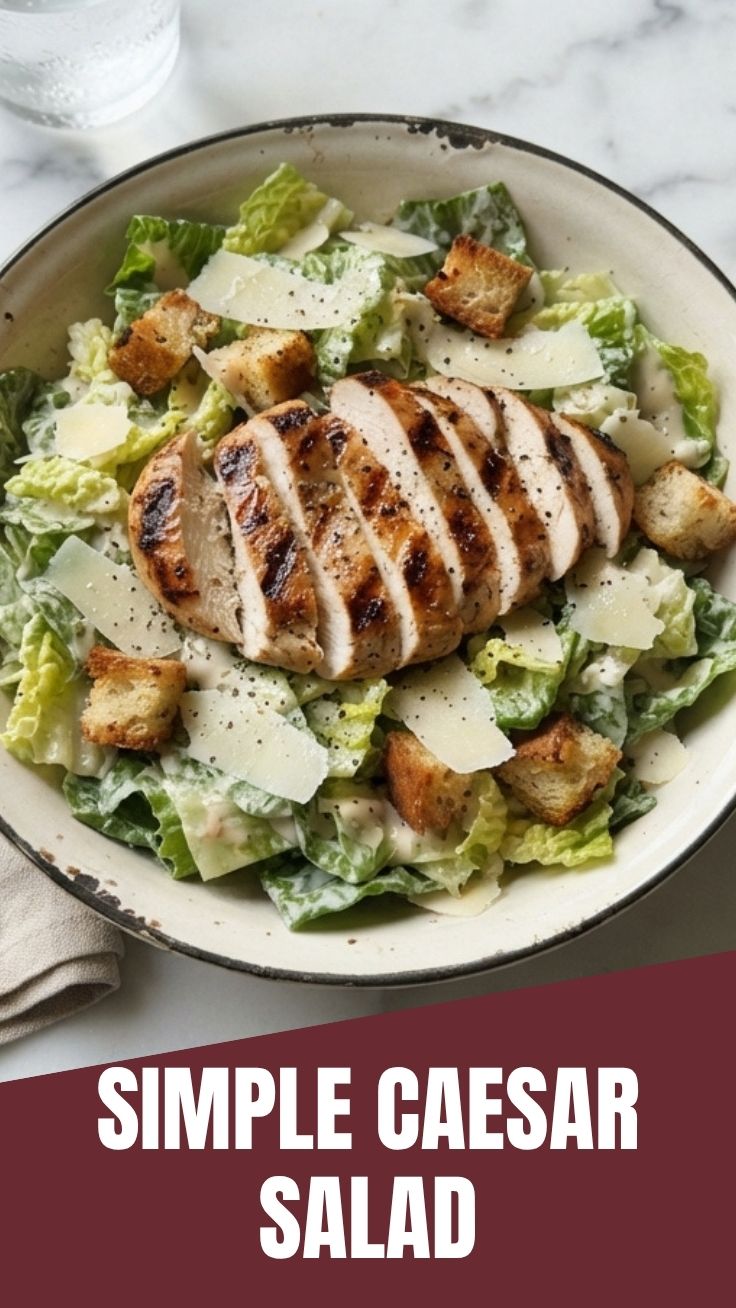
3. Assemble the Salad: Meanwhile, tear romaine leaves into bite-sized pieces (cutting with a knife causes browning). Toss in a large bowl with half the dressing until evenly coated. Add shaved Parmesan (reserve some for garnish) and croutons, then toss gently once more. Slice the rested chicken diagonally against the grain into 1/2-inch strips. This Chicken Caesar Salad should look vibrant—not overdressed or soggy.
4. Finish & Serve: Arrange the dressed greens on plates. Top with chicken strips, remaining Parmesan, and freshly cracked black pepper. Serve immediately with extra dressing on the side.
Nutritional Benefits & Advantages
A homemade Chicken Caesar Salad offers impressive nutritional value when prepared thoughtfully. The romaine lettuce provides 82% of your daily vitamin K (bone health) and a solid dose of vitamin A for eye function. Grilled chicken is a lean protein source—approximately 31 grams per 4-ounce serving—which supports muscle repair and satiety. The Parmesan cheese contributes calcium and protein, while olive oil delivers heart-healthy monounsaturated fats and anti-inflammatory polyphenols.
Dietary advantage: Unlike store-bought dressings that often contain high-fructose corn syrup or soybean oil, your homemade version uses whole ingredients with no hidden sugars or trans fats. One serving (approx. 2 cups) contains roughly 380 calories, 25g protein, 18g fat, and 22g carbs—making it suitable for a balanced meal or low-carb diet when croutons are minimized.
Tips Variations & Cooking Advice
– Flavor boost: Toast croutons with garlic powder and dried oregano before tossing into the salad.
– Protein swap: Use grilled shrimp, pan-seared salmon, or roasted chickpeas for a plant-based version.
– Dressing shortcut: If your emulsion breaks (separates), add 1 teaspoon of warm water while whisking vigorously.
– Portion adjustment: For a lighter main, reduce croutons by half and add cherry tomatoes or cucumber slices.
– Dietary adaptation: To make this dairy-free, substitute nutritional yeast for Parmesan and use a vegan mayonnaise base (1/4 cup) plus 2 tablespoons lemon juice instead of egg yolk—though the flavor shifts from classic Caesar.
– Cooking method: Oven-bake chicken at 400°F for 18–20 minutes if you prefer hands-off cooking; no grill marks but still tender.
Common Mistakes to Avoid
– Dressing too early: Adding dressing more than 10 minutes before serving turns lettuce limp and releases watery pools at the plate’s bottom.
– Overcrowding the grill: Chicken needs space to sear; steaming from overcrowding prevents caramelization.
– Soaking lettuce: Spinning romaine in a salad spinner should remove visible water droplets; any residual water dilutes dressing.
– Skipping anchovy: Even if you dislike fish, anchovies melt into the dressing’s flavor; omitting them yields a flat, one-dimensional taste.
– Cutting chicken too soon: Slicing immediately after cooking releases juices that make the salad swimmy and reduce meat moisture.
– Using pre-grated Parmesan: Anti-caking agents prevent even melting and create a grainy texture.
Storage & Meal Prep Tips
– Refrigeration: Store components separately. Undressed salad keeps 2–3 days in an airtight container lined with paper towels (absorb moisture). Dressing stays fresh 4–5 days in a sealed jar in the fridge.
– Freezing: Only freeze chicken (in a sealed bag for up to 3 months). Do not freeze assembled salad or dressing—ice crystals ruin texture and emulsification.
– Reheating: Reheat grilled chicken in a 350°F oven for 5–7 minutes (not microwave, which dries it out). For meal prep, portion individual containers with dressing in a separate mini cup to keep greens crunchy until lunchtime.
– Crispiness hack: Place a dry paper towel on top of prepped lettuce before sealing to absorb condensation. Refresh slightly wilted greens by soaking in ice water for 10 minutes, then spinning dry.
Conclusion
Mastering a homemade Chicken Caesar Salad transforms a simple dish into a canvas for fresh ingredients and personalized flavor—and the key lies in that rich, anchovy-kissed Caesar salad dressing you made from scratch. By controlling each component—crisp romaine, perfectly grilled chicken, shaved Parmesan, and house-dressed croutons—you avoid the preservatives and lackluster textures of pre-packaged kits. Plus, the nutritional advantages of real, whole foods make it a guilt-free indulgence. We encourage you to try this recipe, adjust it to your taste (add extra lemon or a grind of black pepper), and share your results in the comments below! Explore our related pasta salad variations or browse more low-carb meal ideas for inspiration.
FAQs
1. Can I use store-bought dressing instead of homemade?
Yes, but look for brands with real Parmesan and anchovy paste (like Cardini’s or Ken’s Steak House). Avoid “creamy Caesar” dressings that often contain high-fructose corn syrup. However, homemade dressing tastes noticeably fresher and lets you control sodium levels.
2. What’s the best substitute for anchovies?
Worcestershire sauce (1 teaspoon per 4 fillets) or a small spoonful of miso paste mimics umami depth. Alternatively, capers blended with a touch of fish sauce work well, though the flavor shifts toward brininess.
3. Why did my dressing separate after adding oil?
Most likely you added oil too quickly or used cold ingredients. To fix, place the mixture in a blender and add 1 tablespoon warm water while blending slowly. Or start over with a new egg yolk and slowly whisk the broken emulsion into it.
4. How do I keep croutons crunchy?
Store them in a sealed container with a silica gel packet (from shoe boxes) or a piece of dry bread. Avoid refrigerating croutons—condensation softens them. Toast them an extra 2 minutes in a 300°F oven before adding to revive stale ones.
5. Can I grill chicken on a gas or charcoal grill?
Absolutely—preheat to 400–450°F. Oil the grates well to prevent sticking. For charcoal, use medium-hot coals. The same timing applies, but watch for flare-ups from dripping fat. Always rest chicken before slicing to keep it juicy.
Proven Way to Grow Chicken Caesar Salad
Ingredients
Equipment
Method
- Plant the romaine lettuce seeds in a fertile bed, ensuring adequate sunlight and water; harvest when leaves are vibrant and crisp.
- Nurture your chicken starter with a balanced diet, allowing it to mature into a tender, succulent breast; prepare by grilling or roasting.
- Grate the aged Parmesan culture into fine strands, resembling freshly fallen snow.
- Toast the crouton sprouts in a warm oven until golden and crunchy, optionally drizzling with olive oil and garlic.
- In a large bowl, combine the cultivated romaine lettuce with the prepared chicken and toasted crouton sprouts.
- Drizzle generously with the Caesar dressing vines, tossing gently to ensure all ingredients are coated.
- Sprinkle the grated Parmesan culture over the top, then season with freshly ground black pepper and a squeeze of lemon zest and juice to taste.