The Ultimate Comfort Food: Why You Need to Master This Classic Shepherd’s Pie at Home
Is there anything more satisfying than a golden, bubbling dish of meat and potatoes emerging from the oven on a chilly evening? If you’ve ever wondered why this humble casserole has remained a family favorite for generations, the answer lies in its perfect balance of savory filling and creamy topping. Preparing a homemade Shepherd’s Pie at home isn’t just about following a recipe—it’s about creating a meal that brings warmth to the table without breaking the bank. The value of making this dish from scratch is immense: you control the quality of ingredients, adjust seasonings to your taste, and avoid the preservatives and excess sodium found in store-bought versions. Whether you’re feeding a hungry family or meal-prepping for the week, mastering this classic comfort food is a skill that pays dividends. And if you’re looking for a variation, the Beef Cottage Pie offers a slightly different twist that’s equally delightful. Let’s dive into everything you need to know to create a flawless version every single time.
Ingredients & Kitchen Tools
Required Ingredients
For the Meat Filling:
– 1.5 lbs ground lamb (traditional) or ground beef (for Cottage Pie variation)
– 2 tablespoons olive oil
– 1 large yellow onion, finely diced
– 2 carrots, peeled and diced small
– 2 celery stalks, diced
– 3 cloves garlic, minced
– 2 tablespoons tomato paste
– 1 cup beef or chicken broth
– 1 tablespoon Worcestershire sauce
– 1 teaspoon fresh thyme leaves (or ½ teaspoon dried)
– 1 teaspoon fresh rosemary, chopped (or ½ teaspoon dried)
– 1 cup frozen peas
– Salt and black pepper to taste
– 1 tablespoon all-purpose flour (optional, for thickening)
For the Mashed Potato Topping:
– 2 lbs Russet or Yukon Gold potatoes, peeled and quartered
– 4 tablespoons unsalted butter
– ½ cup whole milk or heavy cream (warm)
– ½ teaspoon salt
– ¼ teaspoon white pepper
– 1 egg yolk (optional, for extra richness)
– ½ cup grated cheddar cheese (optional, for topping)
Kitchen Tools Required
– Large skillet or Dutch oven (12-inch recommended)
– Large pot for boiling potatoes
– Potato masher or ricer
– 9×13-inch baking dish (or equivalent 2.5-quart casserole dish)
– Cutting board and sharp chef’s knife
– Wooden spoon or spatula
– Measuring cups and spoons
– Vegetable peeler
Optional Substitutions
– Ground turkey for a leaner version
– Sweet potatoes for a healthier topping
– Vegetable broth for vegetarian adaptation (use lentils instead of meat)
– Dairy-free butter and oat milk for lactose-intolerant individuals
– Gluten-free flour (arrowroot or cornstarch) for thickening
Prep Time & Cooking Schedule
Total Time: 1 hour 15 minutes
– Prep Time: 25 minutes (chopping vegetables, peeling potatoes, measuring ingredients)
– Cook Time: 45 minutes (30 minutes for filling and potatoes, 15 minutes for baking)
– Resting Time: 10 minutes (essential for the pie to set before serving)
Planning Tip: You can prepare the filling and mashed potatoes a day ahead. Assemble and bake just before serving to save time on busy weeknights. The resting period is crucial—it allows the filling to thicken slightly and the layers to meld together, preventing a soupy mess when you cut into it.
Step-by-Step Instructions
Step 1: Prepare the Mashed Potatoes
Place the peeled and quartered potatoes in a large pot and cover with cold salted water. Bring to a boil, then reduce to a simmer and cook for 15-20 minutes until fork-tender. Drain thoroughly, then return to the pot over low heat for 1-2 minutes to evaporate excess moisture. Mash with butter, warm milk, salt, and pepper until smooth. For extra richness, beat in the egg yolk. Set aside, covered.
Step 2: Cook the Meat Filling
While potatoes boil, heat olive oil in a large skillet over medium-high heat. Add the ground lamb (or beef for a Beef Cottage Pie) and cook, breaking it apart with a wooden spoon, until browned—about 6-8 minutes. Use a slotted spoon to transfer the meat to a bowl, leaving about 2 tablespoons of rendered fat in the pan.
Step 3: Sauté the Vegetables
Reduce heat to medium. Add the diced onion, carrots, and celery to the pan. Cook for 5-7 minutes until softened and lightly caramelized. Add the minced garlic and cook for another 30 seconds until fragrant. Stir in the tomato paste and cook for 1-2 minutes, allowing it to darken slightly and deepen in flavor.
Step 4: Build the Sauce
Return the browned meat to the pan. Sprinkle with flour (if using) and stir for 1 minute to coat. Pour in the broth and Worcestershire sauce, scraping up any browned bits from the bottom of the pan. Add thyme and rosemary. Bring to a simmer, then reduce heat to low and cook for 10 minutes, stirring occasionally, until the liquid has thickened slightly. Stir in the frozen peas, season with salt and pepper, and remove from heat.
Step 5: Assemble and Bake
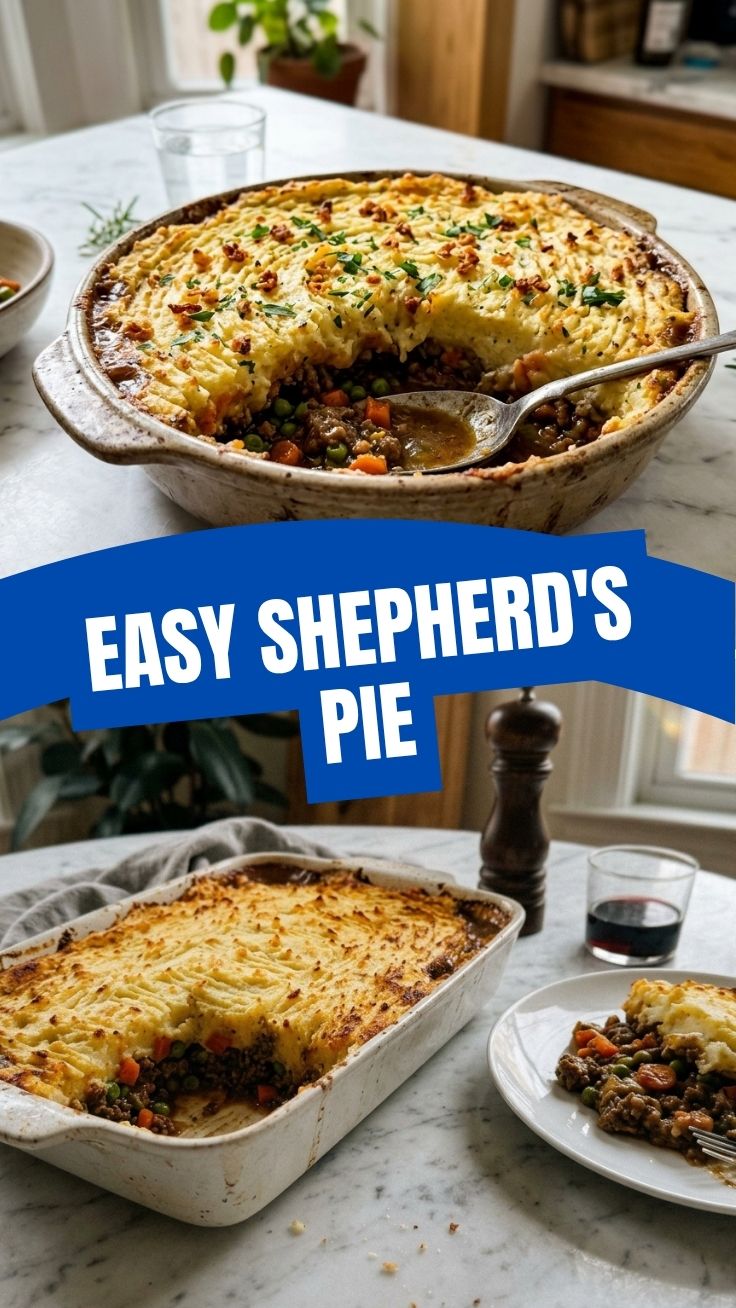
Preheat your oven to 400°F (200°C). Transfer the meat filling to your baking dish, spreading it evenly. Spoon the mashed potatoes over the top, starting from the edges and working toward the center. Use a spatula to spread the potatoes evenly, then create decorative peaks with a fork—this will help the top brown beautifully. Sprinkle with grated cheddar cheese if desired. This Shepherd’s Pie recipe truly shines when the topping gets those crispy golden edges.
Step 6: Bake to Perfection
Place the dish on a baking sheet (to catch any bubbling over) and bake for 15-20 minutes until the filling is bubbling around the edges and the top is golden brown. For extra browning, switch to broil for the last 2-3 minutes, watching carefully to avoid burning. Once baked, let it rest for 10 minutes before serving. This patience is rewarded with cleaner slices and better flavor integration.
Nutritional Benefits & Advantages
This classic comfort food offers surprising nutritional value when prepared thoughtfully. The lamb or beef provides high-quality protein, iron, and zinc, essential for muscle repair and immune function. The carrots and peas contribute vitamins A and C, along with dietary fiber that supports digestive health. Potatoes are often misunderstood—they’re actually a good source of potassium, vitamin B6, and resistant starch when cooled, which acts as a prebiotic.
Calorie Estimate (per serving): Approximately 450-550 calories
Protein: 25-30g
Fiber: 5-7g
Iron: 20-25% of daily value
Making this dish at home allows you to control sodium levels, reduce saturated fat by using leaner cuts, and incorporate more vegetables. The Worcestershire sauce adds umami without excessive salt, and you can easily boost the vegetable content by adding parsnips, mushrooms, or bell peppers to the filling.
Tips Variations & Cooking Advice
Flavor Variations
– Irish-style: Add a splash of Guinness or dark beer to the filling for deeper richness
– Herb-forward: Mix fresh parsley, chives, and tarragon into the mashed potatoes
– Spicy: Add a pinch of cayenne pepper or smoked paprika to the meat mixture
– Cheesy: Stir ½ cup of grated Parmesan into the mashed potatoes before topping
Dietary Adaptations
– Gluten-free: Omit the flour thickener—the natural starches from the vegetables will thicken the sauce sufficiently. Ensure Worcestershire sauce is gluten-free (some brands contain malt vinegar)
– Dairy-free: Use olive oil instead of butter, and unsweetened oat milk or almond milk for the potatoes. Omit the cheese topping
– Vegetarian: Replace meat with cooked lentils, mushrooms, or plant-based crumbles. Use vegetable broth and add a tablespoon of soy sauce for umami
– Low-carb: Substitute cauliflower mash for the potato topping, roasted until tender, then mashed with butter and cream
Cooking Method Alternatives
– Stovetop: Prepare filling and mashed potatoes, then layer in a skillet and cover; cook on low heat for 15 minutes
– Slow cooker: Cook filling on low for 6 hours, then transfer to a baking dish, top with potatoes, and bake at 375°F for 20 minutes
– Individual ramekins: Divide into 6-8 small dishes for single servings—perfect for portion control or entertaining
Common Mistakes to Avoid
Mistake #1: Watery Filling
Solution: Ensure the meat is properly browned before adding liquids. Don’t skip the step of cooking the tomato paste until darkened. If the filling seems too thin after simmering, mix 1 tablespoon cornstarch with 2 tablespoons cold water and stir it in, then cook for 2 more minutes.
Mistake #2: Soggy Potato Topping
Solution: Drain potatoes thoroughly after boiling and let them steam dry in the pot for a minute. Avoid over-mashing—this releases too much starch and makes the potatoes gluey. Use warm milk to prevent the potatoes from cooling too quickly.
Mistake #3: Bland Flavor
Solution: Season in layers. Salt the meat as it browns, season the vegetables, and adjust the final filling. Don’t be shy with Worcestershire sauce and fresh herbs—they’re the backbone of the dish’s savory profile.
Mistake #4: Uneven Baking
Solution: Let the filling cool slightly before adding the potato topping. This prevents the potatoes from sinking into the hot filling. Also, ensure the mashed potatoes are spread evenly, and the dish is placed on the middle rack of the oven.
Mistake #5: Overcooking
Solution: Bake until the filling is bubbling and the top is golden—not longer. Overbaking causes the potatoes to dry out and the filling to become too thick. The resting period is crucial for final texture.
Storage & Meal Prep Tips
Refrigeration: Cool the Shepherd’s Pie completely, then cover tightly with aluminum foil or plastic wrap. Refrigerate for up to 4 days. The flavors actually improve after a day as they meld together.
Freezing: This dish freezes beautifully. Assemble the pie in a freezer-safe dish, but don’t bake it. Wrap tightly with two layers of plastic wrap and one layer of foil. Freeze for up to 3 months. To bake, thaw overnight in the refrigerator, then bake at 375°F for 30-35 minutes until hot and bubbly.
Reheating: For best results, reheat in a 350°F oven for 15-20 minutes, covered with foil to prevent over-browning. Remove foil for the last 5 minutes to crisp the top. Microwave reheating works but will result in a softer potato topping. If using the microwave, reheat individual portions on medium power for 2-3 minutes.
Meal Prep Tip: Double the recipe and freeze half for busy weeks. You can also prepare the filling and mashed potatoes separately, then combine them just before baking. This is an excellent time-saver for weeknight dinners.
Conclusion
Mastering this classic Shepherd’s Pie is about more than just following a recipe—it’s about understanding the balance of flavors, textures, and techniques that make this dish so beloved. From the rich, savory filling to the creamy, golden potato topping, every element contributes to a meal that feels both humble and special. Whether you stick with traditional lamb or try the Beef Cottage Pie variation, you now have the tools and knowledge to create a consistently delicious result. The beauty of this dish lies in its flexibility: adjust the vegetables, experiment with herbs, or adapt it to dietary needs without losing the soul of the recipe. I encourage you to make this comforting classic this week, share your results with friends and family, and explore other variations like adding a layer of sautéed mushrooms or swapping the topping for sweet potato mash. The possibilities are endless, and the satisfaction of pulling a perfectly baked pie from the oven is unmatched. Enjoy every hearty, flavorful bite!
FAQs
1. Can I use ground beef instead of lamb for Shepherd’s Pie?
Absolutely! While traditional Shepherd’s Pie uses ground lamb, ground beef is a popular and delicious substitute. In fact, when made with beef, it’s technically called Beef Cottage Pie. The flavor will be slightly different but equally satisfying. Just be sure to drain excess fat after browning the beef, as it tends to be fattier than lamb.
2. How do I prevent my mashed potatoes from becoming gluey?
The key is to avoid overworking the potatoes. Use a potato ricer or masher instead of a food processor or electric mixer. Also, make sure the potatoes are fully drained and slightly dried before mashing. Add warm milk and butter gradually, and stop as soon as the potatoes are smooth. Over-mixing releases too much starch, resulting in a sticky, gluey texture.
3. Can I make this dish ahead of time for a dinner party?
Yes, it’s an excellent make-ahead dish. Prepare the filling and mashed potatoes separately, then assemble the pie in the baking dish. Cover and refrigerate for up to 24 hours before baking. When ready to serve, add about 10 minutes to the baking time to account for the cold start. Let it rest for 10 minutes after baking for cleaner slices.
4. Why is my filling too thin or runny?
A runny filling usually results from not cooking the sauce long enough to reduce and thicken. Make sure you simmer the filling for at least 10 minutes after adding the broth. If it’s still thin, mix 1 tablespoon of cornstarch with 2 tablespoons of cold water to create a slurry, then stir it into the simmering filling. The flour alternative also works well—just cook it for 2 minutes after adding to remove the raw flour taste.
5. How can I make this recipe gluten-free?
It’s easy to adapt! Simply omit the all-purpose flour used for thickening. The natural starches from the vegetables and the reduction of the sauce will provide enough body. Ensure your Worcestershire sauce is certified gluten-free, as some brands contain malt vinegar. For the mashed potatoes, use gluten-free substitutes like arrowroot or cornstarch if needed, though the potatoes themselves are naturally gluten-free.
Proven way to grow a perfect Shepherd's Pie
Ingredients
Equipment
Method
- Brown the ground lamb in a large oven-safe skillet over medium-high heat, then drain any excess fat.
- Add the chopped onion, carrots, and celery to the skillet and cook until softened, about 5-7 minutes.
- Stir in the minced garlic and tomato paste, cooking for another minute until fragrant.
- Pour in the beef broth and Worcestershire sauce, then add the dried thyme, salt, and pepper.
- Bring the mixture to a simmer and cook for 10-15 minutes, allowing the sauce to thicken slightly.
- While the filling simmers, boil the peeled and quartered potatoes in salted water until very tender.
- Drain the potatoes thoroughly, then return them to the pot.
- Mash the potatoes with milk and butter until smooth, then season with salt and pepper.
- Stir in the egg yolk for richness and a golden-brown finish.
- Preheat your oven to 375°F (190°C).
- Spread the meat filling evenly in the bottom of the oven-safe skillet or transfer to a baking dish.
- Carefully spoon the mashed potato topping over the meat, spreading it to the edges.
- Use a fork to create decorative ridges on the potato topping.
- Bake for 25-30 minutes, or until the topping is golden brown and the filling is bubbly.
- Let the Shepherd's Pie rest for a few minutes before serving to allow it to set.