The Ultimate Guide to Perfectly Soft Dinner Rolls: A Baker’s Secret to Golden, Buttery Perfection
Have you ever wondered why bakery-style Dinner Rolls always seem impossibly soft, fluffy, and golden while your homemade versions sometimes turn out dense or dry? The secret isn’t complicated ingredients or expensive equipment—it’s all about technique and understanding the science behind yeast dough. When you master homemade dinner rolls, you unlock a world of culinary satisfaction that store-bought alternatives simply cannot match. Preparing these rolls at home not only fills your kitchen with an irresistible aroma but also gives you complete control over ingredients, ensuring freshness and quality that elevates any meal from ordinary to extraordinary. Whether you’re hosting a holiday feast, preparing a Sunday dinner, or simply craving comfort food, learning to create these pillowy masterpieces is a skill worth developing. In this comprehensive guide, we’ll walk through every step, from ingredient selection to troubleshooting, ensuring your first batch is nothing short of spectacular.
Ingredients & Kitchen Tools
Essential Ingredients
– All-purpose flour (3½ cups): Provides the structure; bread flour works for chewier rolls
– Active dry yeast (2¼ teaspoons): One standard packet; instant yeast can substitute directly
– Warm milk (1 cup, 110°F): Activates yeast; whole milk yields richer results, but 2% works well
– Granulated sugar (¼ cup): Feeds yeast and adds slight sweetness
– Unsalted butter (6 tablespoons, softened): Adds richness and tender crumb; salted butter reduces added salt
– Large egg (1): Provides structure and golden color; flax egg works for vegan version
– Salt (1 teaspoon): Enhances flavor; reduce slightly if using salted butter
Kitchen Tools Required
– Large mixing bowl or stand mixer with dough hook
– Measuring cups and spoons
– 9×13-inch baking pan or round cake pan
– Kitchen thermometer (optional but helpful)
– Clean kitchen towel or plastic wrap
– Rolling pin (optional for shaping)
Optional Additions
– Melted butter for brushing tops
– Garlic powder, herbs, or sesame seeds for flavor variations
Prep Time & Cooking Schedule
| Phase | Time Required | Temperature |
|——-|—————|————-|
| Yeast activation | 5-10 minutes | 110°F milk |
| First rise (bulk fermentation) | 1-1½ hours | 75-80°F |
| Shaping and second rise | 30-45 minutes | Room temperature |
| Baking | 18-22 minutes | 375°F |
| Cooling | 10-15 minutes | Room temperature |
Plan your schedule: These rolls require approximately 2½ hours from start to finish, including rising times. The first rise is the longest step—use this time to prepare your main dish. For holiday meals, shape the rolls early and let them do a slow second rise in the refrigerator for up to 8 hours, then bake fresh.
Step-by-Step Instructions
Step 1: Activate the Yeast
Warm the milk to exactly 110°F—too hot kills yeast, too cold slows activation. Stir in sugar and yeast, then let sit for 5-10 minutes until foamy. If no foam appears, your yeast may be expired; start fresh.
Step 2: Mix the Dough
In a large bowl, combine flour and salt. Add the yeast mixture, beaten egg, and softened butter. Mix until a shaggy dough forms. Transfer to a floured surface and knead for 8-10 minutes (or use a stand mixer with dough hook for 6 minutes) until smooth and elastic. The dough should bounce back when pressed.
Step 3: First Rise
Place dough in a lightly greased bowl, cover with plastic wrap, and let rise in a warm, draft-free area for 1-1½ hours until doubled in size. This is where the magic happens—proper fermentation develops the flavor that makes Dinner Rolls unforgettable.
Step 4: Shape the Rolls
Punch down the dough, divide into 12 equal pieces (each about 60 grams). Shape each into a smooth ball by pulling edges underneath and pinching seams. Place in a greased 9×13-inch pan, spacing evenly. Perfectly shaped homemade dinner rolls rely on creating surface tension—tug the dough gently while rolling for a tight ball.
Step 5: Second Rise
Cover shaped rolls with a towel and let rise 30-45 minutes until puffy and touching each other. This ensures soft, pull-apart texture.
Step 6: Bake to Perfection
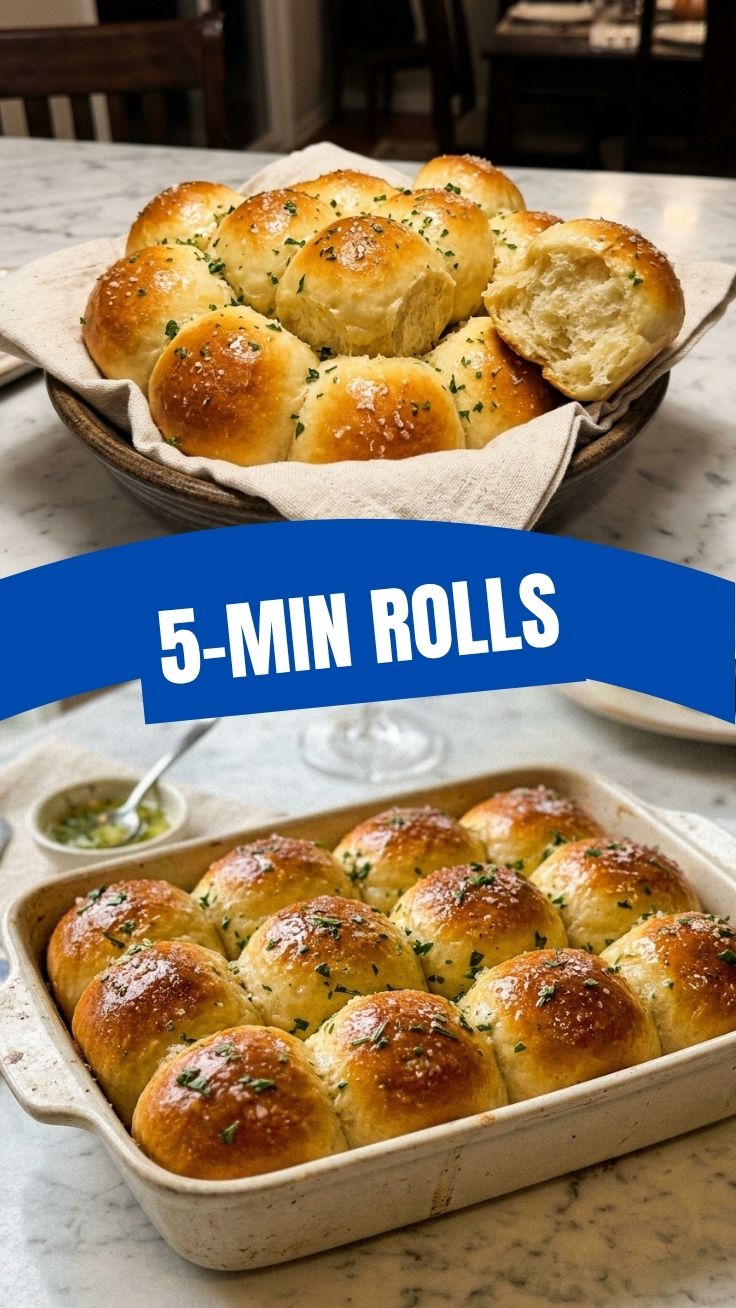
Preheat oven to 375°F. Brush tops with melted butter for golden crust. Bake 18-22 minutes until deep golden brown and internal temperature reaches 190°F. Cool in pan for 10 minutes before serving.
Nutritional Benefits & Advantages
These Dinner Rolls offer more than comfort—they provide essential nutrients when made from scratch. Each roll contains approximately 180 calories, 6g protein, 28g carbohydrates, and 5g fat. The butter and milk add calcium and vitamin D, while the egg provides high-quality protein and B vitamins. By making homemade dinner rolls, you avoid preservatives and dough conditioners found in commercial products. The fermentation process also improves digestibility and nutrient absorption compared to quick breads. For a healthier twist, substitute whole wheat flour for half the all-purpose flour to boost fiber content and add minerals like magnesium and selenium.
Tips Variations & Cooking Advice
Flavor Variations
– Garlic herb rolls: Add 2 minced garlic cloves and 1 tablespoon dried rosemary to dough during mixing
– Cheese rolls: Fold in ½ cup shredded cheddar before shaping
– Sweet cinnamon rolls: Increase sugar to ⅓ cup and sprinkle cinnamon-sugar before baking
Dietary Adaptations
– Gluten-free version: Use a 1:1 gluten-free flour blend with xanthan gum; reduce liquid by 2 tablespoons
– Dairy-free version: Substitute oat milk and vegan butter; the texture remains soft
– Vegan version: Replace egg with flax egg (1 tablespoon flaxseed + 3 tablespoons water) and use plant-based butter
Cooking Method Options
– Air fryer: Bake at 350°F for 10-12 minutes; perfect for small batches
– Slow rise: Refrigerate shaped rolls overnight for deeper flavor development
Common Mistakes to Avoid
1. Overproofing: If rolls collapse or develop a sour smell, you’ve let them rise too long. Time your second rise carefully—touching rolls should spring back slowly.
2. Underbaking: Pale tops and doughy centers indicate insufficient baking. Always check internal temperature for 190°F.
3. Dry dough: Adding too much flour creates dense rolls. The dough should be slightly tacky but not sticky.
4. Cold ingredients: Cold eggs or milk shock the yeast. Bring ingredients to room temperature before starting.
Storage & Meal Prep Tips
Room temperature: Store in an airtight container for 2-3 days. Add a slice of bread to absorb excess moisture and keep rolls soft.
Refrigeration: Keeps 5-7 days in a sealed bag. Reheat in a 300°F oven for 5 minutes to restore freshness.
Freezing: Wrap cooled rolls individually in plastic wrap, then place in a freezer bag. They stay fresh for up to 3 months. Thaw at room temperature for 30 minutes, then reheat.
Reheating: Microwave for 10-15 seconds per roll, or wrap in foil and warm in a 350°F oven for 8 minutes.
Conclusion
Creating the perfect Dinner Rolls at home transforms any meal into a memorable experience. By following these precise steps—from activating yeast to achieving that golden crust—you’ll consistently produce rolls that are soft, buttery, and utterly irresistible. Remember, the journey to perfect homemade dinner rolls is about practice and patience; each batch teaches you something new about your oven, your ingredients, and your technique. Don’t be discouraged if your first attempt isn’t bakery-perfect—the aroma alone makes it worthwhile. We encourage you to experiment with the variations shared here and share your results with friends and family. Happy baking!
FAQs
1. Can I use instant yeast instead of active dry yeast?
Yes! Substitute directly 1:1. Skip the yeast activation step and mix instant yeast with dry ingredients. Reduce the first rise time by about 15 minutes.
2. Why did my rolls turn out dense and heavy?
Common causes include expired yeast, too much flour, or insufficient kneading. Ensure your yeast is fresh, measure flour by spooning into cups (not scooping), and knead until the dough passes the windowpane test—stretched thin enough to see light through without tearing.
3. How can I make these rolls ahead for Thanksgiving?
Shape the rolls and place them in the pan. Cover tightly and refrigerate for up to 12 hours. Remove from refrigerator 30 minutes before baking to come to room temperature, then bake as directed.
4. Can I halve the recipe?
Absolutely. Halve all ingredients and use a 8×8-inch pan. Reduce baking time by 2-3 minutes since smaller rolls bake faster.
5. My rolls are too brown on top but undercooked inside. What happened?
Your oven temperature is too high. Reduce to 350°F and bake longer, or tent with foil for the last 5 minutes. Always use an oven thermometer for accuracy.
Quick way to grow 4 Dinner RollsDinner Rolls
Ingredients
Equipment
Method
- In a large bowl, combine flour, yeast, sugar, and salt; then add warm water and melted butter, mixing until a shaggy dough forms.
- Knead the dough on a lightly floured surface for 5-7 minutes until smooth and elastic, then divide it into 4 equal pieces and shape each into a round ball.
- Place the dough balls in a lightly greased baking dish, cover with plastic wrap, and let rise in a warm place for 15-20 minutes, or until doubled in size.
- Preheat oven to 375°F (190°C), then bake the rolls for 15-20 minutes until golden brown, brushing with melted butter if desired.