How to Achieve a Juicy, Golden-Brown Turkey Every Time
Is there anything more disappointing than slicing into a beautifully browned turkey only to find dry, flavorless meat? You’re not alone—countless home cooks struggle with this classic centerpiece. Preparing your own bird at home not only saves money but also lets you control seasoning, texture, and doneness. Whether you’re hosting your first gathering or refining your technique, this guide will help you deliver a showstopper. Learn everything you need for a flawless Roast Turkey that makes your Thanksgiving dinner truly memorable.
Ingredients & Kitchen Tools
– Turkey (12–14 lbs): Choose a fresh or fully thawed bird. Fresh yields juicier meat; frozen requires 24 hours of thawing per 5 lbs.
– Butter (1/2 cup, softened): For under-skin and surface coating. Use unsalted to control sodium.
– Salt (2 tbsp kosher) & Black Pepper (1 tbsp): Essential for deep seasoning. Kosher salt adheres better.
– Fresh Herbs (rosemary, thyme, sage – 4 sprigs each): Aromatic layers for herbaceous flavor.
– Onion (1 large, quartered) & Lemon (1, halved): For cavity aromatics.
– Garlic (1 head, halved crosswise): Adds subtle sweetness.
– Chicken or Turkey Broth (1 cup): For basting and pan drippings.
– Kitchen Twine: To truss the bird for even cooking.
– Roasting Pan with V-Rack: Lifts the turkey so air circulates, promoting crisp skin.
– Meat Thermometer: Essential for perfect doneness (165°F in thigh, 160°F in breast).
– Optional Substitutions: Use olive oil instead of butter for dairy-free; dried herbs if fresh unavailable (use 1 tsp per 4 sprigs).
Prep Time & Cooking Schedule
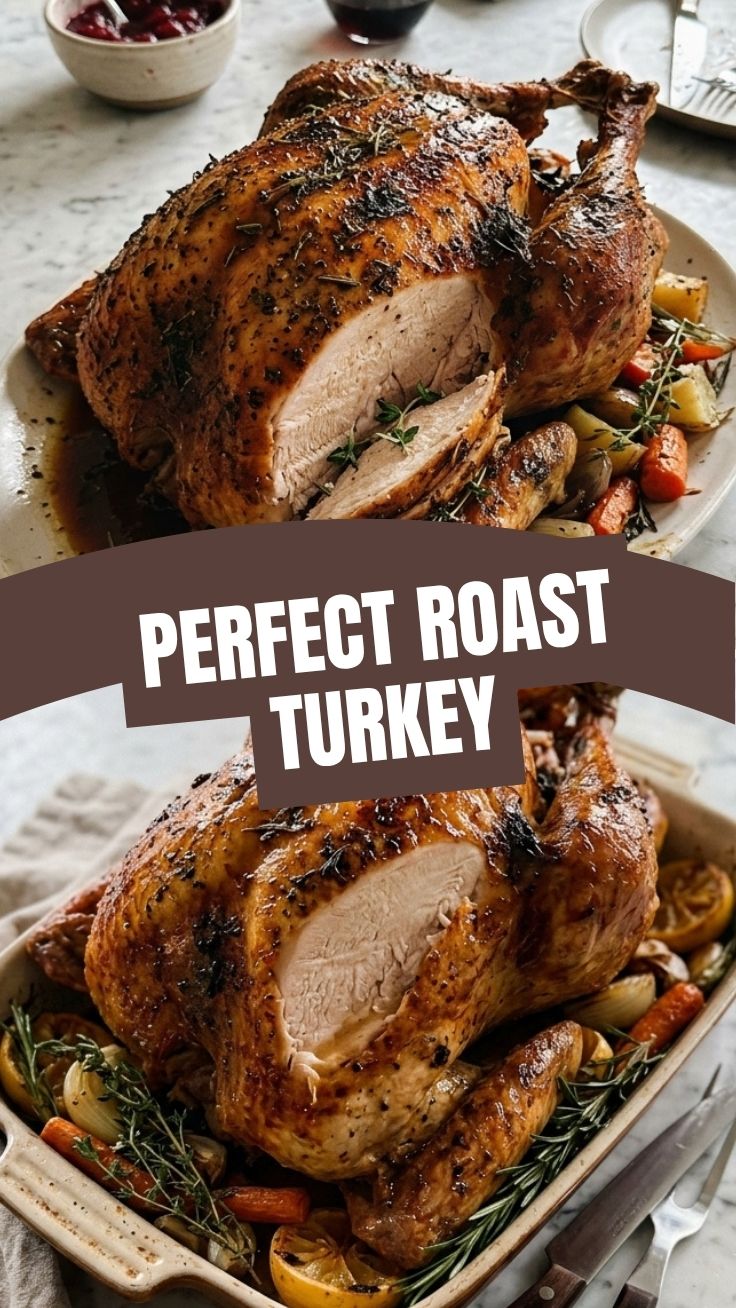
– Prep Time: 30 minutes (including brining if desired). Dry brine 24 hours ahead for best moisture retention.
– Cook Time: Approximately 13–15 minutes per pound at 325°F. For a 12–14 lb turkey, plan 2.5–3.5 hours.
– Resting Time: 30–45 minutes (critical for juices to redistribute). Start checking temperature 30 minutes before the estimated finish.
Planning Tip: Remove turkey from fridge 1 hour before roasting to take off the chill. Preheat oven to 325°F while you prepare. If brining, do so 24 hours in advance and pat dry thoroughly before roasting.
Step-by-Step Instructions
1. Prepare the Turkey: Pat the bird completely dry with paper towels. This step is non-negotiable for crispy skin. Season generously inside and out with salt and pepper.
2. Butter and Herbs: Gently loosen the skin over the breast and thighs. Spread softened butter under the skin and over the entire surface. Place fresh herbs, onion, lemon, and garlic into the cavity.
3. Truss and Roast: Tie the legs together with kitchen twine and tuck the wing tips under the bird. Place on the V-rack in the roasting pan. Pour broth into the pan bottom (not over the bird). Roast at 325°F, basting every 45 minutes with pan juices.
4. Monitor Temperature: After about 2 hours, check the internal temperature in the thickest part of the thigh and breast. When the thigh reaches 165°F and breast 160°F, remove from oven. Note: The breast will continue cooking during rest.
5. Rest and Carve: Transfer the turkey to a cutting board, tent loosely with foil, and rest for 30–45 minutes. This allows juices to settle, ensuring each slice is moist. Carve against the grain for tender pieces. This method yields a spectacular roast turkey that steals the spotlight at any Thanksgiving dinner.
Temperature Control Tips: If the breast browns too quickly, tent it lightly with foil. For extra-crispy skin, increase oven to 425°F for the last 15 minutes—but watch closely.
Nutritional Benefits & Advantages
A well-prepared turkey is a lean protein powerhouse. A 3-ounce serving of skinless roasted breast provides about 25g of protein, only 3g of fat, and rich amounts of B vitamins (especially B6 and B12) and selenium, an antioxidant mineral. The use of herbs adds anti-inflammatory properties, while controlling salt and butter allows you to moderate sodium and saturated fat. Compared to store-bought rotisserie birds, homemade roast turkey is free of preservatives and tailored to your dietary needs—ideal for keto, paleo, or balanced eating plans.
Tips, Variations & Cooking Advice
– Flavor Variations: Swap classic herbs for Cajun seasoning, or add a maple glaze (2 tbsp maple syrup + 1 tbsp Dijon mustard) during the last 20 minutes.
– Alternative Methods: Spatchcock (butterfly) the turkey for faster cooking (about 1.5 hours) and even browning. Deep frying yields crispy skin but requires careful oil temperature management.
– Dietary Adaptations: For dairy-free, use olive oil or ghee instead of butter. For gluten-free, ensure broth and any added spices are certified gluten-free. To reduce sodium, use a low-sodium broth and skip brining.
– Portion Changes: For smaller gatherings, roast a turkey breast instead of whole bird—cook at 350°F for about 20 minutes per pound.
Common Mistakes to Avoid
– Skipping the Pat-Dry: Moist skin leads to steaming, not roasting. Always dry thoroughly.
– Overcrowding the Pan: Use a V-rack or elevate the bird so air circulates; otherwise, the bottom steams.
– Not Using a Thermometer: Guessing doneness results in overcooked or undercooked meat. Always rely on a digital thermometer.
– Carving Too Early: Cutting into a hot turkey causes juices to run out. Patience during resting pays off.
– Forgetting to Baste: Basting every 45 minutes keeps the skin from drying out. But don’t over-do it—opening the oven too often slows cooking.
Storage & Meal Prep Tips
Refrigeration: Remove all meat from the bones within 2 hours of cooking. Store in airtight containers for up to 4 days. Keep the carcass for stock if desired.
Freezing: Shred or slice cooled meat, wrap tightly in plastic wrap then foil, and freeze for up to 3 months. Vacuum-sealing extends quality.
Reheating: For best results, reheat meat in a covered dish with a splash of broth at 300°F until warmed through (about 15–20 minutes). Avoid microwaving, which dries out the meat. For crispy skin, reheat slices in a hot skillet with a little oil.
Meal Prep Tip: Cook extra turkey on purpose—shredded meat is perfect for soups, sandwiches, or salads later in the week.
Conclusion
Mastering a juicy, golden-brown bird doesn’t require a professional kitchen—just careful prep, accurate temperatures, and a little patience. From the initial dry brine to the final carve, every step contributes to a memorable centerpiece. We’ve walked through how to season, roast, and rest your bird for perfect results. Now you can confidently serve a spectacular roast turkey that elevates your Thanksgiving dinner to new heights. Try this method for your next celebration, share your results in the comments, or explore our other holiday recipes to complete your menu.
FAQs
1. Can I stuff the turkey instead of using aromatics?
Yes, but it significantly increases cook time and poses a food safety risk if the stuffing doesn’t reach 165°F. For best results, cook stuffing separately.
2. How do I prevent the turkey from drying out?
The keys are dry brining (or salting 24 hours ahead), using a meat thermometer, and letting it rest 30 minutes before carving. Basting also helps.
3. What if my turkey is frozen?
Thaw in the refrigerator—allow 24 hours per 5 pounds. Never thaw at room temperature. Once fully thawed, follow the recipe as written.
4. Can I use a convection oven?
Yes. Reduce the temperature by 25°F and check the turkey about 20 minutes earlier than the standard time. Convection circulates hot air, so skin crisps faster.
5. My turkey breast is done, but the thighs are still raw. What should I do?
Remove the turkey from the oven, cover the breast tightly with foil, and return just the thighs to the oven until they reach 165°F. Alternatively, spatchcock the bird next time to ensure even cooking.
Quick Way to Roast Turkey
Ingredients
Equipment
Method
- Preheat oven to 375°F (190°C) and remove giblets from turkey; pat the turkey dry with paper towels.
- Rub softened butter all over the turkey, then season generously with salt and pepper; place onion, celery, and rosemary inside the turkey cavity.
- Place the turkey in a roasting pan and roast for 30 minutes, then reduce oven temperature to 325°F (160°C).
- Continue roasting for 2.5-3 hours, basting every 45 minutes with pan juices or chicken broth, until a meat thermometer inserted into the thickest part of the thigh reads 165°F (74°C).
- Remove turkey from the oven, tent loosely with foil, and let it rest for 20 minutes before carving.