The Ultimate Guide to Making a Perfect Greek Salad at Home
Have you ever wondered why the Greek Salad you enjoy at a taverna tastes so much fresher and more vibrant than the one you make at home? The secret isn’t just in the ingredients—it’s in the technique, the timing, and the quality of each component. Preparing this iconic dish at home isn’t just about saving money; it’s about controlling the freshness, customizing the flavors to your palate, and enjoying a meal that is both nourishing and deeply satisfying. Whether you’re a seasoned cook or a kitchen novice, mastering the art of a traditional Greek Salad is a valuable skill that will serve you for years to come. This guide will walk you through every step, from selecting the perfect produce to assembling a bowl that sings with Mediterranean sun and sea.
Ingredients & Kitchen Tools
To craft an authentic Greek Salad, you’ll need a precise combination of fresh ingredients and the right tools. Here’s everything you need:
Ingredients:
– 4 large ripe Roma or vine-ripened tomatoes – Choose firm but juicy tomatoes; they form the salad’s base.
– 1 large English cucumber – Peeled and sliced into half-moons; the thin skin is less bitter.
– 1 medium red onion – Thinly sliced; soak in cold water for 10 minutes to mellow the bite.
– 1 green bell pepper – Seeded and sliced into rings or chunks for crunch.
– 200g (7 oz) good-quality feta cheese – Preferably from sheep’s milk; block feta is best, not crumbled.
– ½ cup Kalamata olives – Pitted for convenience; their briny flavor is essential.
– 3 tablespoons extra virgin olive oil – Use a robust, fruity oil for the dressing.
– 1 tablespoon red wine vinegar – Adds acidity; substitute with lemon juice if needed.
– 1 teaspoon dried oregano – Use Greek oregano if possible for authentic flavor.
– Sea salt and freshly ground black pepper – To taste.
Kitchen Tools & Utensils:
– Large salad bowl – Wide and shallow for easy mixing.
– Chef’s knife – For precise chopping of vegetables.
– Cutting board – A stable surface.
– Small bowl or jar – For whisking the dressing.
– Colander – For rinsing olives or herbs (optional).
– Measuring spoons – For accurate oil and vinegar.
Optional Substitutions:
– Swap red wine vinegar for lemon juice for a brighter tang.
– Use a dairy-free feta or omit cheese for a vegan version (noted in variations).
– Add capers for extra brininess.
Prep Time & Cooking Schedule
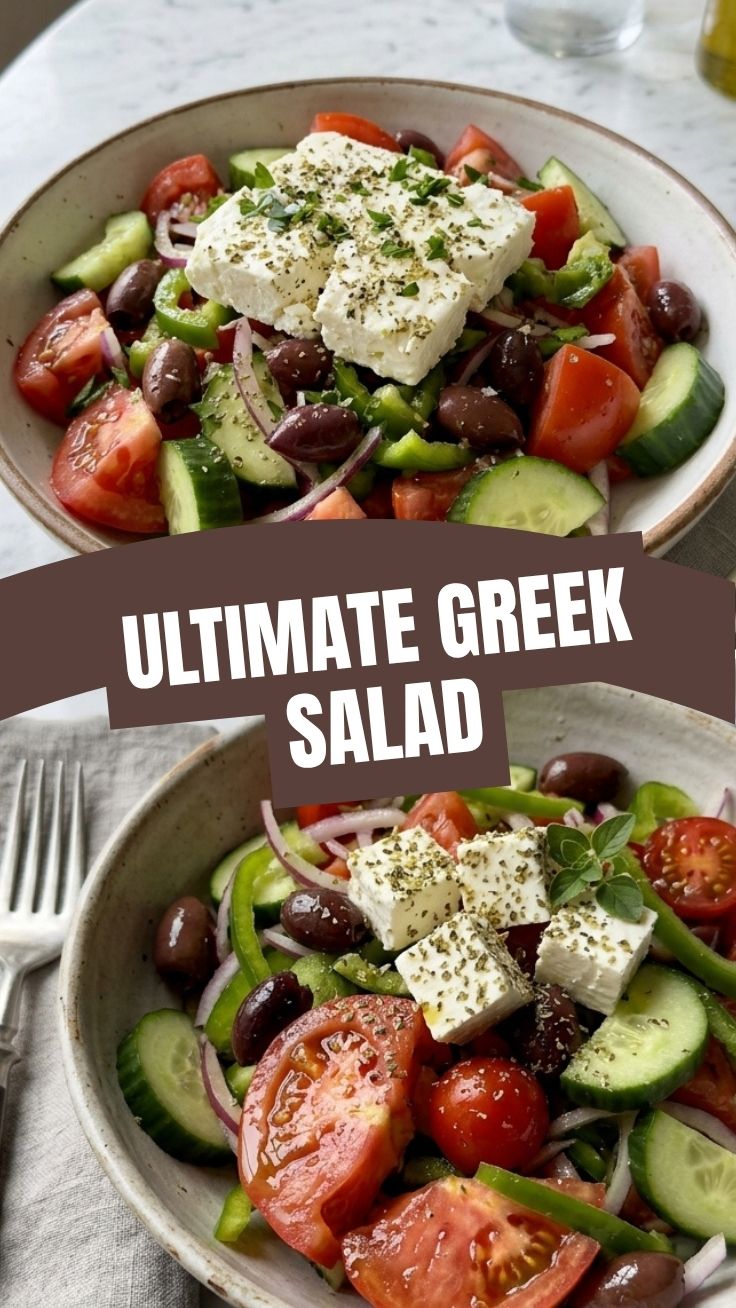
This recipe is all about freshness, so the prep and assembly are straightforward. Here’s a timeline to help you plan:
– Prep Time: 15 minutes (washing, chopping, slicing vegetables)
– Assembly Time: 5 minutes (combining ingredients and dressing)
– Resting Time: 10 minutes (optional, for flavors to meld)
– Total Time: 30 minutes (including resting)
The quick prep makes it ideal for a light lunch, a side dish for grilled meats, or a refreshing dinner on a warm evening. No cooking required—just chopping and tossing. If you’re making it ahead, store the vegetables and dressing separately (see Storage section).
Step-by-Step Instructions
Follow these clear steps to build a perfect Greek Salad every time.
1. Prepare the Vegetables: Wash and dry all produce. Core the tomatoes and cut them into large chunks (about 1–2 inches). Peel the cucumber, slice it lengthwise, then cut into half-moons about ¼-inch thick. Thinly slice the red onion (soak in cold water if desired). Core and seed the green bell pepper, then slice into rings or bite-sized strips.
2. Assemble the Base: In a large salad bowl, combine the chopped tomatoes, cucumber, onion, and bell pepper. Gently toss with your hands to distribute evenly.
3. Add the Toppings: Scatter the Kalamata olives over the vegetables. Then, place the block of feta cheese on top—do not crumble it; leave it whole or cut into thick slabs. This is key for authenticity. Sprinkle the dried oregano over everything.
4. Make the Dressing: In a small bowl or jar, whisk together the extra virgin olive oil, red wine vinegar, a pinch of salt, and a few grinds of black pepper. Taste and adjust acidity or oil as needed. For a more emulsified dressing, shake in a jar.
5. Dress and Rest: Drizzle the dressing over the salad just before serving. Do not toss—this is important to keep the feta intact. Let the salad rest for 5–10 minutes at room temperature to allow flavors to meld. Serve immediately with crusty bread.
Pro Tips: For a more intense flavor, massage the chopped tomatoes with a little salt before adding other ingredients—this draws out juice that becomes part of the dressing. If you prefer a milder onion flavor, soak slices in ice water for 10 minutes before adding. Temperature control: Keep all ingredients at room temperature for best taste; cold vegetables dull the flavors.
Remember, the focus keyword Greek Salad and the related keyword Greek Salad Recipe are essential to this dish’s identity. In this step, you’ve followed a traditional Greek Salad Recipe that emphasizes simplicity and quality.
Nutritional Benefits & Advantages
A classic Greek Salad is a nutritional powerhouse, offering a range of health benefits:
– Tomatoes are rich in lycopene, an antioxidant linked to heart health and reduced cancer risk.
– Cucumbers provide hydration and vitamin K, supporting bone health.
– Red onions contain quercetin, an anti-inflammatory compound.
– Green bell peppers are loaded with vitamin C, boosting immunity.
– Feta cheese delivers calcium and protein, though it’s lower in fat than many other cheeses.
– Kalamata olives offer healthy monounsaturated fats and iron.
– Extra virgin olive oil is a cornerstone of the Mediterranean diet, known for its anti-inflammatory properties and heart benefits.
This salad is naturally gluten-free (if using certified gluten-free vinegar), low-carb, and suitable for keto diets (with olive moderation). It’s also packed with fiber, vitamins, and minerals, making it a satisfying and nutrient-dense meal on its own or as a side.
Tips, Variations & Cooking Advice
Personalize your Greek Salad with these ideas:
– Add Protein: Top with grilled chicken, shrimp, or chickpeas for a heartier meal.
– Herb Swap: Use fresh mint or basil instead of oregano for a different flavor profile.
– Dressing Variations: Try lemon juice and olive oil with a pinch of sumac for a Middle Eastern twist.
– Vegan Version: Omit feta and add avocado or marinated tofu for creaminess.
– Spicy Kick: Add a pinch of red pepper flakes or sliced pepperoncini.
– Dairy-Free: Use a plant-based feta or nutritional yeast for cheesy notes.
– Meal Prep: Chop vegetables in advance (store separately) and dress just before serving. The feta will weep if left too long.
Cooking Advice: For the best texture, cut vegetables into uniform sizes for even flavor distribution. Always use room-temperature ingredients—cold vegetables dull the taste of olive oil and vinegar.
Common Mistakes to Avoid
Avoid these pitfalls for a flawless result:
1. Over-mixing the salad: Tossing the feta can cause it to crumble and disintegrate. Keep it whole or in slabs on top.
2. Using pre-crumbled feta: It’s often dry and lacks the creamy, tangy character of block feta. Always buy a block and cut it yourself.
3. Skipping the salt on tomatoes: A pinch of salt draws out juice and enhances sweetness, creating a natural dressing base.
4. Dressing too early: Adding dressing more than 15 minutes before serving makes vegetables soggy. Dress just before eating.
5. Using low-quality olive oil: This is the star of the dressing. Choose a robust, extra virgin variety for authentic flavor.
Storage & Meal Prep Tips
Greek Salad is best fresh, but here’s how to manage leftovers:
– Refrigeration: Store undressed salad in an airtight container for up to 2 days. The vegetables will soften slightly. Add dressing just before serving.
– Freezing: Not recommended—freezing will ruin the texture of tomatoes and cucumbers.
– Reheating: Do not heat; serve cold or at room temperature. If the salad has been dressed, it will keep for 1 day in the fridge but may become watery.
– Meal Prep: Chop all vegetables (except tomatoes—they get mushy) up to 2 days ahead. Store in separate containers. Make dressing up to 1 week in advance. Assemble when ready.
Conclusion
Mastering this vibrant dish is about celebrating simplicity and quality. The focus keyword Greek Salad is more than a recipe—it’s a testament to the Mediterranean philosophy of letting fresh ingredients shine. By following this Greek Salad Recipe, you’ve learned to balance acidity, saltiness, and creaminess for a perfect bite every time. I encourage you to try this recipe at home, adjust it to your taste, and share your results with friends or family. For more Mediterranean-inspired dishes, explore our collection of fresh, healthy recipes that bring the joy of cooking back to your kitchen.
FAQs
1. Can I use lemon juice instead of red wine vinegar in the dressing?
Yes, lemon juice is a classic substitute. Use 1 tablespoon fresh lemon juice in place of the vinegar. It adds a brighter, more citrusy note.
2. How do I prevent the cucumber from making the salad watery?
Remove seeds from the cucumber before slicing or salt the cucumber slices and let them drain for 10 minutes. Pat dry with a paper towel to remove excess moisture.
3. Can I make this salad ahead for a party?
Yes, but keep the vegetables undressed and store in the fridge. Add the feta, olives, and dressing just before serving. If it’s a buffet, dress only half at a time to maintain freshness.
4. Is there a way to reduce the saltiness of the olives and feta?
Rinse olives in cold water and drain well. For feta, soak the block in cold water for 15–30 minutes before cutting—this reduces saltiness and makes it creamier.
5. What type of feta is best for this salad?
A block of sheep milk feta from Greece is ideal. Avoid pre-crumbled or cow’s milk feta, which can be rubbery or less flavorful. Look for feta packed in brine.
Best way to grow with a perfect Greek Salad: 5 fresh twists
Ingredients
Equipment
Method
- Prepare the classic Greek salad base by dicing the cucumber, chopping the tomatoes, thinly slicing the red onion, and pitting the Kalamata olives.
- Crumble the feta cheese and set aside. Combine all vinaigrette ingredients in a small bowl and whisk until well combined.
- In a large bowl, combine the prepared vegetables and olives. Pour the vinaigrette over the salad and toss gently to coat.
- Sprinkle the crumbled feta cheese over the salad just before serving. Serve immediately for best results.