Beat the Heat & Your Blood Sugar: Grilled Lemon Herb Salmon with Mango Sorbet
Summer is here, and with it comes the challenge of balancing backyard gatherings with health goals. Did you know that a simple midday meal can either stabilize or spike your glucose levels? The real value of cooking at home is taking control of exactly what goes into your food. Whether you are managing type 2 diabetes or simply aiming to cut down on sugar, learning to prepare vibrant, satisfying meals doesn’t mean suffering through bland salads. This guide will walk you through a complete summer plate that is both refreshing and blood-sugar-friendly, starting with a show-stopping dessert you will love. Discover our exclusive collection of diabetic friendly summer recipes that prove healthy eating is delicious. To upgrade your savory skills, we also pair this menu with low carb barbecue marinades that add explosive flavor without the carbs.
Ingredients & Kitchen Tools
For the Salmon (serves 4):
– 4 salmon fillets (6 oz each): Wild-caught preferred for higher omega-3 content and lower mercury levels.
– 3 tbsp olive oil: Use extra virgin for better flavor; avocado oil works as a neutral substitute.
– 2 lemons (zested and juiced): Fresh is non-negotiable here; bottled juice lacks brightness and adds unnecessary sugars.
– 4 cloves garlic (minced): Fresh garlic offers more allicin (a compound linked to heart health) than pre-minced jars.
– 1 tbsp fresh dill (chopped): Dill aids digestion and pairs beautifully with fish; substitute with 1 tsp dried dill if needed.
– Salt and black pepper to taste: Use sea salt or pink Himalayan salt for trace minerals.
For the Mango Sorbet (makes 4 servings):
– 3 cups frozen mango chunks: Choose unsweetened frozen mango; fresh mango can be used but requires peeling, pitting, and freezing overnight.
– ½ cup unsweetened coconut milk (canned): Full-fat creates a creamier texture; light coconut milk works but may yield icier results.
– 2 tbsp fresh lime juice: The acidity balances mango’s natural sweetness and helps lower the glycemic impact.
For the Low Carb Marinade (optional but recommended):
– ¼ cup apple cider vinegar, 2 tbsp cumin, 1 tsp smoked paprika, 1 tbsp minced serrano pepper.
Kitchen Tools:
– Baking sheet or grill grate · Parchment paper (for easy cleanup) · Chef’s knife · Citrus juicer · Microplane or zester · Food processor or high-speed blender · Spatula · Instant-read thermometer · Airtight container (for leftovers)
Prep Time & Cooking Schedule
– Prep time: 15 minutes (includes zesting, juicing, and mincing garlic)
– Marinating time: 20–30 minutes (salmon rests while you prepare sorbet base)
– Cook time: 12–15 minutes (depending on grill or oven heat)
– Sorbet freezing time: 4–6 hours (ideally overnight) — make this ahead of time for the best texture
– Total active time: 30 minutes
Planning tip: Prepare the mango sorbet the night before. This allows the mixture to fully set and develop a smooth, scoopable consistency. On serving day, simply marinate the salmon, fire up the grill or preheat the oven, and assemble your plate. The entire meal comes together in under 30 minutes of active kitchen time.
Step-by-Step Instructions
1. Prepare the Mango Sorbet (do this first)
In a food processor, combine frozen mango chunks, coconut milk, and lime juice. Blend on high for 60–90 seconds, scraping down the sides once or twice, until you achieve a smooth, creamy consistency resembling soft-serve ice cream. The mixture should be thick but pourable. If it is too thick, add 1 tablespoon of water at a time.
2. Transfer and Freeze
Spoon the mixture into a shallow, freezer-safe container. Cover tightly with plastic wrap (pressing the wrap directly onto the surface to prevent ice crystals) and freeze for at least 4 hours. For easier scooping, stir the mixture once after 2 hours to break up any large ice crystals. This step ensures the texture stays silky and not rock-hard.
3. Make the Marinade for Salmon
In a small bowl, whisk together olive oil, lemon zest, lemon juice, minced garlic, and chopped dill. Season generously with salt and pepper. Place salmon fillets in a shallow dish or a resealable plastic bag. Pour the marinade over the fillets, turning to coat all sides. Cover and refrigerate for exactly 20–30 minutes. Do not exceed 30 minutes — the acid from the lemon juice can start to “cook” the fish, making it mushy.
4. Cook the Salmon
– Grill method: Preheat grill to medium-high (about 375–400°F / 190–200°C). Oil the grates lightly. Place salmon skin-side down, close the lid, and cook for 6–8 minutes. Carefully flip using a wide spatula and cook for another 3–5 minutes, until internal temperature reaches 130°F (for medium, the best texture) to 135°F (for well-done).
– Oven method: Preheat oven to 400°F (200°C). Line a baking sheet with parchment paper. Place fillets skin-side down, spacing them 2 inches apart. Roast for 10–12 minutes (check the thickest part of the fillet for flakiness at 10 minutes).
5. Assemble the Plate
Let the salmon rest for 3 minutes after cooking to redistribute juices. Serve alongside a crisp garden salad or roasted asparagus. Scoop the mango sorbet into small bowls or serve directly over the salmon if you prefer a sweet-savory combination. The combination of savory grilled fish and cold, creamy sorbet is the hallmark of many diabetic friendly summer recipes, especially when paired with low carb barbecue marinades that keep your carb count in check.
Nutritional Benefits & Advantages
| Nutrient | Per Serving (1 fillet + ½ cup sorbet) |
|———-|—————————————|
| Calories | 410 kcal |
| Protein | 38 g |
| Healthy Fats | 22 g (mostly omega-3s from salmon) |
| Net Carbs | 18 g (only 12 g from sugar — entirely natural) |
| Fiber | 3 g |
| Glycemic Load | Low (estimated 7–9) |
Key health advantages:
– Omega-3 fatty acids in salmon reduce inflammation and improve insulin sensitivity.
– Mango offers a low glycemic index (51) and provides vitamin C, vitamin A, and digestive enzymes.
– Coconut milk contributes medium-chain triglycerides (MCTs) that may support ketone production and sustained energy.
– No refined sugar — the sorbet relies entirely on the natural sweetness of ripe mango and the acidity of lime.
Tips Variations & Cooking Advice
– Flavor swap: Replace dill with fresh basil or mint for a Mediterranean twist. Add a pinch of red pepper flakes to the marinade for heat.
– Air fryer method: Cook salmon at 375°F for 8–10 minutes, flipping halfway. The high air circulation creates a golden crust without added oil.
– Dairy-free / keto adaptation: For an even lower-carb version, replace the sorbet with a whipped coconut cream sweetened with monk fruit. The salmon is already naturally keto-friendly.
– Serving suggestion: Serve the sorbet between courses as a palate cleanser, or enjoy it as a light breakfast smoothie bowl the next morning.
– Vegetarian alternative: Substitute salmon with thick slices of grilled halloumi (pan-seared for 3 minutes per side) or a portobello mushroom cap. For extra umami, baste the mushroom with our spicy cumin chicken heart marinade, which ties into the broader world of low carb barbecue marinades.
Common Mistakes to Avoid
1. Over-marinating the salmon: More than 30 minutes of lemon-citric acid exposure denatures the protein, resulting in a mushy, “cooked” exterior and a raw interior.
2. Skipping the sorbet stir: If you don’t stir the sorbet halfway through freezing, it will become a solid block of ice crystals. A single stir at the two-hour mark changes everything.
3. Cooking salmon to death: The USDA safe minimum for fish is 145°F, but salmon stays juicy at 130–135°F. Use an instant-read thermometer to check the thickest part.
4. Using canned coconut milk with guar gum: Many canned brands add thickeners that alter texture and may contain hidden sugars. Look for brands with only coconut and water.
5. Serving the sorbet straight from freezer: Let it sit at room temperature for 5–7 minutes before scooping. This softens it to a creamy, scoopable consistency.
Storage & Meal Prep Tips
– Salmon leftovers: Store in an airtight container in the refrigerator for up to 3 days. The salmon will dry out if left uncovered. To reheat, place in a 300°F oven for 5–7 minutes or flake cold into a salad.
– Sorbet storage: Keep the sorbet in a shallow, airtight container in the freezer for up to 1 month. Press plastic wrap directly onto the surface before sealing to prevent freezer burn.
– Freezing cooked salmon: Wrap each fillet tightly in plastic wrap, then foil, and freeze for up to 3 months. Thaw overnight in the refrigerator.
– Reheating tips: Avoid the microwave at all costs — it will turn the salmon rubbery. For best results, reheat in a skillet with a splash of water over medium-low heat, covered, for 3–4 minutes.
– Meal prep: Make the marinade 2 days ahead and store in the fridge. Cook salmon fresh on serving day; the sorbet can stay frozen for up to 3 weeks.
Conclusion
Mastering your summer menu doesn’t require rigid deprivation or exotic ingredients. By combining a protein-rich, omega-3-packed salmon with a naturally sweet, three-ingredient mango sorbet, you create a balanced meal that satisfies your cravings and supports stable blood sugar levels. The key is preparation — making the sorbet ahead and timing your marinade correctly. We strongly encourage you to experiment with our diabetic friendly summer recipes for more inspiration, and don’t hesitate to explore low carb barbecue marinades that transform simple proteins into flavor-packed centerpieces. Try this recipe this weekend, snap a photo, and let us know how it turned out in the comments below. Your next memorable summer meal is just a grill away.
FAQs
Q1: Can I use fresh mango instead of frozen for the sorbet?
Yes, but you must peel, pit, and freeze the fresh mango chunks for at least 4 hours before blending. Using room-temperature mango will result in a slushy, icy texture rather than creamy sorbet.
Q2: My sorbet turned out rock-hard after freezing. What went wrong?
This usually happens when the mixture contains too little fat or too much water. Ensure you use full-fat coconut milk (not light) and stir the mixture once during freezing. Adding 1 tablespoon of vodka or rum (optional) lowers the freezing point and creates softer sorbet.
Q3: How do I know when the salmon is perfectly cooked without a thermometer?
Use the “flake test”: insert a fork into the thickest part of the fillet and twist gently. If the flesh flakes easily and appears opaque all the way through, it is done. If it still looks translucent in the center, return it to heat for 1–2 more minutes.
Q4: Can I substitute the salmon with chicken or tofu?
Absolutely. For chicken, use boneless, skinless thighs (more forgiving than breasts) and increase the marinade time to 1 hour. For tofu, press extra-firm tofu for 30 minutes, slice into steaks, and marinate for 15–20 minutes before grilling or baking.
Q5: What should I serve on the side for a complete meal?
Pair with a large green salad tossed in a citrus vinaigrette, grilled zucchini or asparagus, or cauliflower rice. Avoid starchy sides like white rice, bread, or potatoes, which can spike blood sugar alongside the natural sugars from the sorbet.
Quick way to grow 12 diabetic friendly summer recipes
Ingredients
Equipment
Method
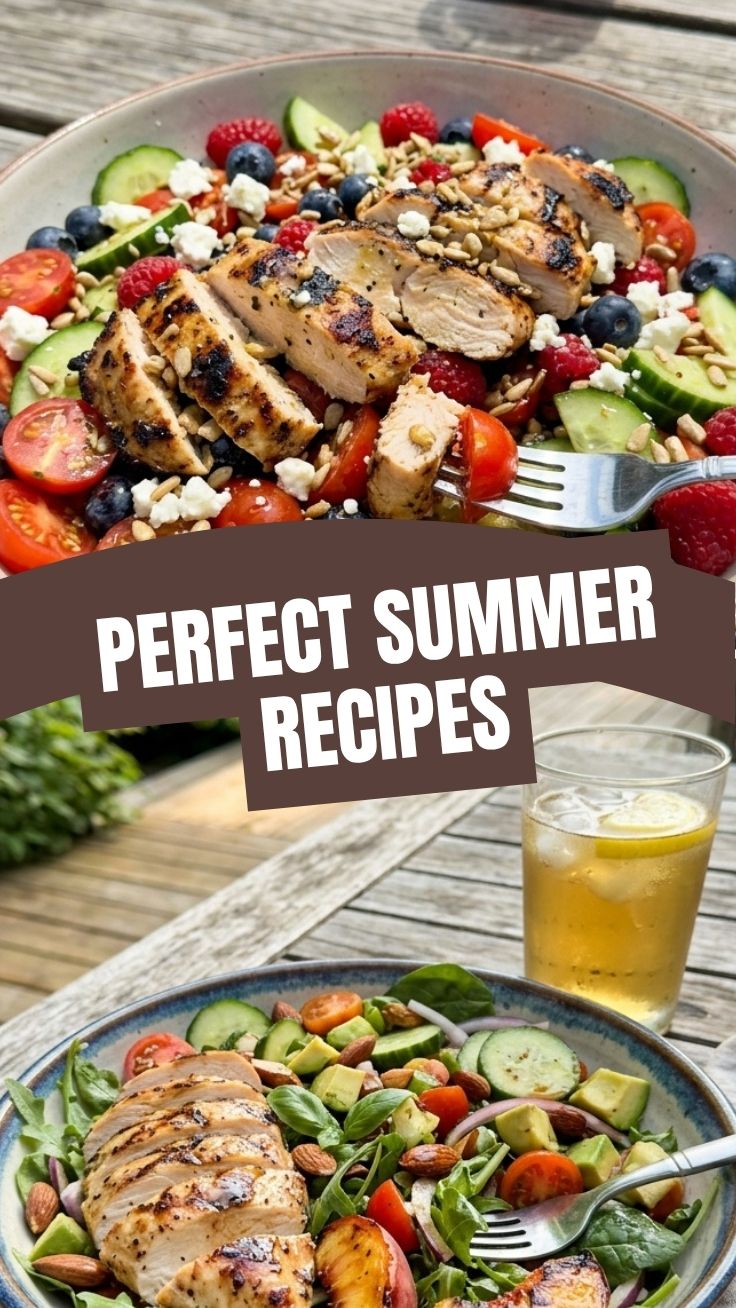
- Toss mixed greens, sliced cucumber, and cherry tomatoes in a large bowl. Add grilled chicken breast slices.
- Whisk olive oil and lemon juice to create a simple dressing. Drizzle over the salad and serve immediately.
- Cook cod fillets until flaky, then shred or cut into small pieces. Warm corn tortillas.
- Assemble tacos by filling tortillas with cod, salsa, and avocado slices.
- Cut bell peppers, zucchini, and red onion into chunks. Thread vegetables and cherry tomatoes onto skewers.
- Grill skewers until vegetables are tender-crisp. For a heartier option, add halloumi cheese to the skewers.
- Layer Greek yogurt and mixed berries in a glass. Repeat layers until the glass is full.
- Top with sugar-free granola and serve chilled, optionally with a sprinkle of cinnamon.