Fluffy Dutch Baby Pancake: The Easi Way to a Showstopping Breakfast
Have you ever craved a breakfast that feels both impressive and effortless? The Dutch Baby Pancake delivers exactly that—a puffed, golden oven-baked pancake that rises dramatically in the pan, then collapses into a custard-like bowl begging for toppings. But what exactly is this magical dish? It’s actually a close cousin of the classic German Pancake, often called a “Dutch baby” thanks to a beloved American diner tradition. Making it at home is not only simple but also cost-effective; you likely already have the ingredients in your pantry. In this post, I’ll walk you through everything you need to know—from ingredients to troubleshooting—so you can enjoy bakery-quality results any morning. Let’s dive into the world of the Dutch Baby Pancake and its relative, the German Pancake, and discover why this dish belongs in your regular rotation.
Ingredients & Kitchen Tools
The beauty of this recipe is its minimal ingredient list. You’ll need:
– 3 large eggs (room temperature for best rise)
– ½ cup all-purpose flour (scoop and level for accuracy)
– ½ cup whole milk (warm slightly to help the batter emulsify)
– 2 tablespoons unsalted butter (plus extra for greasing)
– 1 tablespoon granulated sugar (optional, for a sweeter finish)
– ¼ teaspoon salt
– 1 teaspoon vanilla extract (adds depth)
Kitchen tools:
– 10‑inch cast‑iron skillet or oven‑safe nonstick pan
– Whisk or blender
– Measuring cups and spoons
– Spatula for serving
Optional substitutions:
– Gluten‑free: Use a 1:1 gluten‑free flour blend.
– Dairy‑free: Substitute milk with oat or almond milk and butter with vegan butter.
– Sugar‑free: Omit sugar or use a zero‑calorie sweetener like monk fruit.
Prep Time & Cooking Schedule
– Prep time: 10 minutes (including preheating oven and mixing batter)
– Resting time: 10–15 minutes (let batter rest for better texture)
– Cook time: 18–22 minutes (until puffed and golden brown)
– Total time: about 35 minutes
Plan ahead: Heat your oven to 400°F (200°C) before you start mixing. Place the skillet inside while the oven warms—this ensures the pan is screaming hot when the batter hits it, which creates that dramatic puff. Resting the batter allows gluten to relax and air bubbles to settle, yielding a more tender pancake.
Step-by-Step Instructions
1. Preheat and prepare the skillet. Place a 10‑inch cast‑iron skillet in a cold oven, then set the temperature to 400°F (200°C). Let the pan heat for at least 15 minutes.
2. Blend the batter. In a blender, combine eggs, flour, milk, sugar, salt, and vanilla. Blend on medium speed for 30 seconds until smooth and frothy. Alternatively, whisk vigorously in a bowl.
3. Rest the batter. Pour the mixture into a measuring cup and let it sit at room temperature for 10–15 minutes. This step is crucial for a lighter texture.
4. Add butter and pour. Using oven mitts, carefully remove the hot skillet. Drop 2 tablespoons of butter into the pan and swirl until melted. Immediately pour in the batter.
5. Bake without peeking. Return the pan to the oven and bake for 18–22 minutes. Do not open the door during the first 15 minutes—the puff depends on steady heat.
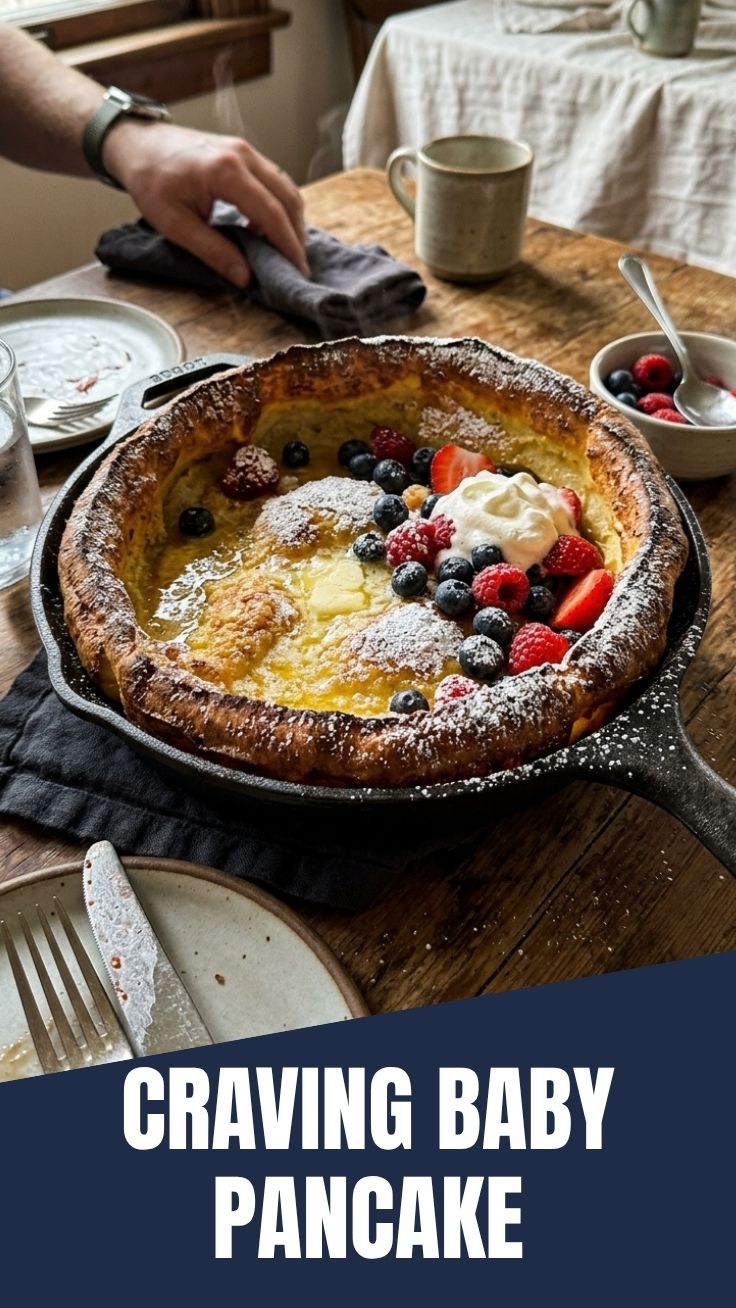
6. Serve immediately. The pancake will deflate quickly. Top with powdered sugar, lemon juice, fresh berries, or maple syrup. This Dutch Baby Pancake is best eaten straight from the oven. For a twist, try the German Pancake variation, which uses the same batter but often adds a pinch of cinnamon or nutmeg.
Nutritional Benefits & Advantages
A single serving (¼ of the pancake) provides approximately:
– Calories: 180
– Protein: 8g
– Fat: 10g
– Carbs: 16g
– Fiber: less than 1g
Eggs deliver high‑quality protein and choline for brain health. Whole milk offers calcium and vitamin D, while butter provides fat‑soluble vitamins. You can boost nutrition by adding ¼ cup of whole‑wheat flour or a tablespoon of ground flaxseed to the batter. The Dutch Baby Pancake also contains less sugar than traditional pancakes because the sweetness comes primarily from toppings—meaning you control the sugar content.
Tips Variations & Cooking Advice
– Flavor variations: Add ½ teaspoon of orange zest, ¼ teaspoon of almond extract, or a pinch of cardamom.
– Savory version: Omit sugar and vanilla; add ¼ teaspoon black pepper and top with sautéed mushrooms and Gruyère.
– Dietary adaptations: For a gluten‑free Dutch Baby Pancake, use a high‑quality 1:1 gluten‑free flour blend. For dairy‑free, swap milk and butter as mentioned above, but note that the puff may be slightly less dramatic.
– Cooking tool swap: If you don’t have cast‑iron, use a heavy‑duty oven‑safe nonstick skillet. Avoid lightweight pans that won’t hold heat well.
– Portion change: Halve the recipe for a single serving in an 8‑inch pan. Adjust baking time to 15–18 minutes.
Common Mistakes to Avoid
1. Cold ingredients: Eggs and milk at room temperature emulsify better and steam more evenly—cold batter results in a dense pancake.
2. Skipping the hot pan: A cold skillet prevents the immediate puff that gives the pancake its signature height. Always preheat the pan in the oven.
3. Over‑mixing: Blend only until smooth; overworking the batter develops too much gluten and makes the pancake tough.
4. Peeking too early: Opening the oven door during the first 15 minutes lets out heat and collapses the puff. Trust the process.
5. Undercooking: The center should be set and golden brown. If it’s still jiggly, bake for 2–3 more minutes.
Storage & Meal Prep Tips
– Refrigeration: Store leftover Dutch Baby Pancake in an airtight container for up to 3 days.
– Freezing: Place cooled slices on a baking sheet, freeze until solid, then wrap individually in plastic wrap and store in a freezer bag for up to 1 month.
– Reheating: For best texture, reheat in a 350°F (175°C) oven for 5–7 minutes. Avoid microwaving—it turns the pancake rubbery.
– Meal prep: Make the batter the night before (store in the fridge, up to 12 hours). Whisk briefly before using, but expect a slightly reduced rise. A freshly made batter always yields the best puff.
Conclusion
The Dutch Baby Pancake is a breakfast game‑changer: simple ingredients, minimal effort, and a dramatic presentation that wows everyone at the table. Whether you call it a German Pancake or a Dutch baby, this versatile dish adapts to sweet or savory toppings, fits dietary restrictions, and comes together in about 35 minutes. The key is a hot pan, rested batter, and patience while it bakes. Now that you know the secrets, I encourage you to try this recipe this weekend—your family will thank you. Share your creation on social media or explore more time‑saving breakfast recipes on our site. Happy cooking!
FAQs
1. Can I make a Dutch Baby Pancake without a blender?
Absolutely. Whisk the ingredients vigorously in a bowl until smooth. A blender gives a fluffier texture, but hand‑whisking works fine.
2. Why did my pancake deflate as soon as I took it out of the oven?
That’s completely normal! The dramatic puff happens from steam inside the batter. As soon as it cools, the steam condenses, causing a gentle collapse. Serve immediately for the best visual effect.
3. Can I use a different type of flour?
Yes. Whole‑wheat flour works but yields a denser pancake. Gluten‑free blends that include xanthan gum perform well. Avoid almond or coconut flour, which lack the structure needed for the puff.
4. How do I prevent the pancake from sticking to the pan?
Generously butter the hot skillet just before pouring in the batter. If using a seasoned cast‑iron skillet, sticking is rarely an issue. For nonstick pans, ensure they are oven‑safe up to 400°F.
5. Can I add mix‑ins like blueberries or chocolate chips?
Add them after pouring the batter into the pan—drop them gently into the batter so they sink slightly. Be aware that heavy mix‑ins may inhibit the puff slightly, so keep the quantity to about ¼ cup.
Quick way to grow a 6-inch Dutch Baby Pancake
Ingredients
Equipment
Method
- Preheat your oven to 425°F (220°C) and place a 6-inch cast-iron skillet inside to heat up.
- In a blender, combine the flour, eggs, milk, sugar, and salt; blend until the batter is smooth and well combined.
- Carefully remove the hot skillet from the oven and add the unsalted butter, swirling it around until melted and coating the bottom and sides.
- Pour the batter into the hot skillet and immediately return it to the oven.
- Bake for 15-20 minutes, or until the pancake is puffed, golden brown, and crispy around the edges.
- Carefully remove the Dutch baby from the oven and serve immediately with your favorite toppings, such as powdered sugar, fresh fruit, or maple syrup.