The Ultimate Guide to Authentic Pasta e Fagioli: A Hearty Italian Classic
Have you ever craved a bowl of soup so comforting it feels like a warm hug on a cold day? That’s exactly what happens when you make Pasta e Fagioli from scratch. This traditional Italian peasant dish—sometimes called “pasta and beans” in English—is far more than a simple soup: it’s a nutrient-dense, budget-friendly meal that can be on your table in under an hour. By preparing it at home, you control the sodium, adjust the texture, and unlock layers of flavor that canned versions simply can’t match. Whether you’re a seasoned cook or a beginner, mastering this recipe will also give you a solid foundation for countless other pasta recipes that rely on pantry staples. Let’s dive into making a restaurant-quality Pasta e Fagioli right in your own kitchen.
—
Ingredients & Kitchen Tools
Main Ingredients
– 2 tablespoons olive oil – use extra-virgin for best flavor.
– 1 medium yellow onion, diced – provides a savory base.
– 3 cloves garlic, minced – adjust to taste; fresh is best.
– 2 medium carrots, diced – adds sweetness and color.
– 2 stalks celery, diced – classic Italian soffritto trio.
– 1 teaspoon dried oregano – or 1 tablespoon fresh.
– 1 teaspoon dried rosemary – crumble between fingers to release oils.
– ½ teaspoon red pepper flakes – optional for heat.
– 1 can (15 oz) crushed tomatoes – San Marzano recommended.
– 4 cups low-sodium vegetable or chicken broth – homemade adds depth.
– 1 can (15 oz) cannellini beans, drained and rinsed – or borlotti beans.
– 1 can (15 oz) kidney beans, drained and rinsed – adds texture.
– 1 cup small pasta shapes – ditalini, elbow, or tubetti work best.
– Salt and black pepper to taste – about 1 teaspoon each.
– Fresh parsley or basil for garnish – optional but recommended.
– Grated Parmesan cheese – for serving (omit for dairy-free).
Kitchen Tools
– Large Dutch oven or heavy-bottomed pot (5–6 quart).
– Wooden spoon or silicone spatula.
– Cutting board and sharp knife.
– Measuring cups and spoons.
– Ladle for serving.
– Optional: immersion blender for creamier soup.
Substitutions & Adaptations
– Gluten‑free: Use gluten‑free small pasta or canned white beans without pasta.
– Dairy‑free: Skip Parmesan or use nutritional yeast.
– Bean swap: Chickpeas or great northern beans work beautifully.
– Broth alternative: Use water with a tablespoon of tomato paste and extra herbs.
– Pasta shape: Orzo, stelline, or broken spaghetti are fine.
—
Prep Time & Cooking Schedule
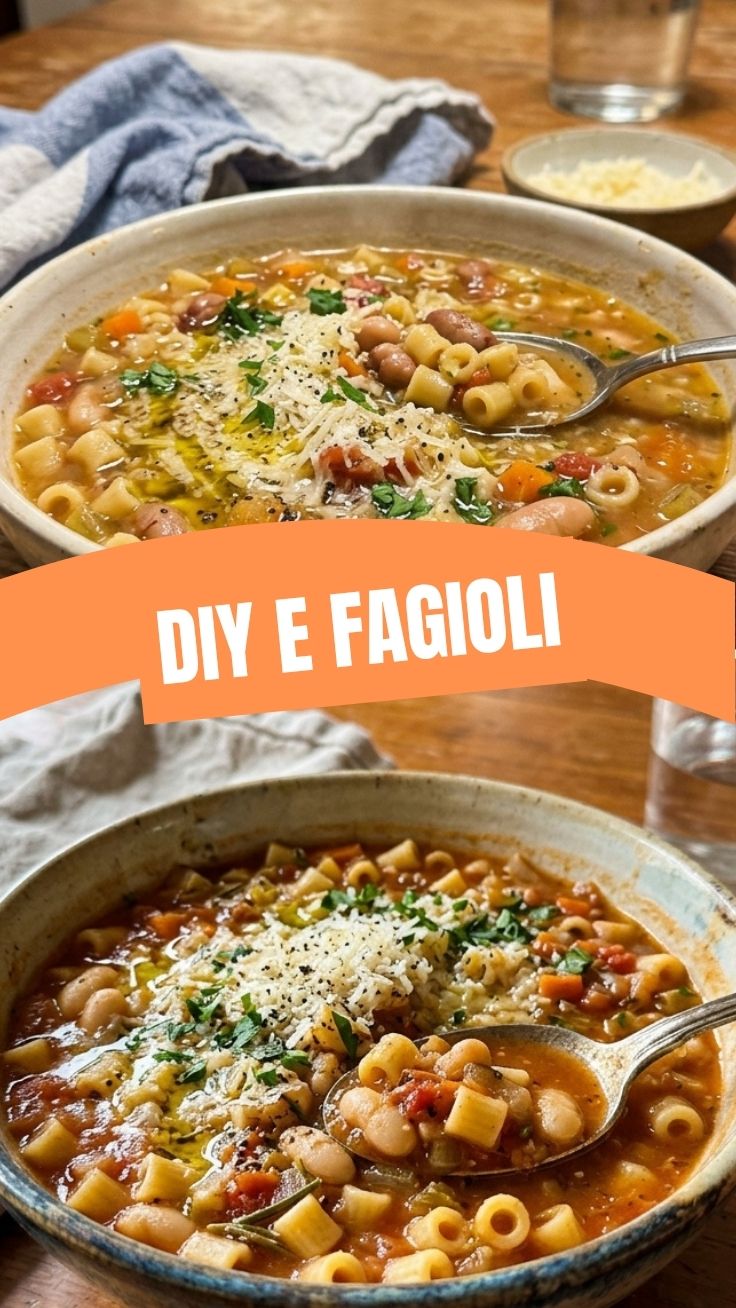
> Note: The image below shows a traditional Pasta e Fagioli with perfectly cooked pasta and creamy beans.
| Phase | Time | Details |
|—————-|——–|————————————————————————-|
| Prep | 15 min | Dice vegetables, measure spices, rinse beans. |
| Cook | 35 min | Sauté aromatics (5 min), simmer broth + tomatoes (10 min), add beans (10 min), then pasta (8–10 min). |
| Rest | 5 min | Let soup sit off heat to thicken slightly and meld flavors. |
| Total | 55 min | Plan ahead so pasta doesn’t overcook during rest. |
Planning tip: If you want firmer pasta, cook it separately and add to individual bowls before ladling soup. For a one‑pot version, use the timing above precisely.
—
Step-by-Step Instructions
1. Sauté the aromatics – Heat olive oil in a large pot over medium heat. Add onion, carrots, celery, and a pinch of salt. Cook, stirring occasionally, for 5–7 minutes until softened. Add garlic, oregano, rosemary, and red pepper flakes; cook 1 minute until fragrant.
2. Build the tomato base – Pour in crushed tomatoes and stir, scraping up any browned bits. Cook 2 minutes to deepen flavor.
3. Simmer the soup – Add broth, cannellini beans, and kidney beans. Bring to a boil, then reduce heat to low and simmer uncovered for 10 minutes. The beans should be tender and the broth slightly reduced.
4. Cook the pasta directly – Stir in the small pasta and cook according to package directions (usually 8–10 minutes), stirring occasionally to prevent sticking. For the perfect texture, this is where you incorporate the focus keyword naturally: The secret to a great Pasta e Fagioli is to slide the pasta into the simmering broth and let it cook until al dente – not mushy. If you prefer even more variety, consider this method adaptable to many other pasta recipes that also rely on one‑pot cooking.
5. Adjust and finish – Season with salt and pepper to taste. If the soup is too thick, add more hot broth or water. Remove from heat, cover, and let rest 5 minutes.
6. Serve – Ladle into bowls, top with fresh parsley and Parmesan. Drizzle with olive oil for extra richness.
Chef’s tip: For a creamier texture, mash about ¼ cup of beans before adding pasta.
—
Nutritional Benefits & Advantages
Pasta e Fagioli is a nutritional powerhouse. Each serving provides approximately:
– Calories: 320–380 (varies by pasta and oil).
– Protein: 15–18g – thanks to the double‑bean combo.
– Fiber: 12–15g – supports digestion and satiety.
– Iron: 20% DV – from beans and leafy herbs.
– Vitamin A: 80% DV – from carrots.
– Low fat: only ~8g, mostly heart‑healthy olive oil.
The dish is naturally vegan if you skip cheese, and low in saturated fat. The combination of complex carbs from pasta and slow‑release carbs from beans provides steady energy. Plus, the high lycopene content in tomatoes (boosted by cooking) supports heart health.
—
Tips, Variations & Cooking Advice
– Flavor Variations: Add a parmesan rind during simmering for umami. Stir in a splash of red wine vinegar at the end for brightness.
– Herb Swap: Use fresh sage or thyme instead of rosemary.
– Texture Twist: Make it brothy (add 2 cups more broth) or thick like stew (cook pasta separately and incorporate less liquid).
– Dietary Adaptations:
– Gluten‑free: Use GF pasta (cook separately to avoid mush).
– Dairy‑free: Omit Parmesan; garnish with chopped olives or capers.
– Low‑carb: Replace pasta with extra zucchini noodles or riced cauliflower (add at the end).
– Cooking Method: Use an Instant Pot on sauté mode, then pressure cook on high for 10 minutes (add pasta after pressure release and simmer normally).
—
Common Mistakes to Avoid
1. Overcooking the pasta – Pasta continues to absorb liquid as it sits. Cook it 1–2 minutes less than al dente if you plan leftovers.
2. Skipping the soffritto – The onion‑carrot‑celery base is non‑negotiable; it provides the foundation of flavor.
3. Adding salt too early – Salt beans and broth only after beans soften; otherwise they can turn tough.
4. Using low‑quality broth – It’s the backbone – use homemade or a good low‑sodium store brand.
5. Not resting the soup – The 5‑minute rest allows starches to release, creating that signature velvety texture.
—
Storage & Meal Prep Tips
– Refrigeration: Cool completely, then store in an airtight container for up to 5 days. Pasta will soften, but still delicious.
– Freezing: Freeze without pasta for best results. Prepare base (step 1–3), cool, freeze up to 3 months. Thaw overnight, reheat, then add pasta and cook fresh.
– Reheating: Warm over low heat, adding a splash of broth or water to loosen. Stir gently to avoid breaking beans. Microwave in 30‑second bursts if short on time.
– Meal prep: Chop veggies and measure spices up to 2 days ahead. Cook base on Sunday, refrigerate, and add pasta on serving day.
—
Conclusion
There’s something truly magical about a bowl of Pasta e Fagioli – it’s humble yet deeply satisfying. By following this guide, you’ve learned how to build flavor from scratch, avoid common pitfalls, and adapt the recipe to your dietary needs. Remember, the same one‑pot technique can inspire countless other pasta recipes that turn pantry staples into weeknight heroes. Now it’s your turn: give this recipe a try, snap a photo, and share your results (or questions) in the comments below. Buon appetito!
—
FAQs
1. Can I use dried beans instead of canned?
Yes. Soak 1 cup dried beans overnight, then simmer in water for 45–60 minutes until tender before starting the recipe. Drain and use where you would canned.
2. My soup is too thin – how do I fix it?
Mash some beans directly in the pot or simmer uncovered for 5–10 minutes until reduced. Alternatively, dissolve 1 tablespoon cornstarch in 2 tablespoons water and stir in.
3. Can I make this in a slow cooker?
Absolutely. Sauté aromatics on the stove, then transfer everything except pasta to slow cooker. Cook on low 6–8 hours or high 3–4 hours. Stir in pasta 30 minutes before serving.
4. What’s the best pasta for Pasta e Fagioli?
Ditalini is classic, but any small shape – tubetti, elbows, or orzo – works. Avoid large shapes that crowd the spoon.
5. Why did my beans turn mushy?
Overcooking or using old dried beans can cause mushiness. If using canned, avoid prolonged boiling – add them after the initial simmer.
Pasta e Fagioli
Ingredients
Equipment
Method
- Heat olive oil in a large pot or Dutch oven over medium heat, then sauté diced onion, carrots, and celery until softened, approximately 5-7 minutes.
- Add minced garlic and cook for another minute until fragrant, being careful not to burn it.
- Stir in the canned diced tomatoes, vegetable broth, rinsed cannellini beans, and kidney beans, along with oregano and basil.
- Bring the mixture to a simmer, then reduce heat, cover, and let it cook for at least 20-30 minutes to allow the flavors to meld.
- Meanwhile, cook the Ditalini pasta according to package directions in a separate pot until al dente; drain and set aside.
- Season the soup with salt and black pepper to taste, adjusting as needed, then stir in the cooked pasta just before serving.
- Ladle the hot Pasta e Fagioli into bowls and garnish with fresh chopped parsley and grated Parmesan cheese, if desired.